English
 Español
 Français
 Deutsch
 Italiano
 Português

The Arab world awoke this week to devastating news that spread across television screens, radio stations, cafés, and social media feeds with the speed of collective heartbreak: Hany Shaker, the beloved “Prince of Arabic Singing", has died at the age of 73 after a long and painful battle with illness in Paris.
For millions across the Middle East and North Africa, the loss feels deeply personal. Hany Shaker was not merely a singer whose songs filled playlists and concert halls. He was the soundtrack of love stories, heartbreaks, weddings, lonely nights, and memories that stretched across generations. His death has triggered an emotional reaction rarely seen in modern Arab entertainment, with many fans comparing the moment to the passing of Abdel Halim Hafez decades ago.
And perhaps no comparison feels more fitting.
The Abdel Halim of his generation
For years, critics and audiences alike referred to Hany Shaker as the closest spiritual successor to Abdel Halim Hafez. Not because he imitated him, but because he carried the same emotional sincerity that defined an earlier golden age of Arabic music.
Like Abdel Halim, Hany Shaker possessed a rare ability to sing pain softly. His voice was never aggressive, loud, or theatrical. Instead, it carried vulnerability — a trembling honesty that made listeners feel understood. In a region where music often becomes part of people’s emotional lives, Hany Shaker’s songs became companions to entire generations.
When he sang “Lessa Betsa'aly", “Law Bethebb", or "Matehaddedesh", listeners did not simply hear lyrics; they heard memories. His music belonged to taxi rides in Cairo at midnight, long drives along the Mediterranean coast, cassette tapes exchanged between lovers, and quiet evenings in homes from Casablanca to Baghdad.
In recent years, as modern Arabic pop shifted toward faster trends and commercial sounds, Hany Shaker remained one of the final protectors of classical romantic music. To many fans, he represented elegance, dignity, and emotional refinement in an industry increasingly driven by spectacle.
A difficult final journey
Behind the scenes, however, the legendary singer had been fighting a difficult health battle for months.
According to reports from family members and close friends, Hany Shaker underwent surgery in Egypt before suffering severe complications, including internal colon bleeding that required blood transfusions and emergency medical intervention. His condition later worsened, leading to respiratory failure and an urgent transfer to a specialised hospital in Paris.
Those close to the singer described weeks of uncertainty, moments of hope followed by sudden setbacks. At one point, doctors reportedly managed to revive him after his heart stopped during treatment. Despite periods of recovery and positive signs, his health deteriorated rapidly in recent days.
The emotional tributes that followed his death revealed the depth of love surrounding him. His son, Sherif Hany Shaker, shared a heartbreaking farewell message describing his father not only as a parent but also as his “soul, support, and closest friend".
Across the Arab world, artists, journalists, and ordinary fans reacted with disbelief. Social media platforms were flooded with clips of his performances, old interviews, and emotional messages mourning what many called “the end of beautiful music".
His final performances became farewell letters
Perhaps what makes Hany Shaker’s passing even more painful is that audiences unknowingly witnessed his goodbye in recent months.
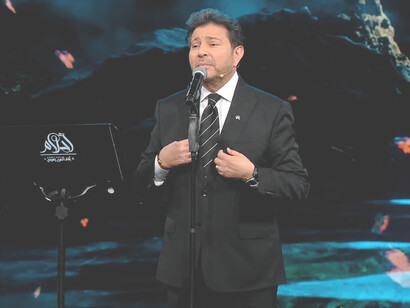
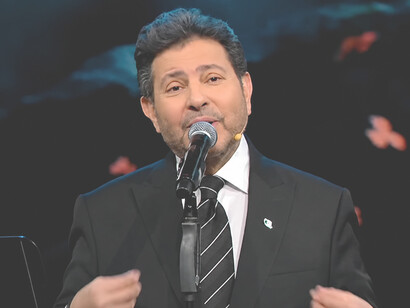
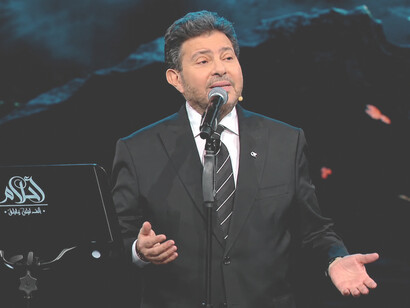
Earlier this year, the singer returned briefly to the stage despite his declining health. Videos from concerts in the UAE showed him performing while seated on a chair, unable to stand for long periods. Yet even then, audiences continued singing every word alongside him, almost as if they understood how precious those moments had become.
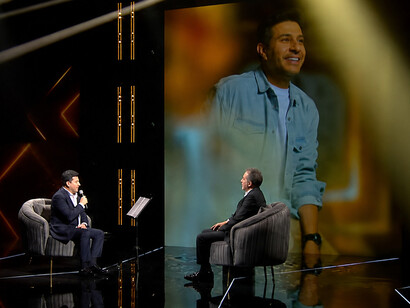
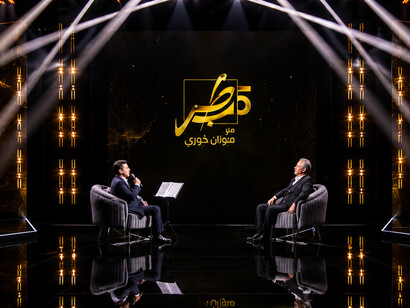
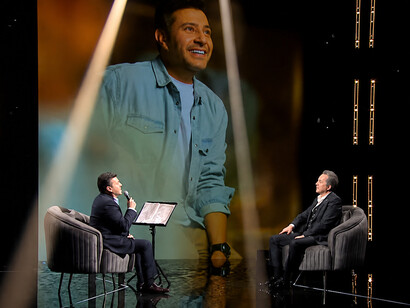
One of his final appearances took place in Paris during a concert with Lebanese artist Marwan Khoury. There, surrounded by members of the Arab diaspora, Hany Shaker performed some of his most beloved classics. Few realised at the time that these would become his final public musical moments.
Today, those performances are being replayed online like farewell letters from a man who spent over 50 years singing directly to the hearts of millions.
More than a singer
Born in 1952, Hany Shaker built one of the longest and most respected careers in modern Arabic music. Over five decades, he released countless hits and earned the title “Prince of Arabic Singing", becoming one of Egypt’s most recognisable cultural figures.
But his influence extended beyond the stage.
As head of Egypt’s Musicians’ Syndicate, he often positioned himself as a defender of traditional artistic values and the cultural identity of Arabic music. He believed music carried moral and emotional responsibility, and whether audiences agreed with his views or not, few questioned his sincerity or dedication to the art form.
Unlike many stars of his generation, Hany Shaker managed to remain relevant without abandoning his musical identity. He never fully surrendered to changing trends, choosing instead to preserve the emotional depth and melodic richness that defined his legacy.
The end of an era
The grief surrounding Hany Shaker’s death reflects something larger than the loss of a celebrity.
For many Arabs, his passing symbolises the fading of a generation that shaped the emotional and cultural memory of the region. Artists like Abdel Halim Hafez, Umm Kulthum, Warda, and later Hany Shaker belonged to a time when songs were not consumed quickly and forgotten. They were lived with.
That is why the sadness feels unusually heavy.
Because with Hany Shaker’s voice now gone, many fear that an irreplaceable chapter of Arabic musical history is disappearing with it.
And somewhere tonight, across thousands of Arab homes, his songs are playing once again — not as entertainment, but as remembrance.