English
 Español
 Français
 Deutsch
 Italiano
 Português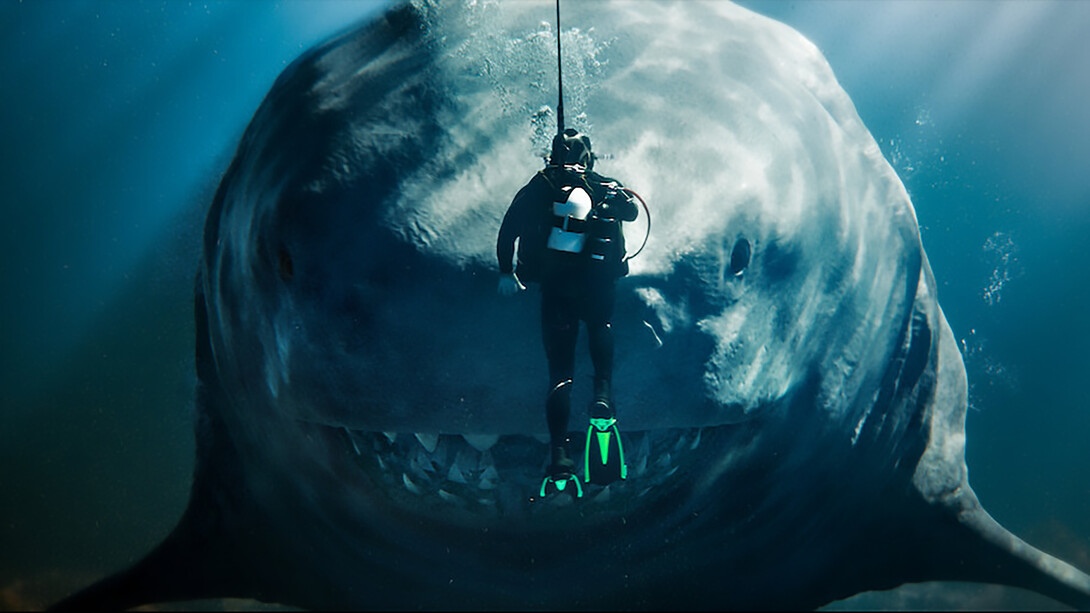
I recently watched Sea Fever, an independent thriller that had everything to win me over: an intriguing premise, complex characters, and a strong ecological message about scientific responsibility. And indeed, for a good part of the film, I was captivated by its dense atmosphere, its carefully implied metaphors, and the promise of something grand taking shape. But when it came to the crucial moment, something collapsed. Not because I didn’t understand the film’s proposal, but precisely because I deeply understood what it tried to achieve, and yet, it failed to sustain it to the end.
It felt like biting into a flawless-looking apple, only to find it mealy inside. And that sparked a deep reflection in me. Are we accepting narrative incoherence as a synonym for artistic depth? Are we, at times, using poetic license as a crutch to justify poor screenwriting?
In this article, I want to explore this delicate question with full respect for the efforts of independent filmmakers, but without abandoning the narrative standards I believe are essential.
The Sea fever case – promise and delivery
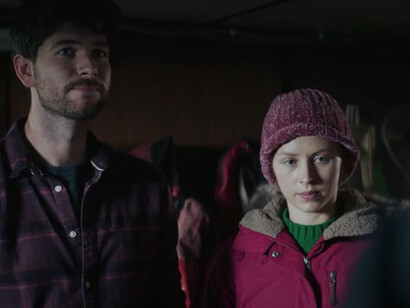
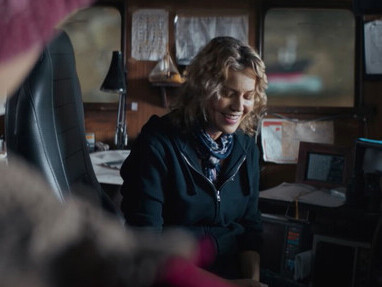
Sea Fever presents us with an aquatic thriller filled with complex ethical dilemmas: a young scientist boards a fishing boat and, upon encountering a mysterious creature in a restricted ocean zone, is forced to deal with themes of isolation, contamination, sacrifice, and responsibility. It’s fertile ground for deep, existential reflections.
However, the film stumbles precisely where it should shine. Not due to lack of budget, but because of narrative choices that leave essential questions unanswered, sabotaging the story’s internal coherence. The restricted zone where the creature lives, for instance, is never properly justified. Why is that region off-limits? What prevents the creature from leaving it naturally? The film doesn’t explain, turning the monster’s existence into a mere graphic square on an electronic map—something that makes no sense, neither symbolically nor narratively.
Another critical moment comes when the creature, supposedly confined to the restricted zone, appears near the coast, following the boat. At this point, it becomes clear that the core theme of ecological responsibility has already been compromised. The mistake has been made, the ecosystem has already been affected, and the unknown creature has breached the boundaries that were meant to contain it. In other words, the damage is done.
Which brings us to the most emblematic issue in the film: the protagonist’s final sacrifice. While poetically beautiful, her decision to dive directly into the creature no longer aligns with the logic of the story or the message of responsibility. There is no effort to preserve knowledge, no scientific purpose attached to her act—she doesn’t take her research, doesn’t leave behind insights, doesn’t attempt to contain the threat. She simply disappears into the unknown. And the problem is that, at that stage, the sacrifice no longer serves any ecological or narrative function. The monster is already loose. The interference has already happened. Her death, rather than being a culmination of moral responsibility, becomes a hollow gesture that undermines everything the film built up until then.
These accumulating holes strip the story of coherence, creating a gap that neither visual poetry nor aesthetic symbolism can truly fill.
The surprise of Meg 2: coherence in the absurd
It might seem strange—perhaps even unfair—to compare a serious, independent film like Sea Fever with a blatantly exaggerated blockbuster like Meg 2. But it is precisely this radical contrast that exposes the core issue I want to highlight: narrative coherence.
Meg 2 is a giant shark movie that never pretends to offer philosophical or scientific depth. It promises exactly what it delivers: massive creatures, impossible situations, explosions, and absurd humor. And paradoxically, by not promising anything more than that, it manages to maintain complete coherence within its own internal rules. The film is self-aware, establishes a simple justification (the explosion that releases the creatures from the deep), and follows this internal logic all the way through.
The irony is that, despite being criticized and ridiculed for its superficiality, Meg 2 respects its audience by delivering exactly what it sets out to do. Meanwhile, Sea Fever, with a much more refined and serious premise, fails precisely by breaking its own internal coherence.
From the beginning, Meg 2 clearly presents the risks and consequences of human interference in an unknown environment, and it delivers on that narrative promise. In contrast, Sea Fever promises a deep and ethical analysis, but contradicts itself throughout the story, offering a message about responsibility that is never truly embraced by its own script.
Independent cinema and narrative responsibility
As an independent director and artist, I know firsthand what it means to create under financial and structural limitations. I have deep respect for independent cinema and understand that limited budgets often make it hard to deliver the ideal result. However, a lack of money cannot justify logical holes in the narrative that could easily be resolved with small adjustments to the script.
For example, simply offering a better justification for the restricted area, such as a magnetic zone, a chemically unique environment, or a place with specific frequencies, could have addressed many of the questions surrounding the creature without adding any significant cost. The protagonist’s final act could also have been reworked to offer more coherence, such as clarifying whether her sacrifice would actually bring any positive outcome.
Justifying inconsistencies by calling them “symbolic” or “subjective” ends up being a lazy choice. True artistic subjectivity is not vague or inconsistent. On the contrary, it demands even greater narrative care, especially when aiming to deliver a social or ethical critique, as Sea Fever attempts to do.
If we want to defend independent cinema, we need to be demanding not only about what it says but how it says it. The strength of independent film lies in the clarity of its ideas, in its originality and narrative intelligence—not in the excuse of a limited budget. That is what artistic responsibility means: understanding that for your message to reach the viewer, the script must be solid, even, or especially, when working with metaphors and subjectivity.
Coherence over poetic license
The purpose of this critique is not to harshly judge Sea Fever, but to use it as a starting point for a broader reflection on contemporary auteur cinema. It’s not about demanding literal explanations for everything, but about expecting narrative coherence as a basic requirement for any film that wants to be taken seriously.
Subjectivity is not the enemy of logic. On the contrary, true subjectivity, the kind that truly moves us, requires a clear internal logic to function. It can leave questions open, but it should never leave the viewer with the sense that the script simply gave up on offering answers.
Independent cinema is essential, courageous, and often brilliant precisely because its limitations force it to be creative and intentional. For that reason, it should never use poetic license as a crutch. Instead, it must use it as a powerful and coherent tool to deepen the message it seeks to convey.
Because in the end, that’s what truly matters: a good story is not the one that explains everything, but the one that knows exactly how—and when—to leave things open, without ever abandoning narrative responsibility.