English
 Español
 Français
 Deutsch
 Italiano
 Português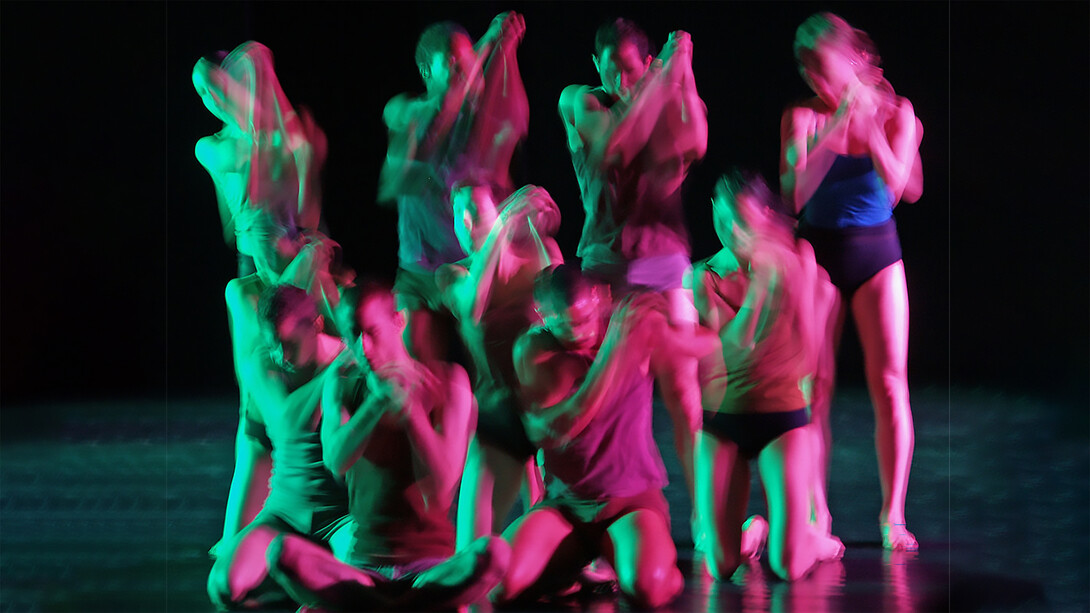
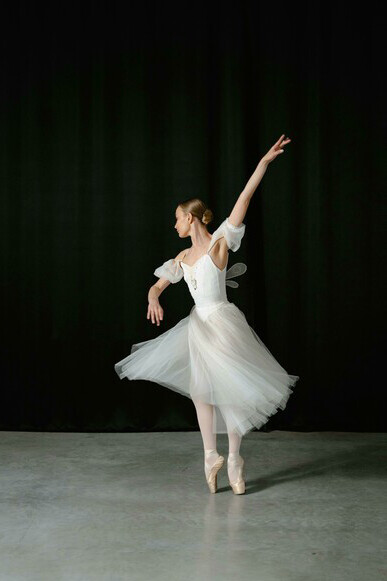
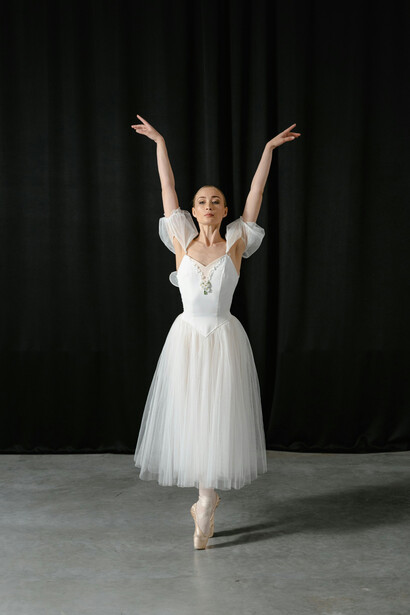
Ballet is a classical dance form that blends grace, discipline, and storytelling through movement. Originating in Renaissance courts, it has grown into a global art form known for its elegance, precision, and emotional power. Contemporary dance developed and grew out from the classical roots, with the promise to fulfill the need to reflect emotions that are not only circulating the classic stories of Swan Lake and Giselle on the stage. The elevated movements in the ballet repertoire used romantic stories to entertain and amaze the audience. Contemporary had a different purpose: to show the “real emotions,” not hide the suffering but stress it; not be only in a tale but reflect the life of a human with its constant challenges, fears, problems, and emotions, which are hard to talk or write about but connect us as people.
Contemporary pieces frequently engage with social, political, and cultural realities. Within Israel, the field of contemporary dance is deeply intertwined with the country’s complex socio-political background. Israeli choreographers and performers often draw on the lived experiences of conflict, community, and identity, transforming them into embodied artistic expression.
In Israeli contemporary dance, the notion of community holds a central position. Dance operates not only as a form of individual expression but also as a reflection of collective structures—both political and social. As an art based on the movement of bodies and the articulation of emotions, dance embodies mechanisms of control and loss of control, in which boundaries between bodies and identities become blurred. In this sense, dance expresses not only freedom and individuality but also belonging and social cohesion—maintaining, questioning, or reshaping prevailing norms and values.
Beyond biopolitical dimensions, society dictates where, when, and how a person may appear or act. The recognition of performativity and the lack of freedom are therefore closely related. In the Middle Eastern context, questions of whose life is deemed grievable or whose body is visible (Butler, 1993) are inscribed within power discourses shaped by war, religion, and media. Alongside norms that regulate appearance and behavior, resistance also emerges—a bodily form of both individual and collective protest. One of the most powerful instruments of such resistance is artistic expression.
Art, particularly dance, offers a sensitive and nuanced mode of dissent. Through sensory and affective engagement, it communicates political perspectives in non-verbal, visceral forms. The visibility that dance affords—through unusual movements, exposure of tabooed body parts, or provocative costuming and sound—does not merely attract attention; it embodies freedom itself. Performance thus becomes a site of resistance, a collective experience that can bring taboo or marginalized topics into public discourse.
Applying the invisible or ungrievable lives into performances can serve as an act of re-embodiment. It gives form to lives otherwise erased by political narratives. This experience of witnessing a performance of human suffering can produce empathy beyond discourse.
Dance, therefore, is uniquely positioned to both critique and embody politics. It reflects the world while simultaneously being instrumentalized by political and institutional systems that fund and frame it. Through this duality, dance becomes a paradoxical space—at once a tool of resistance and a product of the very systems it seeks to challenge. Artistic dependency on political institutions and funding structures can render dance both tolerated and constrained, supported yet subversive.
Historically, this phenomenon has been present since the emergence of modern and contemporary dance. The post–World War II dance revolution in the United States exemplifies this, as artists distanced themselves from the Soviet aesthetic and projected an image of freedom and prosperity through their performances. The issue of cultural funding has always been intertwined with political and ideological agendas: even when not explicitly propagandistic, political pressures often restricted artistic freedom.
A striking example is the “Crusade for Freedom,” a Cold War cultural diplomacy campaign launched in the 1950s as part of the ideological struggle between capitalism and communism (Cull, 2008). Under President Dwight D. Eisenhower, the Emergency Fund for International Affairs supported the global promotion of American artists, presenting their work as embodiments of freedom and creativity. Writers, musicians, and dancers were thus engaged in the dissemination of democratic ideals—propaganda disguised as artistic liberty.
Among those who participated in these initiatives was Martha Graham, whose student later founded Israel’s Batsheva Dance Company. Graham’s works frequently addressed themes of freedom, oppression, and emotional liberation. In her 1938 piece American Document, excerpts from the Declaration of Independence were read aloud during the choreography (Franko, 2007). Alongside such American motifs, Graham often drew from Greek mythology, presenting what she considered “universal truths” that merged human emotion with the ideological vision of the United States. During the Cold War, Graham became—willingly or not—a messenger of American freedom, even as her art served political objectives. Though she claimed to be apolitical, her work inevitably reflected and reinforced the ideological narratives of her time.
The intersections among Martha Graham’s dance, German Expressionism, Orientalism, and Israeli contemporary dance reveal how artistic expression operates within political and cultural discourse. Graham’s choreographies of inner and social struggle paralleled political realities, while Orientalism functioned as an aesthetic lens through which East–West tensions were represented.
A notable example occurred during the celebrations of Israel’s 50th anniversary in 1998. The conservative governing party labeled a Batsheva piece offensive because, during one section, dancers removed their costumes to reveal skin-colored shorts and tops (Klausner, 2015). Although Hora had been performed internationally without issue, organizers deemed it inappropriate for the national ceremony and demanded costume changes. Choreographer Ohad Naharin and the company refused to comply, withdrawing from the event. This decision demonstrated the tension between artistic freedom and state censorship: the act of undressing symbolized emotional release and rebellion against social norms, while the demand for modification reflected the state’s control over representation.
Such moments of conflict reveal how the state, while enabling art, simultaneously seeks to regulate its expression. Batsheva’s refusal to perform represented an assertion of autonomy, an embodiment of freedom through resistance. This case exemplifies how art can both depend on and challenge political authority, transforming the dancing body into a site of negotiation between compliance and dissent.
In contemporary dance, the dancer's body is not just an aesthetic medium. It is a political and social body existing among blurred lines, which is shaped by social and cultural norms and influenced by institutional forces. The way dancers move and are trained reflects on the social disciplines and values. The structured strictness of classical ballet or the freedom and provocative contemporary approach still differs among countries. The costumes, taboo body parts, music, or topics of a performance reflect the context of the social-political sphere where it is created and performed.
A performance itself creates something that is not readable within strict rules and codes. The message is oftentimes subjective and has elements that are hard to speak about but easy to dance, thus eventually making people feel something first, not think rationally. The beauty in it (leaving out the aesthetics) is that starting a meaningful conversation about a taboo topic from within, making someone feel something first, creates more understanding and ability to see—or willingness to see—the other people without labels, just as humans.
Bibliography
Butler, J. (1993). Bodies That Matter: On the Discursive Limits of “Sex.” New York: Routledge.
Cull, N. J. (2008). The Cold War and the United States Information Agency: American Propaganda and Public Diplomacy, 1945–1989. Cambridge: Cambridge University Press.
Franko, M. (2007). Dancing Modernism / Performing Politics. Bloomington: Indiana University Press.
Klausner, A. (2015). “Dancing the Nation: Batsheva Dance Company and Israeli Identity.” Dance Research Journal, 47(2), 24–41.
Naharin, O. (1998). Hora. Tel Aviv: Batsheva Dance Company.
Graham, M. (1938). American Document. New York: Martha Graham Dance Company.
Foster, S. L. (2011). Choreographing Empathy: Kinesthesia in Performance. London: Routledge.
DeFrantz, T. F., & Rothfield, P. (Eds.). (2016). Choreography and Corporeality: Relay in Motion. Cham: Palgrave Macmillan.