English
 Español
 Français
 Deutsch
 Italiano
 Português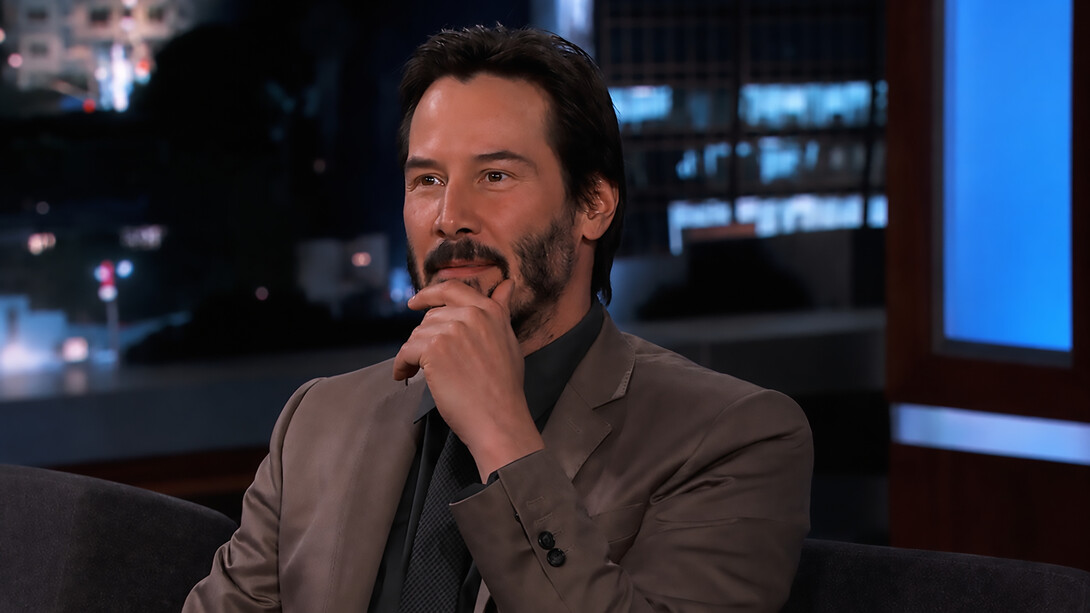
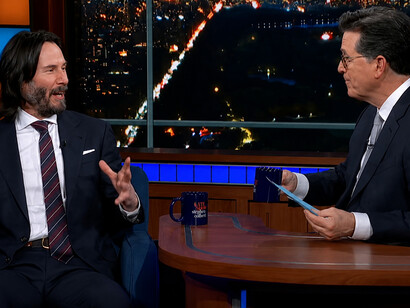
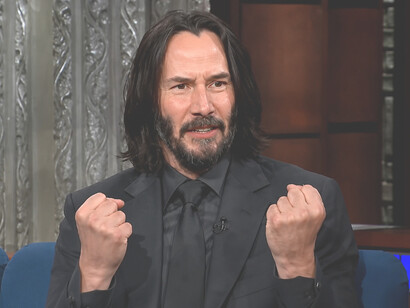
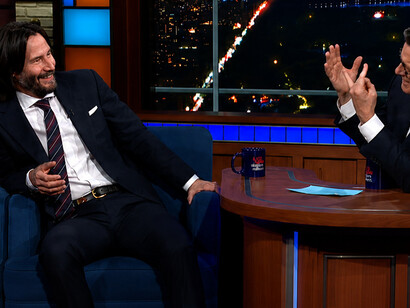
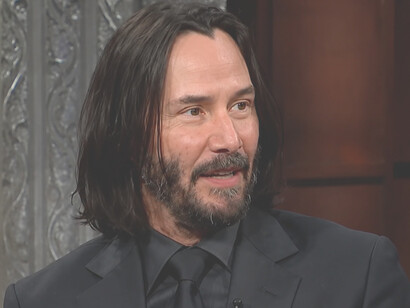
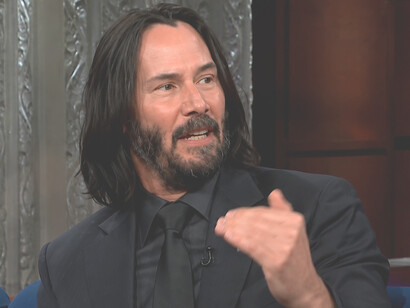
I know that the ones who love us will miss us.
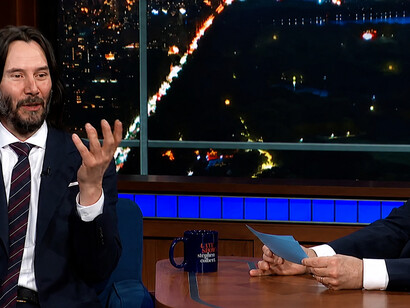
(Keanu Reeves, The Late Show with Stephen Colbert, May 10, 2019)
What made this quiet thunderclap of a reply so profound was the very method stand-up comics have long mastered to summon laughter from the void: the sudden, improvisational pivot that slices through expectation and lands straight in the soul. Yet here Keanu Reeves wielded it not for comedy but for revelation. Credit belongs to his razor-sharp improv skill. Credit belongs to the actor’s mastery of the character moment. Credit belongs, above all, to a man who has spent decades honing the craft of acting with grave seriousness, who understands that every stage—whether a live auditorium or late-night television—is a sacred space where performance and truth must collide.
In that instant, Colbert had steered the conversation from the apocalyptic stakes of Bill & Ted—a stoner comedy, yes, but one that secretly grapples with mortality, with saving not only their own existence but the entire world. The question came light-hearted, almost playful: “What do you think happens when we die, Keanu Reeves?” The audience tittered, braced for a joke.
Reeves could have leaned into the banter. He could have delivered the safe, forgettable quip the cushion economy demands. Instead, he chose depth. He chose resonance. He chose timelessness. And in that choice lies the mark of genius.
Those we call geniuses across civilisations do not invent from nothing. They return us to what was always there. Old is gold. The methods, the practices, and the reasoning forged in earlier epochs still apply today because they are rooted in the eternal. Timelessness is the foundation. Without it there can be no true movement in time—no forward motion that is not mere frantic spinning. To build upon the timeless is the philosophical definition of innovation: the deliberate, patient extension of what endures. Yet the system has hijacked the word. In the Cushion Economy, “innovation” means only this: amplify urgency, accelerate luxury, multiply comforts and conveniences, and flood the market with novelties that promise to attract sales. The grim reality? Those sales erode society itself. They do not elevate the quality of life. They diminish it. And there is no society without people—conscious, critically thinking, fully alive citizens.
The illusion society is sold: faster is better, newer is superior, and convenience equals progress. The stark truth: people are growing less cognitively stimulated, less consciously engaged, less capable of critical thought. They have forgotten how to define what matters. They have dismissed duality altogether—beautiful and ugly, transient and eternal, surface and depth. They chase the smudge on the painting and call it a masterpiece.
I issue this call, urgent and unapologetic: reminders are needed. Reminders for role models. Reminders to stop the manufactured urgency. Reminders to slow down. Reminders to think. Reminders to recall the basic foundations.
In philosophy it has long been observed—whether one attributes the insight first to Plato or finds its echo in the deeper truth granted by Allah—that knowledge is already here. It surrounds us. It resides within us. Everything is already present; we simply cannot see it all at once. Our gaze is distracted, fixated on the smudge, blind to the whole painting. Yet I, for one, choose to see the whole painting. I choose to walk beside those rare souls who carry a beautiful map in their heads—Keanu Reeves among them.
His answer was not scripted cleverness. It was second nature. It was the spontaneous flowering of character, mindset, and hard-won skillset. “The ones who love us will miss us.” Simple.
Devastatingly accurate. Relatable in the deepest registers of human experience. When we die, what remains is not the fleeting applause of the Attention Economy, not the metrics of the Cushion Economy, not the hollow comforts we accumulated in haste. What remains is the ache in those who truly loved us—the living memory of authentic connection. That ache is the proof we mattered. That ache is the bridge between the finite and the enduring.
Keanu Reeves, in that moment, performed the rarest feat: he turned a late-night couch conversation into a mirror for the entire species. He reminded us that real genius does not dazzle with novelty; it reveals what we have always known but have been trained to forget. There are many like him—timeless figures scattered across every field—who refuse the system’s script. They align with a different map: one drawn in patience, in contemplation, in the slow cultivation of the self. They understand that true innovation builds upon foundations that do not crumble. They reject the urgency that hollows the soul. They walk in the reflective economy, where work on character matters more than work for currency, where inner peace is not a luxury but the only sustainable wealth.
The cushion economy fears such figures. It fears the slowdown. It fears the reminder. Because once people begin to see the whole painting—once they remember that knowledge is already here, that love leaves an indelible mark, that timelessness is the only reliable ground—they stop performing for validation. They stop forcing belonging. They stop equating money with meaning. They begin the real work: clarifying who they are, what principles they will not trade, and who is worthy of walking beside them.
This is the revolution, the moment with Colbert quietly ignited. A single, improvised sentence pierced the noise. It exposed the poverty of surface-level banter. It restored dignity to the existential question. And in doing so, it modelled the very path we must reclaim: from distraction to depth, from urgency to reflection, and from commodified novelty to everlasting truth.
Let the Keanu Reeves moment stand as exhibit A against the cushion economy's false definitions. Let it remind every system citizen that genius is not measured in likes or sales but in the capacity to return us to what endures. Let it call us back to the foundations. Let it summon us to slow down, to think, to see the whole painting instead of the smudge.
The ones who love us will miss us.
The ones who walk in timelessness will be remembered.
The ones who choose the Reflective Economy will leave behind something that no algorithm can delete and no urgency can erase.
Begin the work of carrying that beautiful map in your own head. The knowledge is already here.
The choice is already yours.
Whatever you have will end, but what Allah has is everlasting.
(Quran 16:96)