English
 Español
 Français
 Deutsch
 Italiano
 Português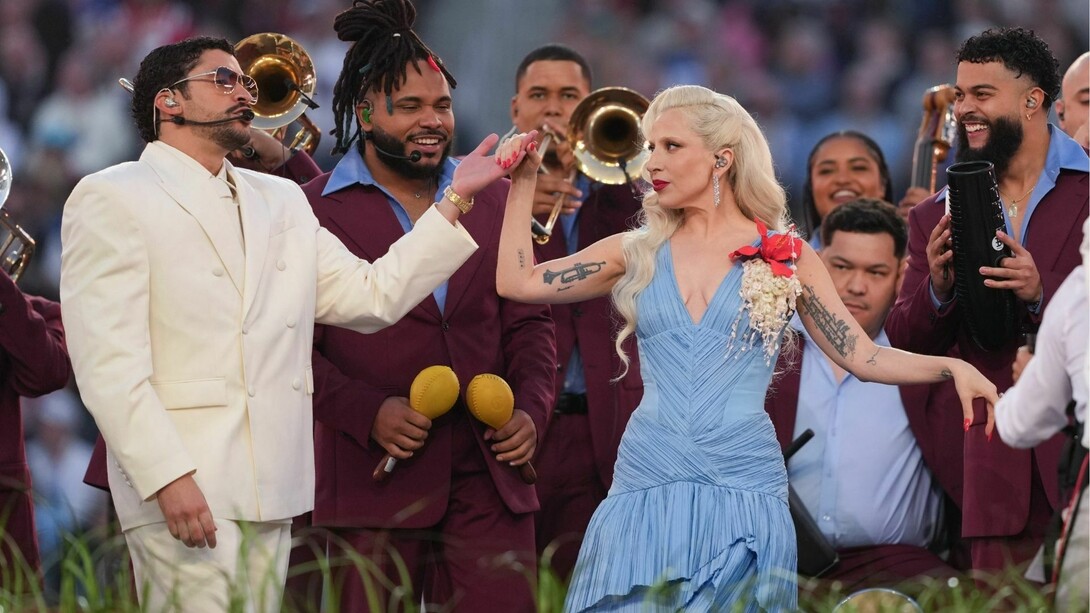
2026 is a very special year for Bad Bunny and his fans. He won three of his six Grammy Awards in the same year he was invited to perform at the Super Bowl LX halftime show, which took place on February 8 at Levi's Stadium in Santa Clara, home of the San Francisco 49ers of the NFL (National Football League). An exceptional show based on a coded staging and production.
First, I want to mention the origins of the city where the event took place. It's usually a stadium chosen by the organizer’s years in advance from a list of options. Like so many cities in California, Santa Clara has deep Hispanic roots. In 1777, Spanish Franciscans founded Mission Santa Clara de Asís, the origin of the city. This was one of 21 missions connected, since 1769, by the Spanish Camino Real, which stretched from San Diego to Sonoma in Alta California.
For the NFL, this sixtieth edition was very special, as it pitted the six-time champion New England Patriots (2002, 2004, 2005, 2015, 2017, and 2019) against the former champion Seattle Seahawks (2014). An East Coast team against a West Coast team. The old colony against the city of grunge. The Puritan elements that founded the nation against the dynamism of the American West. It wasn't to be for the Patriots, who, had they won, would have become the most decorated team in history, surpassing the Pittsburgh Steelers, who also have six championships. The Seahawks won 29-13.
Although many Hispanics have publicly stated that they don't feel represented by reggaeton or trap, the show was distinctly Caribbean. Many Hispanics would have preferred to be represented by artists who performed tangos, rancheras, boleros, merengues, ballads, zarzuelas, or operas, but the NFL invited Bad Bunny, knowing he sings in Spanish. We may not like the decision, but these days it's the best option for those seeking maximum benefit. A bitter pill to swallow for many.
The Apple TV spectacle, which lasted about 13 minutes, was more than just entertaining the 65,000 people in the stadium; it was a meticulously crafted production, designed to etch coded details into the retinas of the 137.9 million viewers (124.9 million on average) who watched it live that day, or the more than 4 billion viewers who enjoyed it on their screens in the first 24 hours.
It's worth noting that the first statistic reflects the massive audience that these kinds of sporting events attract year after year, but the second statistic is driven by the decisions of people who choose to watch it repeatedly, voluntarily pushing the button. And it kept growing. Six days later, it had already surpassed 20 billion and was still climbing.
From its inception, it was a mestizo spectacle, or as they would say in Puerto Rico, jíbaro. In the language of Cervantes, Benito Antonio Martínez Ocasio, aka Bad Bunny, reaffirms that his name couldn't be more Hispanic. It recalls a traditional 16th-century custom that considers both the paternal and maternal surnames, thus representing genealogy.
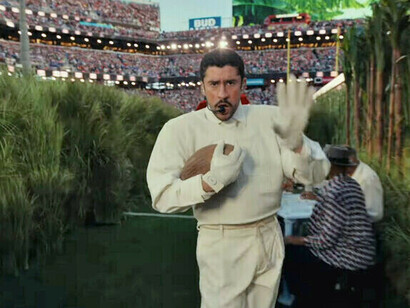
In other cultures, the paternal surname becomes the sole one for the entire family, the maternal lineage disappearing from official records. Dressed in Zara, the accessible and ubiquitous Spanish brand, Bad Bunny dressed in the Spanish style. His American football jersey bore the surname Ocasio, from his maternal family, along with the number 64, which, although it seems to have several meanings, was officially declared in honor of his uncle "Cutito" Ocasio.
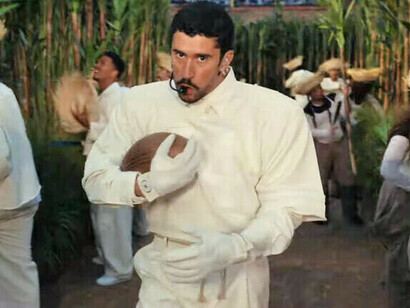
Caribbean and very Puerto Rican. In the sugarcane fields, a farmer wearing a “pava”, the typical hat, greets us with a guitar and says, "How wonderful to be Latino!" It's probably payday for the harvest, so he adds, "Today we drink," anticipating a festive atmosphere. A joyful celebration, always family-oriented, where, combining elements like music, liquor, and dancing, anything can happen. After all, guaro and rum come from the fermented juice of sugarcane.
On Christopher Columbus's second voyage, the Spanish brought sugarcane to the Caribbean. From then on, the sweet white powder replaced the shimmering golden dust found on the banks of some rivers. In 1500, the Catholic Monarchs prohibited the enslavement of the indigenous population unless they resisted through war, and in the Caribbean, the tribes fought back fiercely. Finally, the indigenous people were better protected by the Laws of Burgos of 1512 and the New Laws of 1542.
The remaining native population, after epidemics, conflicts, miscegenation, and, in some cases, enslavement for resisting conquest, was often replaced by imported slaves. However, it wasn't until the arrival of the true sugar industry, with the United States occupation of the island, that Puerto Ricans began to experience real change. They went from being a Spanish province in 1809, with parliamentary representation in 1870, to modern colonial servitude in 1898, under large corporations without the same rights as citizens of the United States.
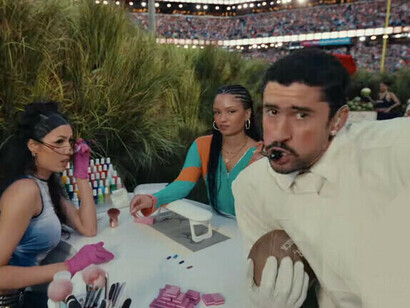
With images of sugarcane fields, Bad Bunny tells the whole story in under a minute. Then a vendor of cold coconut water appears, followed by a domino stand run by Puerto Rican masters and a modern beauty salon, conceived by a Canadian in the United States and a huge success in the Caribbean. The women laying concrete blocks could represent the reconstruction after the hurricane or their matriarchal role as home pillars.
Then came a tribute to immigrants and small business owners. First, a sale of shaved ice, or "copos," as we would say in Costa Rica. At this stand, flavors were displayed with the flags of Colombia, Spain, Puerto Rico (the Puerto Rican flag with a light blue background, not dark blue), and Mexico. Immediately afterward, a stand from Villa's Tacos appeared, the successful Californian chain owned by a Mexican immigrant, followed by a boxing match between the undefeated Xander Zayas Castro, from Puerto Rico, and Emiliano "El General" Vargas, a Mexican-American, a classic rivalry between the two boxing schools.
At another point in the sequence, we see a gold and silver shop where the clerk hands Bad Bunny an engagement ring, which he cleverly redirects to a couple in love, who accept it without hesitation. The Caribbean is full of shops like this, offering the ideal engagement ring to couples arriving on cruise ships, who then accept it at home—oops!—if something goes wrong during the proposal. Very telling.
The scene shifts, and the "picheo" (ignoring something or someone, in Puerto Rican slang) begins. At Bad Bunny's "casita," a spectacular party “de marquesina” erupts with Pedro Pascal, Karol G, Cardi B, Young Miko, Ana de la Reguera, David Grutman, and Jessica Alba as special guests, all cheered on in the background by the Puerto Rican crested toad. This charming “Concho” toad is a powerful ecological symbol of Puerto Rican resilience and survival. It is an endangered species endemic to the island. The "casita," on the other hand, is another symbol, honoring his grandmother's house and standing in stark contrast to the multi-family developments currently being promoted along the Puerto Rican coast. You can break the roof, but never the foundation.
Upon exiting, Bad Bunny is greeted by a group of young people singing and dancing to the rhythm of Don Omar, Daddy Yankee, and Tengo Calderón. It's a tribute to the pioneers of his musical style, historically criticized and even censored for the machismo in its lyrics and its scandalous and sexually explicit dance style. It serves as a reminder that the music and the bodily sensations it evokes in rebellious youth have been persecuted throughout history by the puritanical and moralistic gaze of each era. Those who censor the dance should place themselves in their own time and confront themselves in the mirror of history, if they dare.
Initially, the waltz was considered immoral in 18th-century European courts due to the scandalous contact between dancers. The liberal City of Light censored the can-can in 1820 for showing "too much leg" and the tango was considered a "forbidden dance" in Paris in 1913. Rock and roll were censored in California in 1950, and more recently, in 1990, the Brazilian lambada was accused of the same. Explicit sexuality, sensual body shaping, and frotteurism: a dangerous combination for those who promote abstinence as the best method of population control. Unbearably scandalous for many. It seems we learned nothing from the movie Footloose.
The following scene highlights the valuable work of many Spanish-speaking countries for over 50 years. Countries like Costa Rica, since 1972, and Venezuela, since 1975, have maintained state policies and permanent educational programs based on the musical training of young people with classical instruments. In fact, in these countries, these projects have made classical music very accessible, even in rural areas.
At the 2016 Super Bowl, conductor Gustavo Adolfo Dudamel Ramírez, a successful native of Barquisimeto, Lara State, Venezuela, and a member of Venezuela's prestigious National System of Youth and Children's Orchestras, with its 51-year history, performed.
For his Super Bowl halftime show 10 years later, Benito, after saying "good afternoon, California," brought in another conductor, Giancarlo Guerrero Chavarría, this time originally from Managua, Nicaragua, and a graduate of the Costa Rican Youth Symphony Orchestra, founded 53 years ago, where he was educated, grew up, and became a Costa Rican citizen.
This "Tico" (an affectionate term for someone from Costa Rica) has also won six Grammy Awards and, along with Bad Bunny, conducted musicians from Tucson, Arizona, many of whom are of immigrant origin. This demonstrates once again that immigration can contribute to local culture by adapting to it, without replacing it.
Meanwhile, Bad Bunny told us, "My name is Benito Antonio Martínez Ocasio, and if I'm here today at Super Bowl 60, it's because I never, ever stopped believing in myself. You should believe in yourself too; you're worth more than you think, believe me." With the rhythm of salsa swaying in Lady Gaga's hips, adorned with a “maga” flower on and wearing a design by Dominican Raúl López, the singer performed "Die With a Smile." Composed by the Italian-American artist along with Peter Gene Hernández, better known as Bruno Mars, who, although born in Hawaii, is also a musician of Puerto Rican descent.
With this part of the performance, Bad Bunny also tried to please the English-speaking audience, and by dancing at a safe distance, he tried to please the more conservative crowd. A tribute to the musical West Side Story. The popular tropical salsa version was a Spanish arrangement by Randy Feijóo and the Feijóo Orchestra, which had already been released before the event. Musically, the show was also a high-quality presentation of Puerto Rican salsa.
With the real and legal marriage of Tommy Wolter and Elly Bean, nurses from California, she of Hispanic origin, Benito reminded us of the meaning of international or interracial union. A blend of cultures that “Isabel la Católica” herself fostered more than 500 years ago during the conquest. A combination that unites us more than it divides us. The participation of the entire family in the wedding and celebration is also typical of our Hispanic world. He reaffirmed this with two beautiful representations: a child asleep on three chairs, or a girl dancing with her octogenarian grandfather, played by another Costa Rican, Rubén "Chino" Zúñiga, a scene that highlights the intergenerational relationship.
A current value, as Native American as it is Mediterranean. A union of several worlds in a single gesture. Hispania and Hispanic America are the product of the mixture of many cultures. Mestizaje has been natural in the Iberian Peninsula and, consequently, in the Hispanic Empire and its viceroyalties.
Already in “NuevaYol,” with his version of “Un Verano en Nueva York” by El Gran Combo de Puerto Rico, he reminded us of La Marqueta, the iconic Caribbean Social Club with María Antonia Cay, known as “Toñita”, and again of the barbershop or beauty salon, part of the aesthetic explored in his latest and award-winning work, “Debí tirar más fotos.” Then, we saw an adult Bad Bunny giving one of his 2026 Grammys to a younger Bad Bunny. The scene was officially explained, although the audience interpreted it differently. Unintentionally, Benito struck a chord.
Enrique José “Ricky” Martin Morales delivers an elegant and stellar performance surrounded by banana groves, occupying one of the white chairs that appear on the cover of the album “Debí tirar más fotos”. The two monoblock chairs that appear on the cover, with a banana grove in the background, are a tribute to the Puerto Rican diaspora expelled from the island. These types of plastic chairs can be found in any Hispanic American backyard. The importance of banana production in the Caribbean is well known. Meanwhile, James Dole, known as “the Pineapple King,” founded the Hawaiian Pineapple Company in 1901.
For this and many other reasons, Puerto Rican Ricky Martin sang a fragment of “Lo que le pasó a Hawai’i” (What Happened to Hawai’i), another song by the presenter, which says: “They want to take away my river and also the beach, they want my neighborhood and for my grandmother to leave, no, don’t let go of the flag nor forget the lelolai, because I don’t want them to do to you what happened to Hawai’i…”
Another somber theme evokes memories of those affected by the blackout and its potentially corrupt causes. It depicts workers with "pavas" (a colloquial term for a type of traditional Puerto Rican hat), like the employees of LUMA Energy, struggling to restore power. A dysfunctional private monopoly in a strategic sector. Problems that not only persisted after Hurricane Maria in 2017 but have continued to worsen in some areas. The song opens with Bad Bunny defiantly waving the Puerto Rican flag with a light-blue background, amidst the undergrowth or "monte" (a colloquial term for dense, rugged terrain), climbing to sing his critique and protest from the light poles.
Finally, surrounded by flag bearers and musicians in guayabera shirts, playing tambourines and güiros in the Puerto Rican style, they sing "Café y Ron" while Bad Bunny says in English: "God bless America, whether it be Chile, Argentina, Uruguay, Paraguay..." until he completes the list of nations of the American continent in Spanish, including Canada, adding in English: "...and my homeland, Puerto Rico." This list is reminiscent of the one proposed by Rubén Blades and Willie Colón at the end of their collaborative song "Plástico," which concludes by speaking of a united Hispanic America, naming the nations and responding: "present." Lyrics by Rubén Blades Bellido de Luna.
Although we may not share the same musical tastes or what they represent, and although, as Hispanics, we may not identify with the Caribbean culture of reggaeton or trap, we must acknowledge that in this performance, Benito reminded us of what it means to be American in America, the continent. With a recurring theme from his melancholic and futuristic short film “Debí tirar más fotos” (I Should Have Taken More Photos), which says "we are still here," he concluded his performance by scoring a goal with a ball that read "Together, we are America," and with a message projected on the stadium screens that also read in English and in capital letters: "The only thing more powerful than hate is love".