English
 Español
 Français
 Deutsch
 Italiano
 Português
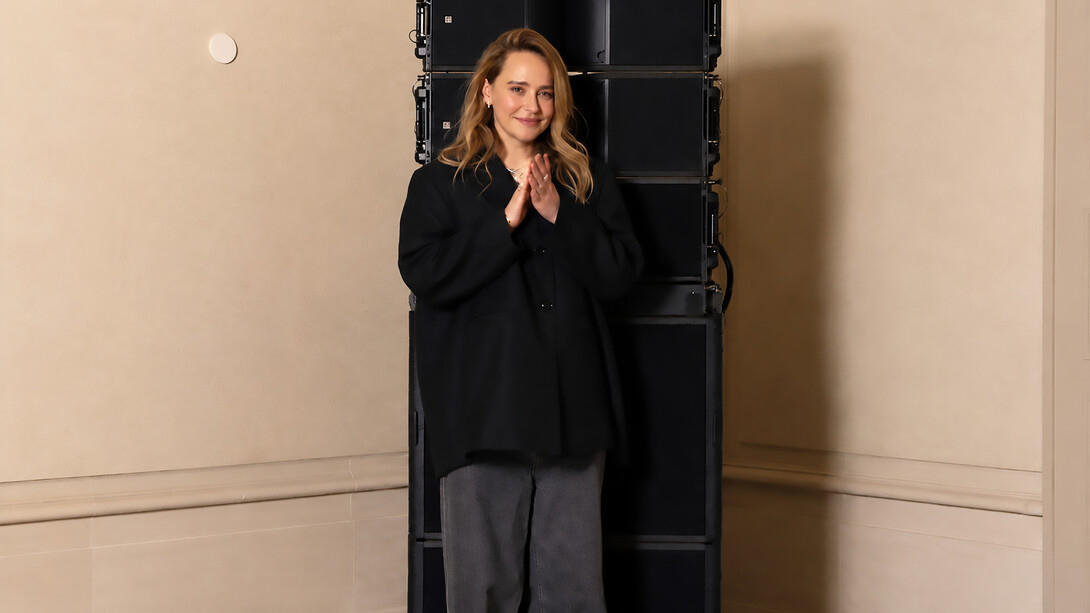
Since its establishment, Ganni has represented a unique Scandinavian take on contemporary fashion — one that prioritises storytelling, craft sensitivity, and playful contradiction. Under the creative leadership of Ditte Reffstrup, the brand has continuously reinterpreted “everyday wear” as something both intuitive and surprising, eschewing traditional luxury codes in favor of expressive velocity and communal resonance.
Rather than subscribing strictly to minimalism or maximalism, Ganni’s womenswear often traverses both terrains — marrying relaxed, often utilitarian shapes with expressive cuts, colour-forward palettes, and detail-rich ornamentation. This duality, as we will see, is central to understanding both the cutting techniques of the SS26 and FW25/26 runways and the possible evolution of these techniques into Ganni’s future collections.
2025/26: the art of cutting and silhouette
For Spring/Summer 2026 (SS26), Ganni presented a collection that balanced the ethereal with the assertive, embedding emotional narratives into its tailoring and cutting. The collection, described as a “garden suspended between memory and imagination,” drew deeply from Reffstrup’s personal summer memories — seaside afternoons and natural play — and translated these into garments that celebrate movement, spirit, and tactile joy.
Patchwork, draping, and intuitive construction
One of the most compelling aspects of the 2026 womenswear offering was its fluid approach to fabric assembly and silhouette shaping:
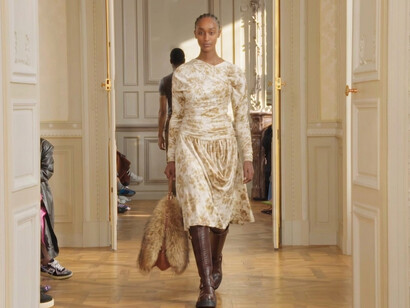
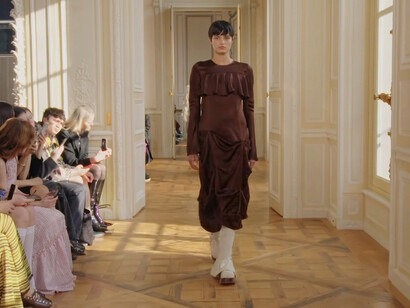
Patchwork as play: SS26 utilised patchwork not just as embellishment but as a structural approach to design. Far from rigid patch placement, fabrics were draped and tied intuitively, creating an almost performative sense of shape exploration — as though each look had been born out of a collage of memories rather than a prescribed template.
Draping and layering: draping provided a rhythmic, almost improvisational quality to garments. This encouraged a tactile economy — clothes that didn’t just hang from the body but responded with it. The technique introduced an unpredictable elegance, where semi-structured hems and twisted panels blurred the line between tailored intent and organic motion.
Colour contrasts as structural dialogues: whilst not strictly a cutting technique, the strategic placement of bold colours — such as vibrant reds juxtaposed with turquoise and floral prints — acted as visual cadences that guided the silhouette’s perceived form. These colour decisions were inseparable from the cut, essentially guiding how the eye perceived volume and lines.
The kino of sewing: emotional stitching and fabric expression
Ganni’s womenswear drew from tactile craft and reinvigorated traditional techniques with contemporary audacity:
Hand-crochet and open textures: lightly open weaves and crocheted insertions disrupted voluminous shapes with moments of deliberate exposure, lending an airy, almost languid quality to otherwise structured designs.
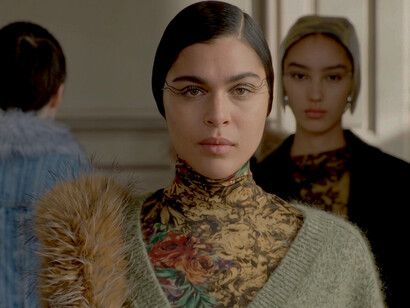
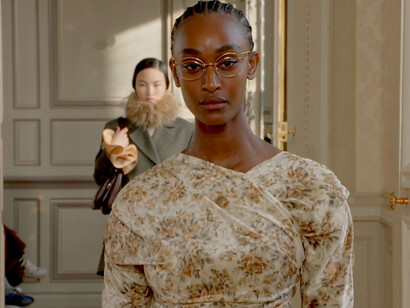
Florals reimagined: flowers, a recurring motif in Ganni’s design lexicon, appeared not simply as prints but as woven texture, embroidery, and softened 3D tactile detail — every bloom contributing to the affective persona of the wearer.
This combination of intuitive construction, fabric innovation, and emotional sensuality allowed Ganni to elevate womenswear beyond seasonal trends, rooting cutting and fabrication in narratives of freedom, nature, and identity.
Fall/Winter 2025/26: cutting as cocooning
In contrast to the ease of SS26, Fall/Winter 2025/26 (FW25/26) revealed Ganni’s capacity to navigate colder seasons with resilience and warmth. The brand’s runway reaffirmed that cutting — even for winterwear — could convey protection without sacrificing expressive subtlety.
Layered protection meets expressive play
Ganni’s FW25/26 designs showcased garments that felt cocooning yet expressive:
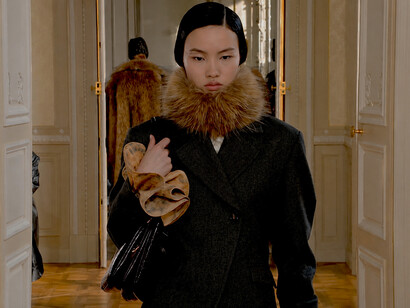
Voluminous coats and soft tailoring: cocooning silhouettes dominated outerwear — broad shoulders, generous sleeves, and enveloping forms that suggest shelter. These contours were further softened with pattern work that referenced domestic interior elements, tying comfort directly to personal space.
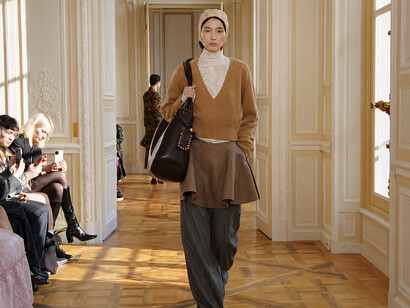
Mixed textures with intent: corduroy suits, tweed jackets, and layered knits were cut not merely for warmth, but for their capacity to interact with the body’s motion. Undertones of patchwork, checks, and floral motifs disrupted classical winter shapes, reaffirming Ganni’s commitment to expressive layering.
Cocooning meets structure: even within protective layers, Ganni retained architectural considerations — such as tailored blazers or fitted denim — grounding the collection in purposeful precision.
Together, these elements suggested that cutting at Ganni does not begin with a template but with a human experience, whether that’s the freedom of a summer breeze or the comfort of a winter’s embrace.
Ditte Reffstrup’s creative vision: from personal history to collective imagination
Understanding Ganni’s cutting and design requires an appreciation of its creative director’s values. Ditte Reffstrup has built Ganni’s identity around a core philosophy: clothes as emotional companions rather than status symbols.
Personal narrative as design generator
Reffstrup frequently channels her personal history—from Danish summers to nostalgia tinged with youthful adventures—into her collections. These references are not alias motifs but structural DNA, informing choices in texture, silhouette, and form.
The SS26 collection explicitly drew from this place of inward reflection, translating it into a wardrobe that feels intuitive and intrinsically wearable.
Craft meets sustainability
Beyond aesthetics, Reffstrup’s approach to cutting is informed by Ganni’s sustainability commitments — a thread which has dramatically reshaped how fabrics are selected and integrated. From experimental materials in Ganni’s Fabrics of the Future initiative to biofibre explorations, fabric consideration now precedes cut and pattern.
This integration of craft and conscience suggests an enduring aspect of the Ganni aesthetic: design that respects both the body and the planet.
Projecting 2026/27: the future of form and feeling
As we look ahead to the 2026/27 season, it’s worth synthesising the trajectories already visible in Ganni’s recent work. While specific runway details for 26/27 have not yet been publicly released, we can anticipate several potential directions based on continuing themes:
Emotional craft as structural logic
Reffstrup’s continued commitment to storytelling will likely drive garments that feel personal and expressive. In the context of cutting:
Expect silhouettes that communicate presence over perfection — forms that nurture individuality rather than conform to rigid codes.
Cutting may lean further into asymmetry and intentional imperfection, echoing wider cultural impulses toward authenticity and impermanent expression.
In this sense, the bare line between tailored precision and loose, narrative draping could become Ganni’s hallmark.
Sustainability becomes structural innovation
Given Ganni’s ongoing fabrics research, cutting and pattern work may increasingly respond to the properties of new materials rather than traditional cloth hierarchies:
Biofibres and sustainable weaves could necessitate novel seam structures or bias cuts that celebrate material behaviour.
Lightweight engineered fabrics—emerging from the brand’s innovation labs—might prompt adaptive shapes that respond to macro-movement, climate, or even wearer body language.
This could redefine how Ganni conceives tailoring — as responsive, almost kinetic fashion rather than static form.
Narrative layering and modular clothing
Another plausible direction involves modular design — garments designed to be built on and transformed:
Pieces with detachable elements, reversible details, or multi-functional panels.
Cutting that anticipates assembly moments — zip-on skirts, foldable collars, reconfigurable sleeves.
Such modular cutting would resonate deeply with consumer narratives of sustainability, personalisation, and lived versatility.
The continued poetics of colour and texture
While cuts and silhouettes will evolve, Ganni’s colour language and texture play remain central:
- Anticipate a continued dialogue between bold hues and tactile subtleties, where cut becomes a canvas for emotional resonance.
Such an approach keeps form and feeling entwined — a through-line in Ganni’s design journey.
The poetics of cutting at Ganni
In mapping Ganni’s 2025/26 cutting and design inspiration, we arrive at a clear insight: clothing becomes a catalyst for feeling, not just appearance. The brand’s garments act as living structures — responsive, tactile, and deeply personal.
Looking toward 2026/27, this sensibility shows no signs of slowing. If anything, Ganni’s design evolution suggests a future where cutting is conscious first, then creative — a practice grounded in empathy, sustainability, and narrative depth.
In such a world, womenswear becomes more than garments: it becomes architecture for experience, sculpture for movement, and poetry in motion.