English
 Español
 Français
 Deutsch
 Italiano
 Português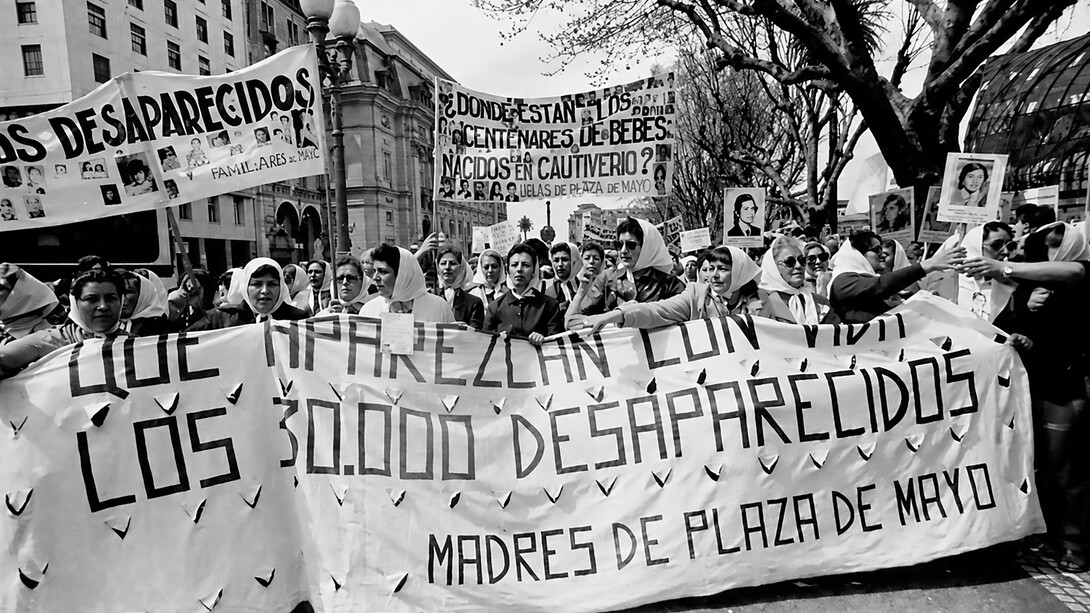
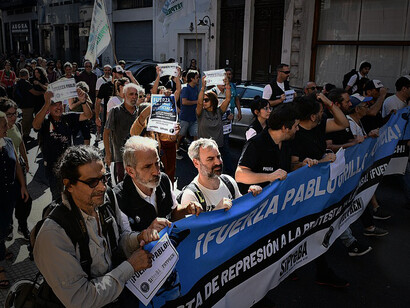
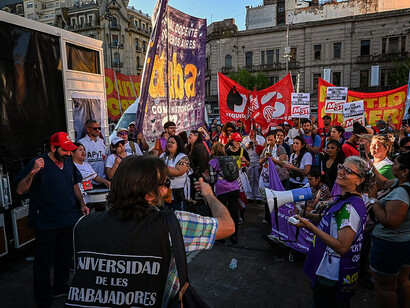
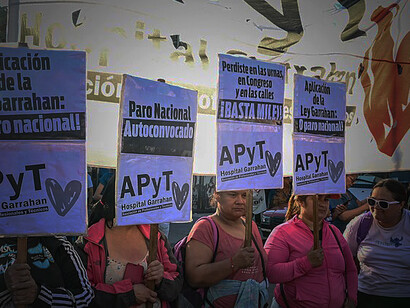
This year marks the 50th anniversary of the military coup that ushered in Argentina’s last dictatorship in 1976. For decades, March 24 has been one of the country’s most powerful civic rituals. Each year, tens of thousands of Argentinians take to the streets to commemorate the victims of state terror and reaffirm their democratic commitment to memoria, verdad y justicia – memory, truth and justice. What began as a demand from grieving families searching for an estimated 30,000 disappeared gradually became something larger: the moral language that defined Argentina’s post-dictatorship democracy.
But this anniversary arrives at a moment when that moral compass is under assault. Argentina’s president, Javier Milei, relishes flouting taboos around the country’s democratic consensus—questioning the scale of the dictatorship’s atrocities, celebrating the military, and deriding activists as corrupt opportunists. As president, Milei has marked each anniversary of the coup with controversial videos questioning the number of victims or equating state repression with violence by leftist guerrilla groups. This year, rumours are abundant that he could pardon military officers convicted in landmark crimes against humanity trials—a move that would shatter a central pillar of Argentina’s post-dictatorship settlement.
I’ve been thinking about all of this because I’m planning to go back to Argentina soon. It will have been three years since my last visit. And the country I knew—or thought I knew—feels like it’s changing into something else entirely.
On my last trip, the blue dollar was still a way of life. I remember the quiet arithmetic of it: the unofficial exchange rate that made Buenos Aires feel like a bargain, the arbolitos on street corners shouting 'cambio, cambio', and the wads of pesos that turned a coffee into a serious transaction. That parallel economy was its own kind of Argentine truth, where the official story never quite matched my reality.
Now, I’m told, the currency has stabilised. Milei’s shock therapy has done what years of Peronist price controls could not: the gap between the official and blue dollars has all but vanished. For the first time in a long time, Argentina feels like a normal country to travellers—no more running to cuevas or hoarding crisp $100 benjamins.
The erasure begins
The same government that disciplined the peso has also gutted the Instituto Nacional de Cine y Artes Audiovisuales. For anyone who loves Argentine cinema, this isn’t a footnote. INCAA was the engine of one of the world’s great film cultures: Martel, Trapero, Sorín, the New Argentine Cinema that spoke back to the dictatorship’s silences. It funded films that told the stories the state wanted buried—about the disappeared, about the ESMA detention centre, and about the children stolen from their mothers and given to military families.
Milei’s government has slashed INCAA’s budget by over 80 per cent. He has called it a "nest of ideology". And that’s precisely the point. Because memory, in Argentina, has always been ideological, in the best sense. It was never neutral. It was very much against forgetting.
What happens when you defund the institutions that preserve memory? You don’t just save money. You create a generation that grows up without the films, without the archives, and without the classroom visits from the Grandmothers of Plaza de Mayo. You don’t need to burn books anymore. You just stop funding the libraries.
A radical right-wing president challenging a long-standing democratic settlement is a familiar story. But Milei’s actions also reflect a harder truth: Argentina’s post-dictatorship consensus was always more fragile and incomplete than it appeared.
From the beginning of the democratic transition in 1983, debates over the violence of the past divided the country. Initial efforts towards accountability—such as the Nunca Más (Never Again) report and the landmark Trial of the Juntas—were quickly followed by laws limiting further trials, passed under pressure from the armed forces. The "theory of the two demons" became a dominant interpretive lens, resulting in an idea that minimised the reality of systematic state terror by framing the period as a tragic conflict between the government and left-wing guerrilla groups.
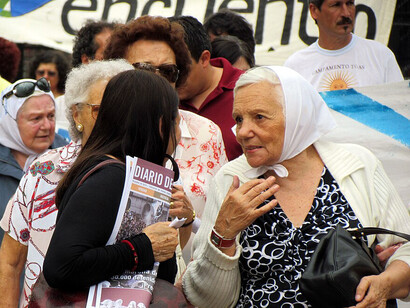
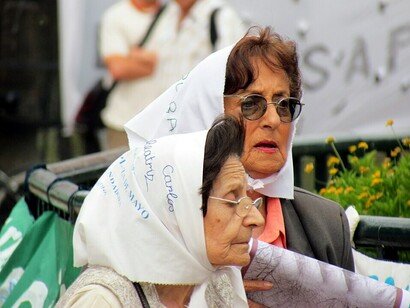
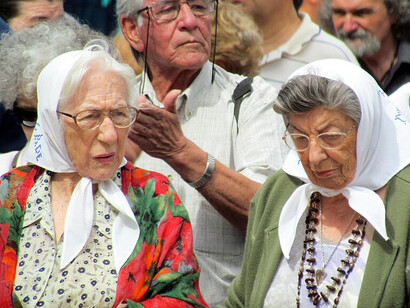
Yet thanks to the efforts of activists, whom many of them are relatives of the dictatorship’s victims, a broad moral framework has been consolidated. The dictatorship’s crimes were increasingly recognised as uniquely illegitimate, and demands for justice for the disappeared became central to Argentina’s democratic narrative. Human rights organisations such as the Mothers and Grandmothers of Plaza de Mayo rose from activist groups to national moral authorities. But this consensus began to fracture precisely as it consolidated.
Between 2003 and 2015, leaders such as Néstor Kirchner and Cristina Fernández de Kirchner overturned old amnesty laws, enabling the prosecution of hundreds of dictatorship-era crimes. At the same time, the language of human rights was embedded across school curricula and public commemorations. These policies expanded victim recognition and deepened the country’s reckoning with its past.
Yet for critics, this approach came to be perceived as an ideological project: the appropriation of historical memory for political legitimacy. And for the disenchanted, the policies came to represent hollow symbolism from leaders who seemed unable to solve the country’s deeper crises.
Milei is hardly the instigator of Argentina’s memory wars, but his government has taken denialism further than any predecessor, turning it into state policy: slashing funding for human rights bodies and investigation of dictatorship crimes, labelling education about the dictatorship as "indoctrination", and openly promoting the discredited "two demons" narrative. UN human rights experts have warned of "alarming setbacks" in Argentina’s historic commitment to memory, truth and justice. Milei now shouts to stadium crowds what was once whispered behind closed doors, framing these fights as a backlash against activist excess—the same playbook used against feminism and other progressive movements.
None of this diminishes the extraordinary achievements of Argentina’s human rights movement. Few countries have pursued accountability so persistently. The trials of former military officials, the recovery of stolen children by the Grandmothers of Plaza de Mayo, and the transformation of former torture centres into public memorials are remarkable examples of democratic memory.
But I wonder: when I land at Ezeiza, will the abuelas still have their weekly vigil in the Plaza? Will the Espacio Memoria at ESMA still be fully funded, or will it feel hollowed out, understaffed, and like a monument to a consensus that no longer governs? Will young Argentinians—many of whom voted for Milei because they were tired of inflation and corruption—know what the vuelos de la muerte were? Or will that knowledge become a niche interest, like Latin declamation?
I am no longer going to lean into the blue dollar. That small, familiar anxiety—how much will I actually pay today? Seems to have been engineered away. Stability is a kind of peace. But so is memory. And I am afraid that the second piece is being traded for the first.
What country will I find when I go back? I don’t know yet. But I’m going to find out. And I’ll write to you from there.