English
 Español
 Français
 Deutsch
 Italiano
 Português
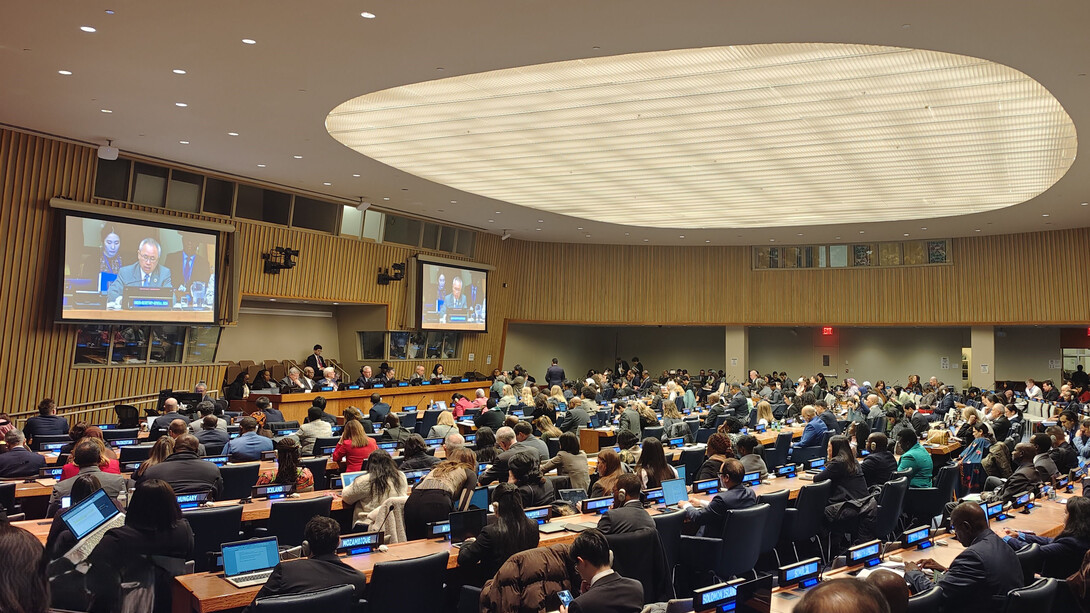
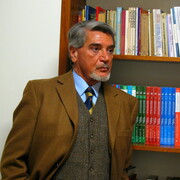
The resignation of Francisco Rojas Aravena as Rector of the University for Peace (UPEACE), created by the United Nations General Assembly in 1980 and established in Costa Rica, is an event that goes beyond the circumstances of a university crisis. It confronts us with a paradox of our time: while humanity is passing through a period of intense international conflict, an institution conceived to train professionals committed to peace, dialogue and the peaceful resolution of conflicts is encountering serious difficulties in guaranteeing its own functioning.
Rojas Aravena, a Chilean political scientist of recognized international standing, took office as Rector in 2013. His resignation, announced in October 2026 and effective as of the 31st of that month, brings to light institutional problems that deserve a public explanation and a deeper reflection on the future of the University.
In his message to the academic community, Rojas Aravena attributed his decision essentially to the impossibility of relying on a duly constituted University Council, an indispensable condition for the exercise of the powers that the International Charter and the Statute of the institution confer on its authorities.
According to the information released, the lack of appointments to complete the Council has obstructed essential decisions, among them the approval of budgets, the review of audits, the authorization of new campuses and the procedure for selecting a new Rector.
The origins of UPEACE and the reasons for the Rector's resignation
In 1980, a Costa Rican president persuaded the United Nations General Assembly that a country without an army could host the world's university for peace. Rodrigo Carazo achieved this with resolution 35/55. Forty-six years later, that university has campuses on three continents, a President of the Republic among its doctoral graduates and an Italian seat in the heart of Rome. What it has lacked for months is a Council capable of governing it. That is why its Rector, Francisco Rojas Aravena, announced his resignation on 19 October.
The letter deserves a careful reading before conclusions are drawn. Rojas Aravena does not leave defeated. He leaves because the body that should approve his budgets, receive his audits and, when the time comes, choose his successor does not exist in its legal composition. The Statute provides for 17 Council members, ten of them appointed by the UN Secretary-General, plus the nominees of UNESCO and of the Government of Costa Rica. All three channels are stalled, for reasons that have nothing to do with Ciudad Colón: the uncertain succession of Guterres in New York, the change of leadership at UNESCO, the change of government in San José.
The Rector himself describes the result bluntly: "It is not possible to approve budgets, take note of audits, approve new academic campuses or promote emergency measures." Not even the cuts demanded by the decline in international cooperation can be formalized. A rector without a Council does not govern: he waits. And Rojas Aravena has decided that UPEACE cannot afford to wait with him at the helm.
The irony is that the handover had been planned. The Council, at its Rome meeting in June 2025, had set the procedure for electing the new Rector, to begin in May 2026. It never got under way: the Council members who were to conduct it were missing. The resignation is the way to break the deadlock from the only side that can still move. Since 19 October, day-to-day management has fallen to the Vice-Rector, the Venezuelan Juan Carlos Sainz-Borgo, whom the Council, once it exists again, will have to confirm as interim Rector before resuming the selection process.
What Rojas Aravena leaves behind deserves to be told from this side of the Atlantic. Because a zone of peace and a nuclear-weapon-free region such as Latin America, which has contributed so much to international peace, could lose both the headquarters and the Rectorship of UPEACE, and the region would thereby slide from marginality to irrelevance in the international system.
During his tenure, UPEACE obtained authorization to offer training and graduate programmes in Spanish, something that for decades had not been possible at a UN university based in a Spanish-speaking country. In November 2021 it opened the Bucaramanga campus, in cooperation with the University of Santander, and together with the University of Cali it created a master's programme in post-conflict studies that has graduated dozens of people committed to implementing the Colombian peace agreements. Honduras, El Salvador, Mexico and the Southern Cone are calling, according to the letter, for an ever greater presence.
There is a chapter that few people know about. Together with UNHCR and IOM, and in coordination with the Government of Costa Rica, UPEACE took part in a humanitarian project which, in the Rector's words, "saved the lives of hundreds of people from the Central American region," who were able to rebuild their lives elsewhere. A university for peace that did not confine itself to studying forced migration, but helped to prevent it.
The overall record is equally solid: all the master's programmes at the main campus accredited by Costa Rica's SINAES and by European institutions; a campus in Somalia since 2021, where the current Somali President completed his doctorate; a doctoral programme in Beijing since 2020; some five hundred graduates of the Asia Peace Scholar programme with the Nippon Foundation; in Rome, a seminar on artificial intelligence and peace that received a message from Pope Leo XIV, and a master's programme in interreligious dialogue born under Pope Francis; in Turin, the training of lawyers against organized crime together with UNICRI.
The Rector does not sidestep the internal tensions. He recounts that he met with staff, students and alumni, that he listened to criticism and that he took difficult decisions which "generate resistance." He states that he cannot conceive of holding the office without the full support of his colleagues. And in an annexed document he rejects the accusations contained in an anonymous statement, which he describes as false and defamatory. Anyone looking for a confession in his letter will find instead a precise idea of what it means to lead: one leads by consensus or one does not lead at all.
A question remains for the region. Costa Rica founded this university, hosts it and has a seat on its Council. That its new government should promptly complete the appointments that fall to it is the least it can do for Carazo's legacy. The rest depends on New York and Paris. In the meantime, as Rojas Aravena writes in closing his letter, "if you want peace, work for peace." In Ciudad Colón, the work has been done. Now it is up to others.
The crisis of multilateralism
The University for Peace was born of one of the most dramatic experiences in human history: the two world wars that stained the twentieth century with blood. The United Nations was created to prevent such tragedies from ever happening again. Its Charter expressed the will to replace force with law, confrontation with cooperation and war with the peaceful settlement of disputes.
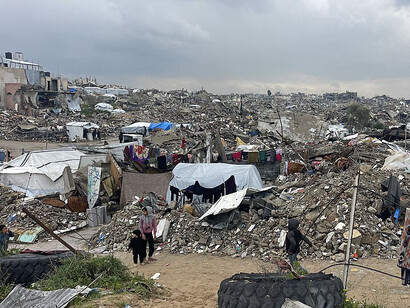
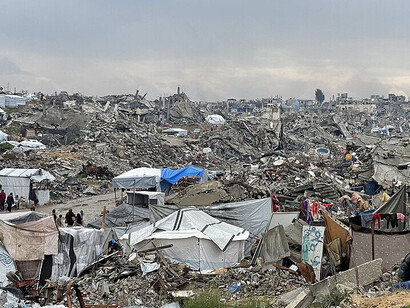
Yet eight decades later, that ideal faces a crisis of extraordinary magnitude. The wars in Ukraine and the Middle East, the armed conflicts in Africa, nuclear threats and strategic competition among the great powers make up an international scenario in which recourse to force is once again prevailing over the mechanisms of negotiation.
Multilateralism, conceived as an instrument for organizing coexistence among sovereign States, is undergoing a progressive weakening. The United Nations Security Council is frequently paralysed by the exercise of the veto and by the conflicting interests of the powers that sit on it.
The principle of cooperation is giving ground to geopolitical and geoeconomic competition. International institutions, created to express the common interests of humanity, are subjected to pressures that compromise their effectiveness and legitimacy.
The crisis of the University for Peace must also be understood in that context. Not because the difficulties of the international system automatically explain its internal problems, but because they reveal the gap between the commitments proclaimed by multilateral institutions and the political and institutional resources actually devoted to fulfilling them.
Barbarism at the heart of civilization
The word barbarism originally designated that which lay outside the world considered civilized. But the twentieth century demonstrated that the greatest atrocities could arise precisely from societies that had attained high levels of scientific, technological and cultural development. Auschwitz and Hiroshima remain as testimonies to that terrible contradiction.
Today, well into the twenty-first century, humanity possesses technological instruments that would have been unimaginable to earlier generations. Artificial intelligence, the digital revolution, biotechnology and scientific advances expand our capacity to transform the world. Yet that material progress has not been matched by an equivalent development of our moral conscience.
Never have we had so many means of communicating with one another and, paradoxically, rarely has it been so difficult to understand one another. Never have we accumulated so much knowledge and yet we continue to show an alarming inability to resolve our differences peacefully.
Contemporary barbarism does not manifest itself only in wars. It also appears in intolerance, hate speech, the dehumanization of the adversary, contempt for cultural diversity and indifference to the suffering of others.
When politics ceases to recognize the adversary as an interlocutor and turns him into an enemy, democracy loses one of its essential foundations. When international relations abandon law in order to privilege force alone, coexistence among nations becomes a permanent contest for domination.
Peace is not simply the absence of war. It is a cultural and political construction founded on respect for human dignity, justice, freedom and coexistence among those who differ. That, precisely, was the inspiration that gave rise to the University for Peace.
To defend peace is to defend its institutions
The resignation of Francisco Rojas Aravena should be an opportunity to examine the responsibilities that led to the crisis and to strengthen the University's governance mechanisms. His tenure deserves an assessment grounded in its academic and international contributions, despite the financial and institutional constraints.
It falls especially to the United Nations to help restore the functioning of the governing bodies provided for in the International Charter and to secure the conditions the institution needs to fulfil its mandate. It is not enough to proclaim the importance of education for peace. The institutions intended to promote it must be sustained.
The preamble to the UNESCO Constitution contains an affirmation that retains all its force: since wars begin in the minds of men, it is in the minds of men that the defences of peace must be constructed. The University for Peace is one of those defences.
Its continuity and strengthening should not depend on passing circumstances, nor be held hostage to administrative or political disputes. Its mission belongs to a deeper aspiration: to help humanity find paths of coexistence capable of overcoming violence and confrontation. The resignation of a rector may close an institutional chapter. It should not mean the weakening of an educational project that belongs, by its very nature, to all of humanity.
For the true barbarism of our time lies not only in the persistence of wars, but in our growing inability to imagine and build peace. To defend the University for Peace is to defend the hope that civilization may still prevail over barbarism.