English
 Español
 Français
 Deutsch
 Italiano
 Português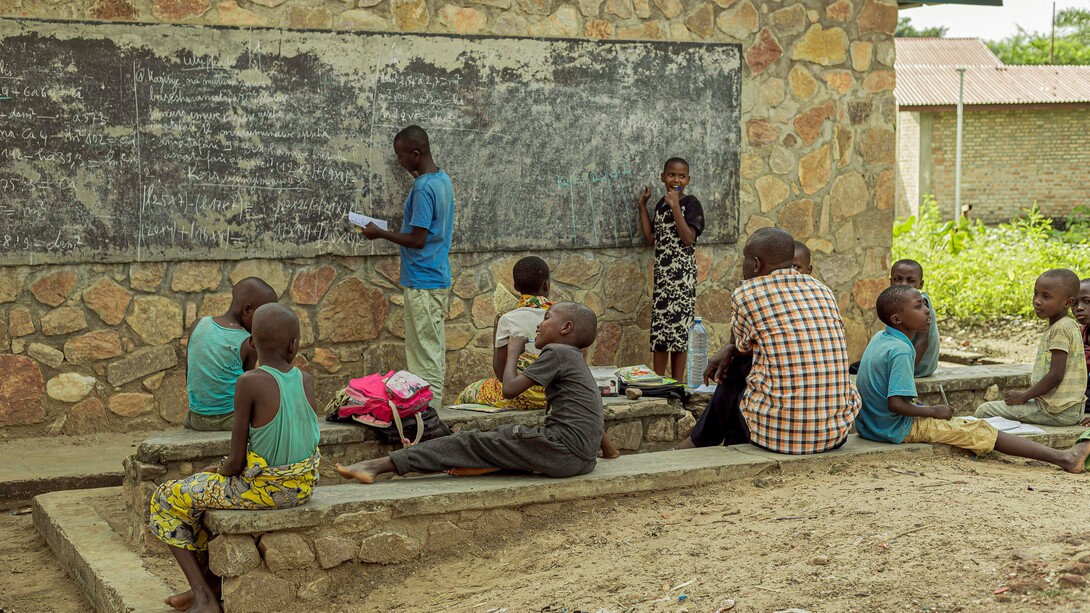
Development is a product of the acquisition of knowledge; it involves the awakening of potentials, the sharpening of thought, and, very importantly, it connects the key that unlocks both personal freedom and collective progress; and all of these processes that trace to development can be encapsulated in one word: “education”. In simple terms, education is defined as learning, whether in a classroom, at home, at work, or through life experiences.
Education helps to acquire skills, values, and attitudes that enable a person to understand the world and function effectively in it. Education can be formal, entailing classrooms and their accessories, or informal, that is, organised learning outside school, which can be vocational or workshop trainings and even family or societal influence and impact.
Over the years, education has become the platform upon which nations stand, grow, and develop. Nations and civilisations have migrated from one era of advancement to another through the indispensable power of education. To this end, it was not a surprise when the United Nations General Assembly on the 3rd of December 2018 proclaimed the International Day of Education and was first celebrated on the 24th of January 2019.
Subsequently, this day has been given the needed attention; however, there still exists this chasm between nations of the world when considering the topic of education. In today’s world, the influence of education has, by default, segmented the world into the first world or very advanced nations, the fast-developing nations, and the underdeveloped nations, otherwise called the Global South.
We can easily tell that this categorisation is directly proportional to the level of educational investment of these nations, combined with all other economic indices. The question is, how do we balance the educational disparity, and as a case of paramount urgency, how do we improve education in the Global South nations?
Simple research will show that employment, good governance, industrialization, discipline, and morality, to some extent, are all tied to quality education. Moreover, we have seen successive governments in third-world nations advocate for quality education, but the advocacy over the years has not been proportional to the investment, and therefore it's been tales by moonlight.
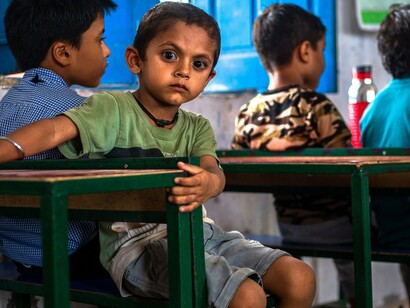
As it is now, the unemployment and consequently inability to fund education in the Global South is staggering; in Nigeria, for instance, records hold that there are about 10.5 million children currently out of school, mainly ages 5 to 14. That means approximately 1 in every 5 out-of-school children globally is Nigerian. There are about 1.2 million children (ages between 4 and 17) out of school in Ghana; out of the stated figure, nearly 942,000 have never attended school at all. In Pakistan, about 25–26 million children (ages 5 to 16) are out of school. This is the second-highest number in the world after Nigeria. A large percentage of these children are girls, especially in rural and disadvantaged regions.
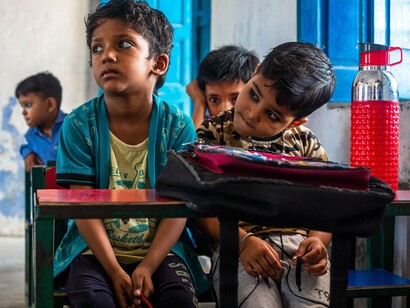
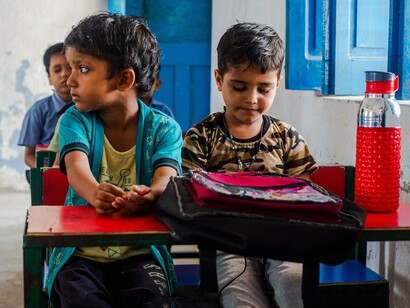
In India, there are about 1.17 million children currently out of school. Despite improvements, challenges remain in rural areas and among marginalised groups. As we have seen of the four nations above, so it is in other continents with underdeveloped areas not mentioned here. To reduce unemployment in the Global South, governments, organisations, stakeholders, and well-to-do individuals must declare a state of emergency in the educational sector.
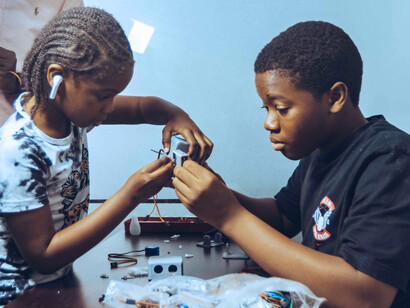
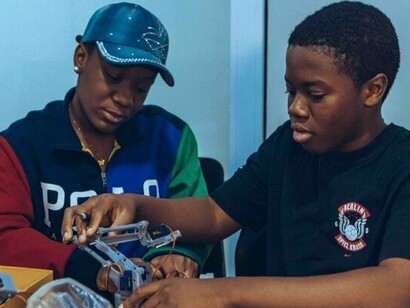
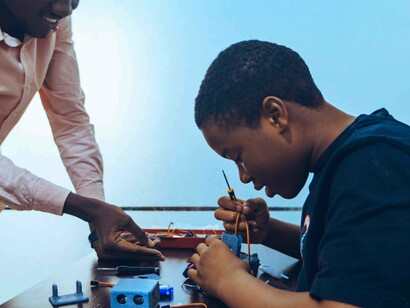
While considering educational investment, the focus must not just be on formal education; informal education is a very strong medium for building any economy. Take China, for example; it is one of the most industrialised nations in the world today that has heavily leveraged vocational and workshop education. A lot of emphasis has been laid over the years on formal education to the detriment of so many.
As a matter of reality, any nation that embraces both seems to do much better. But neglecting one for the other does more harm than good. Theory gives practical, real-time perceptions and comprehension, while practical endears the skill to the brain, heart, hands, and soul. Therefore, the man who has gained both theoretical and practical knowledge has indeed gained knowledge in full.
The crux of this piece is to encourage the United Nations General Assembly that while celebrating Education Day on the 24th day of the first month of every year, it must begin to look much more into the educational malnutrition in the Global South, which in turn has resulted in high unemployment and inevitably struggling economies flanked by poverty and crises of different shades. Education is a solid foundation anyone can build on, and anyone without formal or informal education is more or less a liability.
From breaking the cycle of poverty to boosting economic development to improving health and well-being to gender equality, strengthening democracy and stability, and most profoundly addressing unemployment and underemployment, education holds a very high stake.
To neglect education is to neglect advancement. The Global South must have a rethink and re-engineer the educational sectors of their various nations to match current economic realities. This includes budgeting beyond the United Nations, 20% of public expenditure to education, which is budgeting about 10% or more of GDP to education, if they will ever come near or meet up with the advanced nations. Beyond awareness, this is a call to duty, a need for survival; else the worst might just be locking around not just for these nations but for the entire world.
One of Africa's greatest leaders, Nelson Mandela, said, 'Education is the most powerful weapon which you can use to change the world.' Just to buttress that fact, Malcolm X said, "Education is the passport to the future, for tomorrow belongs to those who prepare for it today."
Enough of having out-of-school children, enough of unaffordable education, enough of sordid environments for learning, enough of lack of or no teachers, and enough of overcrowded classrooms in the Global South nations.
It’s time to shift the narrative, to realign the compass. This will take a lot from the government and other stakeholders; however, Benjamin Franklin said, "An investment in knowledge pays the best interest."Aristotle, the great philosopher, corroborated when he said, "The roots of education are bitter, but the fruit is sweet..." The Global South leaders must keep to heart the words of Confucius: he said, 'Education breeds confidence.' Confidence breeds hope. Hope breeds peace.
Apart from sincerity, good conscience, and proper negotiations, one way to end the crisis in the Global South is to get the people educated. Education breeds peace and equality; it eradicates poverty and enhances growth and development. The continuous expansion of banditry in some of these nations has become a cause for concern.
These atrocities are perpetrated by young men who are supposed to be tools of development, but they have been recruited by some enemies of progress to inflict eternal pain on many, while they benefit from the nefarious activities. The obnoxious act of these anti-state actors has not just commonised the sacredness of life but has so proliferated arms that it has become natural to see herders and non-military personnel with assault rifles in bushes, towns, and even city centres for no justifiable reason.
And gradually, the world is drifting back to the state of nature as postulated by Thomas Hobbes, where might is right. He described the state as “solitary, poor, nasty, brutish and short,” a state where men are driven by self-interest, fear, and the desire for power by all means possible. Where there is no security but constant conflict, injustice, and very predictable little or no government presence or intervention. And it will be difficult to argue against all of these in the Global South, a direct product of poor education.
Conclusively, education remains the most powerful lever for transformation in the Global South. Education must now grow beyond just certification to practical skills, critical thinking, and the necessary adaptive techniques required in a rapidly changing world. Furthermore, deliberate efforts must be put in place to integrate both formal and informal learning systems, teachers must be empowered, infrastructures strengthened, and technology responsibly leveraged to close the inequality gap.
The Global South cannot afford to continually get education wrong; the cost is too great.
As the world continues to celebrate the International Day of Education yearly, let's all remember to contribute a quota to the part of the world that needs educational recuperation, or we might all suffer for it. Let's not consider the cost; let's consider humanity and a world that is good for us all. Derek Bok said, 'If you think education is expensive, try ignorance.' The world must not allow ignorance to prevail over knowledge. We all must get hands-on for better and quality education for all; it begins with you.