English
 Español
 Français
 Deutsch
 Italiano
 Português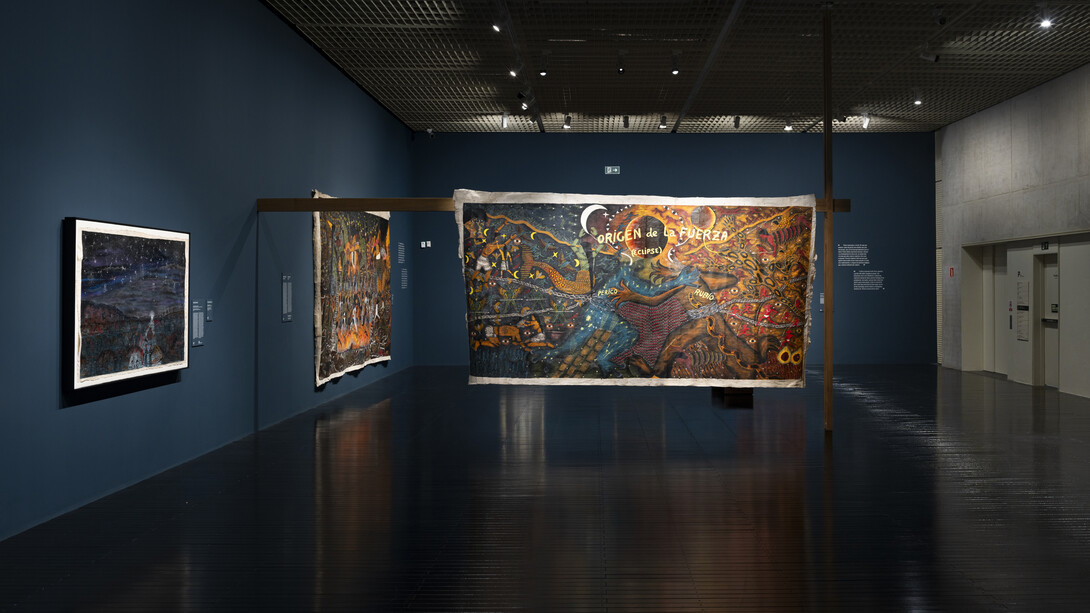
MASP – Museu de Arte de São Paulo Assis Chateaubriand presents, from April 2nd to August 2nd, 2026, the first in Brazil to focus on the works of Santiago Yahuarcani (Pebas, Peru, 1960), artist who gives form to the physical and spiritual beings that make up the identity and culture of the Uitoto indigenous people, located in the Amazon region between southern Colombia and northern Peru. Yahuarcani intertwines his people’s cosmology with a condemnation of extractive violence against indigenous peoples in the Amazon. Curated by Amanda Carneiro, curator, MASP, Santiago Yahuarcani: the beginning of knowledge features 35 works that invite viewers to immerse themselves in Uitoto knowledge, myths, and traumas.
The works are grouped in five sections: Painting Sounds, Time of Bloody Tears, Spiritual Worlds, Sacred Plants, and Guardians of the Amazon. The exhibition draws its title from the work El principio del conocimiento [The beginning of knowledge] (2019), in which we see, at the center of the canvas, a coca leaf with a hand, emphasizing its aspect of a living being, and from this body’s mouth emerges a tobacco leaf. This work reflects the Uitoto’s creation story, a narrative in which Buinaima, the creator figure, confers wisdom to their people through coca and tobacco, two sacred plants used in spiritual and healing rituals for communicating with divine forces.
Yahuarcani articulates both a multilayered Uitoto cosmology and an ancestral legacy of resistance and survival during the rubber boom. His grandfather Gregorio Lopez survived the Putumayo Genocide that took place from 1879 to 1912, a period during which the destruction brought by rubber extraction companies led to the death of about 30.000 Indigenous people. In defining Yahuarcani’s art approach, curator Amanda Carneiro understands that he “uses painting as a tool to honor his ancestry and to denounce long-lasting injustices. The legacy passed onto by ancestors and family members surpasses practical abilities of expression; it represents a way of seeing the world that is deeply rooted in preserving Indigenous memories while acknowledging both the spiritual importance of nature and the power of storytelling.”
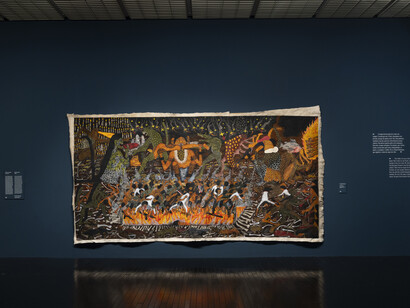
Titled Time of bloody tears, the second section of the exhibition highlights accounts of coercion, forced labor, and other forms of violence. It features works such as Lugar caliente [Hot place] (2023), a painting expressing the imbalance between the spiritual and the human. It depicts upside-down human figures thrown onto a bonfire, a comment on periods of persecution. “The rubber boom was a time of bloody tears – that’s how we the Uitoto people call it, because there was so much cruelty. We the descendants feel ancestral pain, for it was the destruction of our culture”, says Yahuarcani.
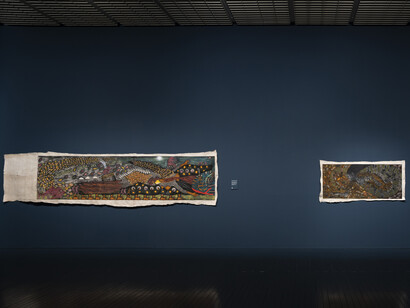
The Uitoto artist creates his paintings on llanchama, a type of fabric manufactured by him from the inner lining of bark from trees native to the Amazon. It emphasizes his proximity with the forest, which to him represents more than mere resources or landscapes, but rather a living being, guardian of knowledge and history.
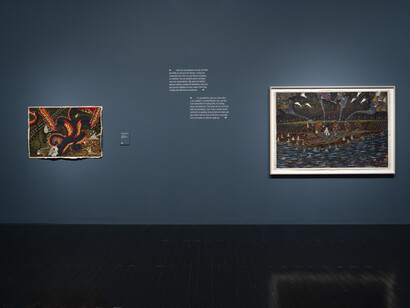
For the Uitoto people, there is no border separating what is material from the invisible, the present from ancestral legacies. The forest, the rivers, and the human beings co-exist with spiritual and physical life: there is no separation in the everyday world. Humans can morph into animals or plants, while the river listens and the earth responds. In Yahuarcani’s artistic practice, such a way of living has been representing through a profusion of figures, often hybrid and mythical. Featured in the section Spiritual Worlds, the painting Buinaiño — Dueña del mijano [Buinaiño — Owner of the mijano] brings depth to our understanding of the figures driving life in the Amazon. The Dueñas and Dueños [Owners] are spiritual authorities that govern both a territory and the living species, watching over the pact that balances humans and non-humans. Yahuarcani’s painting highlights Buinaiño, who serves as the guardian of the mijano, shoaling fish whose migration is vital to the life of riparian communities.
This exhibition has been organized in partnership with University of Manchester’s The Whitworth, where it was on view from June 2025 through January 2026, and with the Museo Universitario del Chopo, in Mexico, to which the show will travel by October 2026 and remain on view until March 2027.
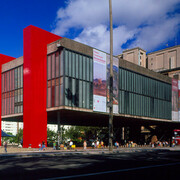
Santiago Yahuarcani: the beginning of knowledge is part of MASP’s annual program dedicated to Latin American Histories, which includes the exhibitions from the works of Claudia Alarcón & Silät, La Chola Poblete, Sandra Gamarra Heshiki, Colectivo Acciones de Arte, Damián Ortega, Sol Calero, Carolina Caycedo, Pablo Delano, Rosa Elena Curruchich, Manuel Herreros and Mateo Manaure, Jesús Soto and an international collective exhibition.
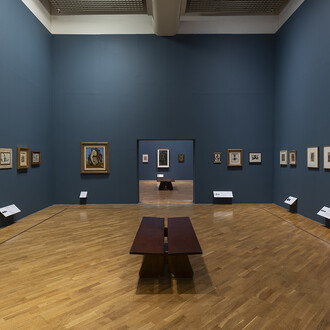
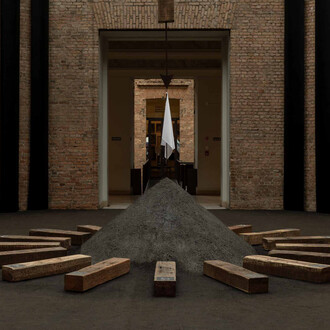
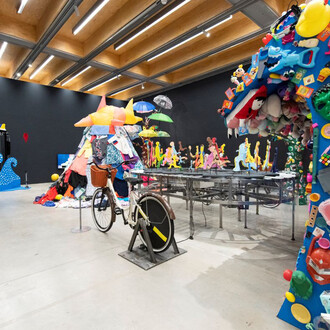
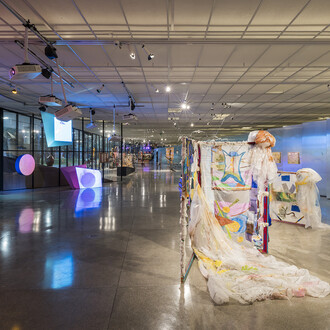
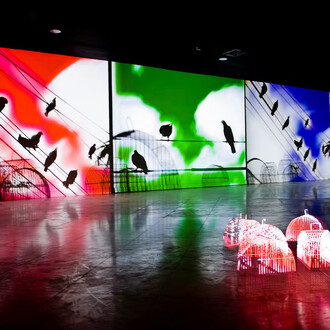
![Various artists, Histórias latino-americanas [Latin american histories], exhibition view. Courtesy of MASP](/attachments/2ec1b7615df2d9b9c3f211de14c70faefd850aea/store/fill/330/330/8481e63599516249cba60f15e188644bb76fc1eec25547e2c4b88b8f1c92/Various-artists-Historias-latino-americanas-Latin-american-histories-exhibition-view-Courtesy-of.jpg)