English
 Español
 Français
 Deutsch
 Italiano
 Português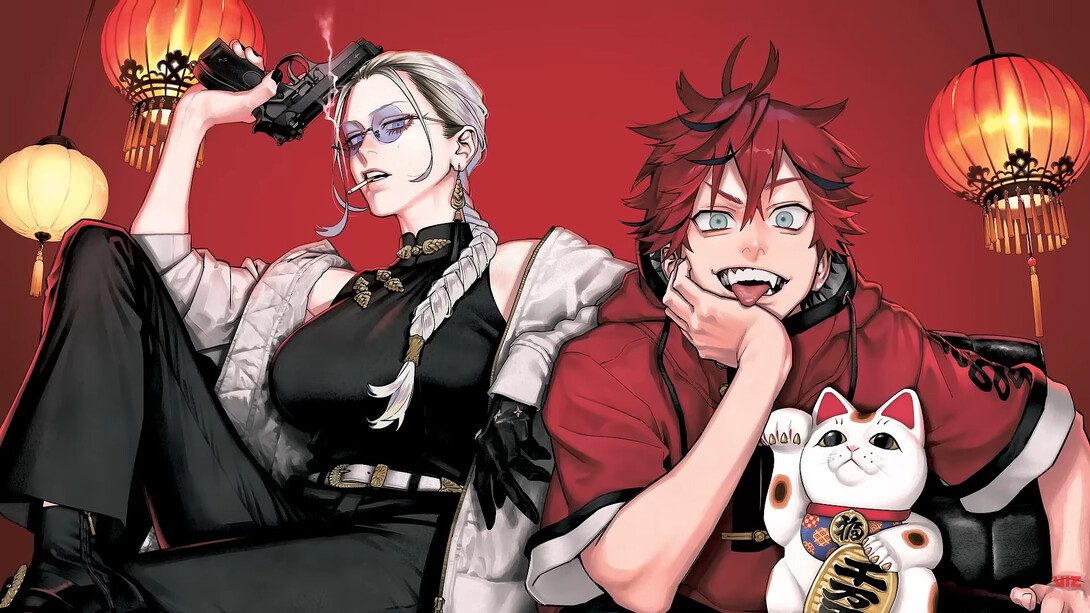
The internal logics and tropes that are particularly common to anime are easy to navigate for those who have been engaging with the medium since before its current ubiquity. However, for people on the outside—those who have never called themselves “otaku” or run like Naruto in the hallways while screaming in broken Japanese—there are a lot of things that fans take for granted that emerging fans of the medium might find surprising.
Why do we recognize pink hair as a sign of danger or instantly tell that the hidden secret of the pale-skinned anime girl with cold-coloured eyes is that she isn’t human?
Colour is one of the most important factors that are harnessed in character design and characterization not only in anime, but in other visual media as well. People have been assigning meaning to colour since time immemorial, and these associations are wired into our societies, albeit with different cultural connotations and contexts. For example, red is associated with passion, heat, and action, while blue is commonly associated with intelligence, logic, and calmness.
Shonen anime is especially privy to using visual markers to communicate different aspects of its characters. Over the past few decades, there have been a number of different kinds of anime/manga protagonists who emerged and influenced an entire generation after them.
In the case of Shonen Jump’s The Big Three, orange became a prominent colour. To describe Dragon Ball as a cultural touchstone would be a major understatement, but without getting into the impact of the iconic series across time and space, its protagonist is one of the most easily recognizable fictional personas, perhaps ever. Son Goku’s impact on the battle Shonen subgenre of anime and manga is immense, and in the generations that followed, many protagonists were effectively made in his image as happy-go-lucky simpletons whose overwhelming goodness turns foes into friends and tragedies into triumphs.
The primacy of orange was potentially as a result of the Big Three generation’s status as descendants of the Golden Age, the period between the mid-1980s and mid-1990s, which saw the rise of major titles like Dragon Ball, Rurouni Kenshin, Slam Dunk, and many others. Goku’s orange gi has been part of his character design ever since his introduction in the original Dragon Ball, and in subsequent generations of manga published in Shueisha’s Weekly Shonen Jump magazine, orange has been a major colour used to characterize battle Shonen protagonists who were inspired by the Dragon Ball narrative.
Kishimoto Masashi’s Naruto and Tite Kubo’s Bleach, titles that form two-thirds of the legendary Shonen Jump “Big Three," both featured main characters whose main colour scheme featured a vibrant orange in some way and often times contrasted this bright protagonist with a monochromatic deuteragonist. This character would be a foil who, despite being the polar opposite of the main character, develops a close relationship with them.
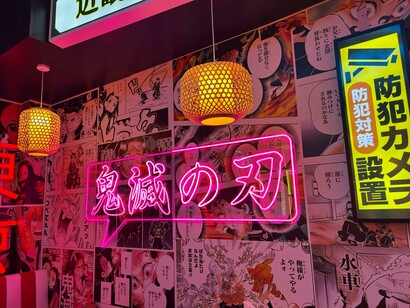
In the generation following the Big Three, which I dubbed the “Post-Big Three Era," titles like Horikoshi Kohei’s My Hero Academia, Tabata Yuki’s Black Clover and Gotouge Koyoharu’s Demon Slayer: Kimetsu no Yaiba all stepped away from the Orange Hero brand of Shonen protagonist. Once again, two-thirds of the flag-bearing titles of the generation feature main characters who share the same primary colour when it comes to their character designs: green.
Izuku “Deku” Midoriya from My Hero Academia is in fact so green that it is part of his name, with the “midori” in “Midoriya” meaning a literal "green." Meanwhile, Kamado Tanjiro from Demon Slayer sports an iconic haori adorned with a black and green checked pattern. These visual changes in the quintessential Shonen protagonist since the Golden Age would only be visual changes if they didn’t also come with clear changes to the personalities, goals and even the lived experiences of the characters in question.
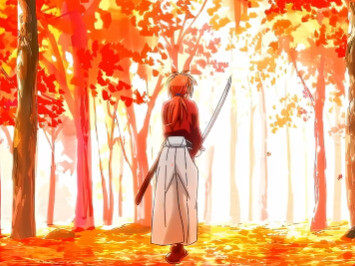
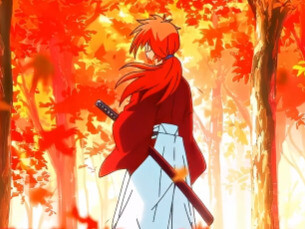
To better illustrate this idea of colour making the protagonist in anime and manga, I, rather begrudgingly, bring our attention to the now-disgraced legendary series known as Rurouni Kenshin (Samurai X in the United States). Set in Japan’s violent historical past, Rurouni Kenshin follows a pacifistic samurai roaming the land in the aftermath of the opening of Japan’s borders for the first time in 254 years, a time in which the “Warring States” period has drawn to a close and the power of the shogunate has begun to dwindle.
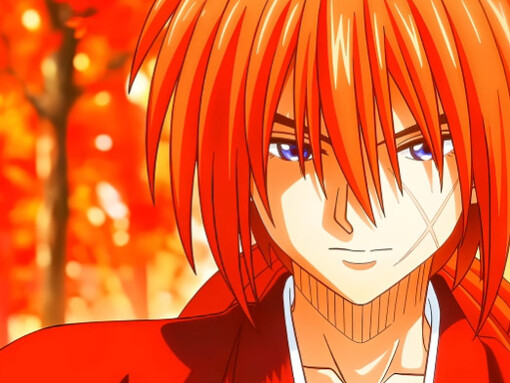
The titular character, Kenshin, is on a journey of atonement, as it turns out that he is the legendary "Battousai," a ruthless warrior who killed scores of people as a dog of the shogunate. With this dark past bubbling beneath the surface of a seemingly benevolent character, the predominance of the colour red in his character design is an interesting aspect because it isn’t all too common in battle Shonen.
Since Kenshin, the most notable characters to have donned red as a primary colour design include Nightow Yasuhiro’s Vash the Stampede from the Trigun franchise, as well as Arakawa Hiromu’s Edward Elric, the protagonist of Fullmetal Alchemist.
In all three of these cases, the adornment of the character with red clothing (usually some form of drapery like a coat, jacket, or haori) has seemingly been in relation to the character as a traumatized subject. Red is commonly associated with passion, heat, fire, or even blood. For these characters, the red that they wear is often a marker of horrific events that they were either part of or directly responsible for.
In the case of Edward Elric, the red jacket is a marker that connects to his arm and leg, which he lost as a result of attempting the alchemical taboo known as “Human Transmutation” together with his younger brother Alphonse. In an attempt to revive their deceased mother, the brothers wound up learning firsthand why certain practices are deemed taboo.
Alchemy is led by the law of equivalent exchange, which means that to gain something as substantial as a human life, something of equal value must be lost. As a result of their attempt to create human life, Ed loses his arm, while Al loses his entire body. Edward further sacrifices a leg to affix his brother’s soul to a nearby suit of armour—all of this taking place before either one has even turned twelve.
For Vash, the red jacket also communicates a hidden dark past. Interestingly, he is also a pacifist, an element that becomes all the more important to his characterization as we learn that the events of the Trigun universe are happening on a planet that is not Earth. Vash the Stampede, known as a heinous criminal, is actually some kind of alien life form who once lived alongside humans on a spaceship with his twin brother, Millions Knives.
Vash is seen as a heinous evildoer by all, but only because people incorrectly remember the sequence of events that led to the destruction of the largest human settlement on this unnamed planet: July. For centuries, Vash carries the guilt of annihilating all those human lives, even though it was not his fault but the nefarious setup of his brother, Knives, who, unlike Vash, has a body that is far less human. Where Vash was kind and passive, Knives grew cold and hostile, especially towards humanity due to the fact that humans made use of lifeforms known as “Plants” for their energy needs on this new planet.
Humans were unconcerned with the fact that these plants died painfully as a result, not to mention the fact that Knives and Vash are humanoid manifestations of these creatures. In Sano Yuto’s Gokurakugai, the protagonist, Alma, dons a red Chinese-inspired overcoat and has red hair. In this universe, monstrosities known as Maga feast on people in secret, and it turns out that Alma has Maga blood coursing through his veins. Jujutsu Kaisen protagonist Yuji Itadori dons the black uniform of Tokyo Metropolitan Jujutsu Technical High School, accented by a red hoodie.
Red is not only a communicator of trauma in this case but potentially also of grievous bodily harm experienced by the protagonist or someone else important to the narrative. Where orange once meant “happy-go-lucky simpleton," green communicated a Shonen protagonist who actually thinks more than his predecessors and tends to process his emotions more readily.
Even Ishigami Senku from Inagaki Riichiro and Boichi’s Dr. Stone sported some green accents in his character design, and his entire gimmick as a character is sheer intelligence. The delinquent protagonist from Togashi Yoshihiro’s Yu Yu Hakusho, Urameshi Yusuke, dons a green school uniform, which seems to be counter to his hotheaded personality.
However, Togashi’s most notable main characters, Yusuke and Gon Freecss from Hunter x Hunter, are both highly emotional characters who display high levels of empathy. In Yusuke’s introduction, we see him risk (and actually lose) his life to save a child from an oncoming car. Gon is happy-go-lucky like the “orange protagonists” discussed earlier; however, as time goes on, the audience learns more about the raging emotions hidden beneath the smile.
Green protagonists appear to be those who are pushed to the brink by some kind of greater circumstance, and while seemingly one way, their deeper personalities reveal high intelligence, empathy, and likability within their respective universes.
Tanjiro is a kind young man who refuses to abandon his little sister despite the fact that she’s become a demon. To take this even further, Tanjiro is the kind of person who’d shed tears for an enemy yet would never hold back against them in combat. Gon, despite his overwhelming joy, hides a deep darkness that only emerges when his father’s friend, Kite, is murdered.
The high empathy Gon exhibits throughout the narrative is terrifyingly absent when he finally encounters Kite’s murderer, Pitou, who finds themself desperate to save a life in the same way Gon wanted to save Kite. Yusuke, despite being a delinquent, is evidently a very kind individual, but like Gon, he hides a deep-seated darkness that manifests as his demonic final form.
When laying them out in this manner, it becomes evident that green protagonists in Shonen are primarily empathetic individuals who are forced to reckon with an internal darkness that threatens to consume them.