English
 Español
 Français
 Deutsch
 Italiano
 Português
There are moments when everything seems to be going right, yet one small thing goes wrong, and suddenly, that is all that can be seen. A single mistake in an otherwise perfect situation begins to feel larger than everything else combined. The mind circles around it, replays it, and slowly, the rest fades into the background. What was once a balanced picture starts to feel incomplete, even though most of it remains unchanged.
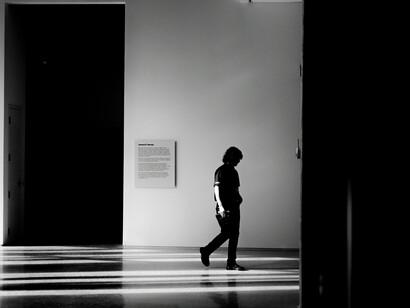
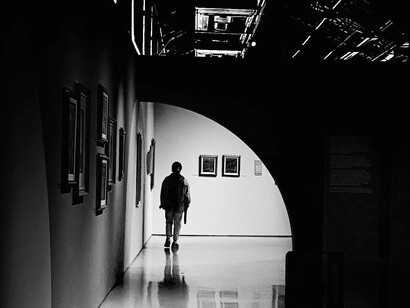
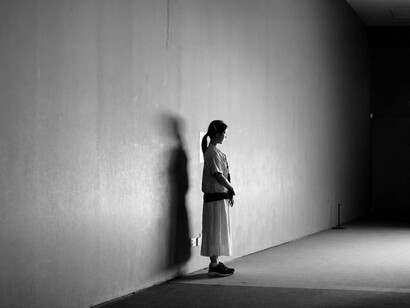
This way of thinking is surprisingly common. It reflects how attention works, not just in daily life, but also in design and art. The concept of negative space offers a useful way to understand this pattern. In visual design, negative space refers to the empty or unused areas around and between elements. It is not simply “nothing.” It plays an active role in shaping how something is seen, what stands out, and how the overall composition feels.
Interestingly, the human mind seems to create its own version of negative space. When one problem appears, it often becomes the focus, while everything else, everything that is still working, quietly disappears into the background.
Seeing through absence, not just presence
In design, negative space is not an afterthought. It is carefully used to guide attention. When a layout is too crowded, it becomes difficult to focus. When there is space, clear, intentional space, the eye knows where to go. The absence of elements creates clarity.
A well-designed page, for example, does not fill every corner. It leaves room. That room allows important elements to stand out. It gives structure, balance, and calm. Without negative space, even good design can feel overwhelming.
The same principle applies to perception. What is not emphasized becomes invisible, even if it is still present. This is not because it disappears, but because attention has limits. The mind can only focus on a few things at a time, and whatever falls outside that focus becomes part of the background.
This is where design and human thinking begin to overlap.
Why the mind focuses on what is wrong
Psychology offers an explanation for why the mind behaves this way. Humans are naturally more sensitive to negative information than positive information. This tendency is known as negativity bias, the idea that negative experiences, thoughts, or events have a stronger impact than positive ones (Baumeister et al., 2001).
From an evolutionary perspective, this makes sense. Paying attention to potential threats or problems helped humans survive. A mistake or a risk needed to be noticed quickly. As a result, the brain became wired to prioritize what is wrong over what is right.
In modern life, however, this same tendency often works against well-being. A small issue can feel overwhelming, not because it is large, but because attention is pulled toward it. Everything else, progress, stability, and positive moments, remains present but unnoticed.
This is similar to how a single bold element stands out in a minimal design. The difference is that in design, this focus is intentional. In thinking, it is automatic.
The mind’s version of negative space
When attention locks onto one problem, the rest of the experience becomes a kind of mental negative space. It is still there, but it is not being actively seen.
For example, consider a situation where most aspects of a project are going well, but one part fails. Instead of seeing the overall progress, the mind zooms into that one failure. The rest, the effort, the improvement, and the working parts fade away. The mental frame shifts from balanced to distorted.
This does not happen because the situation has changed significantly. It happens because attention has shifted.
In visual design, negative space is used to highlight what matters. In thinking, something similar happens, but often without awareness. The mind highlights what feels urgent or wrong, and everything else becomes background.
Research in attention and perception suggests that this narrowing of focus can influence emotional experience. When attention is centered on negative elements, emotional responses become stronger and more persistent (Kahneman, 2011). The issue itself may be small, but the way it is framed mentally makes it feel larger.
When clarity turns into distortion
Negative space in design creates clarity because it is balanced. It supports the main elements without overwhelming them. However, in human thinking, this balance is not always maintained.
When one negative element dominates attention, the “space” around it is no longer neutral. It becomes invisible. This creates a distorted view of reality, where the whole experience feels negative, even when it is not.
This is why one mistake can feel like everything is wrong. The mind is not evaluating the full picture. It is focusing on a single point and ignoring the rest.
This pattern is common in many areas of life, work, relationships, learning, and personal growth. A single comment can overshadow multiple positive ones. One failure can outweigh several successes. The focus becomes narrow, and the overall picture is lost.
Understanding this pattern is important because it shows that perception is not always accurate. It is shaped by attention.
What design can teach about balance?
Design offers a useful perspective here. Good design does not eliminate negative space; it uses it intentionally. It balances presence and absence. It allows important elements to stand out, but it also ensures that the overall composition remains clear and stable.
Applying this idea to thinking suggests that attention can be adjusted. Instead of allowing one negative element to dominate, it is possible to step back and see the full frame. This does not mean ignoring problems. It means placing them within context.
Just as a designer decides what to highlight and what to leave in the background, individuals can become more aware of where attention is going. This awareness does not remove negativity bias, but it can reduce its impact.
Research in cognitive psychology suggests that attention can be trained and redirected. Practices that encourage broader awareness, such as mindfulness, help individuals notice more than just the most intense or negative elements (Kahneman, 2011). This creates a more balanced perception of experiences.
Reframing what is seen and what is not
The idea of negative space offers a simple but powerful insight: what is not being noticed still exists. It continues to shape the overall picture, even if it is not in focus.
In everyday thinking, this means that positive or stable aspects of a situation do not disappear just because they are not being actively considered. They become part of the background, but they still matter.
Recognizing this can change how situations are interpreted. Instead of seeing one mistake as defining the whole experience, it becomes one element within a larger frame.
This shift does not require changing the situation itself. It requires changing how attention is distributed.
A quieter way of seeing
The connection between negative space and human thinking highlights something simple but often overlooked: perception is selective. Both in design and in life, what stands out is not always the most important thing; it is simply what has been given focus.
Zentangle, minimal design, and structured visual compositions all rely on the careful use of space and attention. They show that clarity comes not from adding more, but from understanding what to leave out and what to notice.
In the same way, mental clarity may not come from solving every problem immediately but from seeing the full picture, both what stands out and what quietly supports it.
When attention expands beyond a single flaw, balance returns. The frame becomes complete again. And what once felt overwhelming begins to settle into proportion.
References
Baumeister, R. F., Bratslavsky, E., Finkenauer, C., & Vohs, K. D. (2001). Bad is stronger than good. Review of General Psychology, 5(4), 323–370.
Kahneman, D. (2011). Thinking, Fast and Slow. Farrar, Straus and Giroux.
Hermanto, E., Kurnia, G. M., Nurmala, I., & Devy, S. R. (2025). Zentangle art to improving mental health: A scoping review. Jurnal Promkes: The Indonesian Journal of Health Promotion and Health Education, 13(1 SI), 227–234.