English
 Español
 Français
 Deutsch
 Italiano
 Português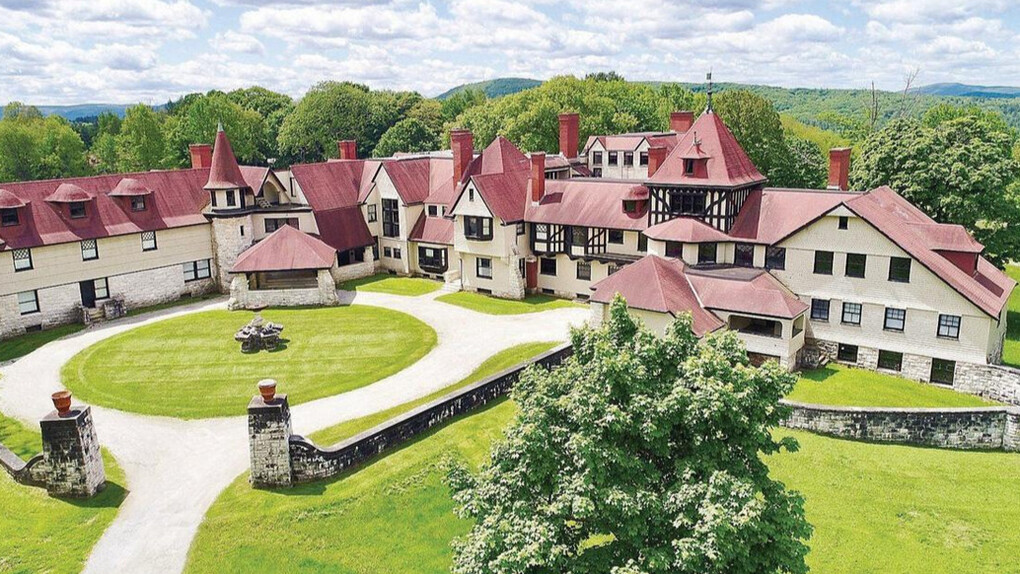
In the Gilded Age, as America surged with industry and excess, the Vanderbilts became its most dazzling symbol. A true rags-to-riches story, the family rose to massive wealth during the mid-1800s at the leadership of savvy railroad and shipping business tycoon Cornelius "Commodore" Vanderbilt. Growing up with modest means, Cornelius built an empire, and as generations were spawned, the family’s extreme wealth only grew.
By the start of the Gilded Age in the 1870s—an era defined by rising industrialism and rapid growth—the Vanderbilts were the defining family to epitomize the age. They showcased their wealth with large and extravagant estates in vacation spots down the East Coast and breathtaking mansions on New York's Fifth Avenue.
One of the first large homes built by a Vanderbilt family member was the Petit Chateau, a sprawling mansion located on Fifth Avenue with details based on the Hôtel de Cluny in Paris. A late Gothic-inspired home built with limestone and copper, the interiors of the mansion reportedly employed over 40 artisans who helped to create a space that, at the time, was unmatched in America in its extravagance. Demolished 44 years after construction, the home was considered an architectural marvel, but was just the beginning for a family who loved grand homes.
Although many of the great homes built by members of this well-heeled family are now gone, including the Vanderbilt Triple Palace, which was an elaborate family home with distinctive wings that housed art collections and decked out in priceless details throughout, many of the homes that remained are now open to the public. Here are a few ways one can explore the early Vanderbilt legacy themselves and step into the shoes of one of the wealthiest families in America.
The Breakers in Newport, Rhode Island
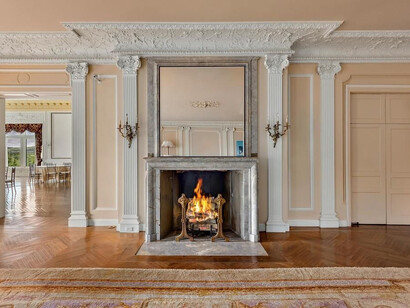
A seventy-room house built with imported marble, mosaics, and handcrafted ceilings and murals, The Breakers in Rhode Island is one of the most important Vanderbilt homes to survive. Rising above the Atlantic cliffs of Newport, the style is both European-inspired (the family employed many European artisans to build the interiors) and a showcase of American industrialism. The house even incorporated advanced engineering for its time, including steel trusses, masonry walls, and systems designed to make it nearly fireproof.
Built as a summer residence, the home spans over 125,000 square feet and is considered one of the most opulent summer “cottages” to ever exist. Although the mansion was used for generations as a place for the family to relax over the summer months, today the home is a popular tourist site where the public can view this architectural marvel.
The Breakers is now one of the most visited historic houses in America and the centerpiece of Newport’s famous mansion tours. Each of the large halls, like the Great Hall and the Dining Room, is breathtaking in both size and artistry. One begins to understand how these homes were designed not simply for living but for spectacle.
Biltmore Estate in Asheville, North Carolina
A family with a large appetite for grandeur, it's no surprise that the Vanderbilts are responsible for what is still considered the largest house in America. The Biltmore Estate, tucked away in the Blue Ridge Mountains, is one of the most famous Vanderbilt residences. Constructed between 1889 and 1895, the châteauesque home spans 250 rooms and is beautifully situated on thousands of acres of pastoral land.
Inspired by French Renaissance architectural styles, the home was originally imagined as both a private retreat and a cultural center. A place to entertain politicians, writers, and European aristocrats, many important meetings and parties occurred at this family home.
Beyond the house itself, the grounds also hold significant historical weight. The renowned gardens were designed by the father of American landscape architecture, Frederick Law Olmsted, who is perhaps best known for co-creating New York City’s Central Park.
Today, visitors can tour rooms filled with original furnishings, artwork, clothing, and an extensive library belonging to the Vanderbilt family, as well as the large gardens and vineyard located on the property. The home, unlike most of the American mansions built during the Gilded Age, is still privately owned by the family. Although no one actually lives in the Biltmore Estate today, the Vanderbilt family still own the estate and some family members reside in private homes on the land. The interiors of the Biltmore Estate are updated during the holidays, making it a popular tourist destination for those who want to be transported into the lives of a Gilded-era Vanderbilt.
Marble House in Newport, Rhode Island
Not far from The Breakers sits another Vanderbilt stunner, the Marble House, which was built in 1892 as a birthday gift. Rumored to have used half a million cubic feet of marble for the construction, the home is an architectural showpiece. Besides being an expensive and carefully-constructed palace, the home is also historically significant for its role in Alva Vanderbilt Belmont’s political ambitions. She regularly used her home to hold meetings and rallies to support women’s suffrage.
Originally costing 11 million dollars to build, today the home is a priceless piece of American history. Preserved as a museum, visitors are guided through French-inspired interiors and unique rooms, including a Chinese Tea House overlooking the Atlantic Ocean.
Elm Court in Lenox and Stockbridge, Massachusetts
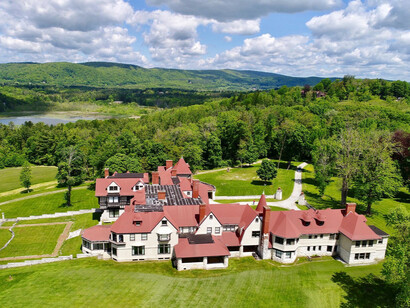
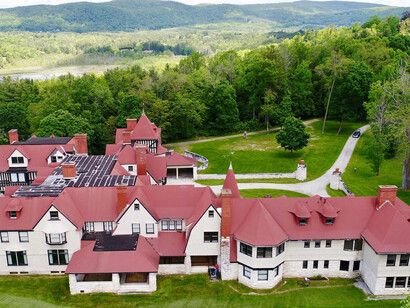
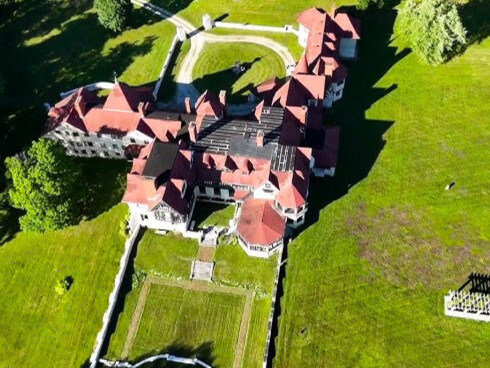
Like The Breakers, Elm Court in Massachusetts was originally built as a summer “cottage”. The sprawling estate (which is so large that it spills over to two different towns in Massachusetts) was once known as the forgotten Vanderbilt mansion.
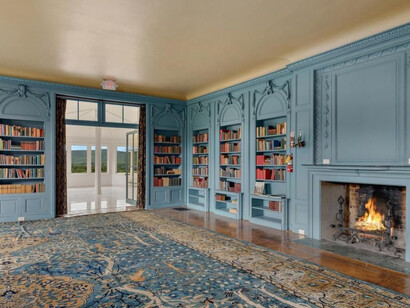
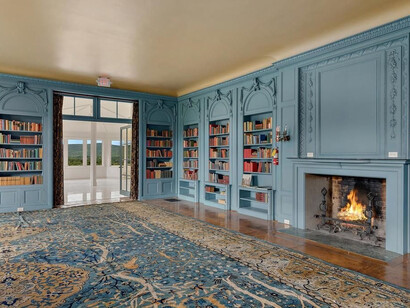
Recently purchased in 2022 by real estate developer Linda Law of Law & Associates, Elm Court is in the dawning of a new renaissance. Plans for the estate include The Manor House, a boutique hotel focused on wellness, that will feature 26 guestrooms, a ballroom, a library room, and a restaurant open to the public.
The Berkshires estate, which was designed in 1885, spans 55,000 square feet and has always been a point of interest for people. Later plans for the estate include over thirty home sites for single-family custom residences, which means that someone soon will be given the chance to live like a Gilded Age Vanderbilt.
Today, the Vanderbilt family hasn’t disappeared so much as it has transformed. One of the most famous descendants of the original rags-to-riches clan, led by Cornelius "The Commodore" Vanderbilt in the early 1800s, is Anderson Cooper, who wrote a book about the history of his family. Today, the Vanderbilt fortune may have faded, but their houses remain grand displays of American industrialism and power. A visit to one of their many homes is a way to be offered a rare glimpse into the private spaces of America's first true dynasty.