English
 Español
 Français
 Deutsch
 Italiano
 Português
Walking into the West Wing, there’s a quiet weight that meets you before anything else does. Not loud, not theatrical, just a hum of history layered so thick it almost presses against your chest. Our tour was brief, guided by a friend who works within the federal government; someone who knows the rhythms of that place in a way outsiders never quite can. The kind of person who doesn’t just point at rooms but lets the stories before them breathe a little, like during the operation to take out Osama bin Laden, public tours weren’t canceled. Visitors moved through the West Wing as usual, unaware that just feet away, like five, maybe less, the President and his team were gathered in the Situation Room, waiting on the outcome of one of the most consequential military operations in modern history. It’s almost surreal to think about. History unfolding in real time, separated from everyday life by little more than a wall.
That’s the nature of the place, I suppose—monumental decisions tucked inside ordinary moments. But what struck me most wasn’t the stories; it was the aesthetic—the gold. There’s a lot of it. Not subtle accents or restrained nods to tradition, but bold, unapologetic flashes of it. Frames, finishes, details that catch the light and hold onto it just a beat too long. Even the mantelpiece of the fireplace feels less like a quiet architectural feature and more like a stage, adorned with the unmistakable silhouettes of golf trophies that gleam with the same unmistakable intentions. Then there are the photos. So many photos, and not just a curated presence — more like a repetition. Within inches of one image is another and another; the same figure, different angles, different moments, but unmistakably centered. I was told the turnaround time for new artwork (say, from an event that just happened) is about two hours. Two hours from the moment to the wall. That kind of immediacy isn’t just operational efficiency; it’s something else. It’s narrative control, almost in real time.
Of course, every administration reshapes the West Wing to some degree. Artwork rotates, priorities shift, visual messaging evolves. That’s not new, but this felt… concentrated. Intentional in a way that goes beyond tradition. The few historic paintings that remain, portraits and scenes from the broader American story, feel almost like islands. Scattered sparsely, like old lighthouses still standing while a new skyline rises around them. You get the sense they’re not moving anytime soon, maybe because they can’t. Bolted in place, both physically and symbolically.
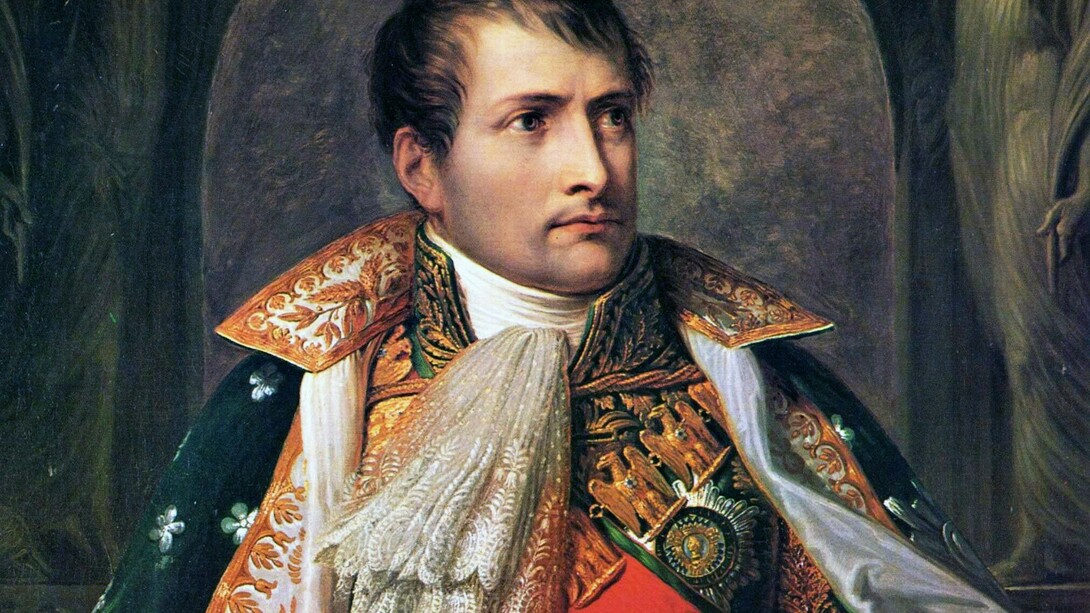
It makes you wonder, though. What does it say about leadership when the visual landscape leans so heavily inward? History offers a few parallels, though none fit perfectly, because they never do. Leaders like Napoleon Bonaparte famously curated their own image, commissioning grand portraits that elevated them beyond mere office into something mythic. Louis XIV, the Sun King, quite literally positioned himself as the center of the universe in art and architecture, Versailles acting as both palace and performance. In more recent history, figures like Joseph Stalin and Mao Zedong saturated public and private spaces with their likenesses, cultivating not just authority, but a kind of omnipresence. In those cases, it didn’t end particularly well… for the leaders or the people under them. That imagery wasn’t just decoration; it was reinforcement of power, a constant visual reminder of who held the wheel. Familiar?
There are other, more nuanced examples to look at. Winston Churchill, for instance, was deeply aware of image and legacy, though he didn’t flood his environment with his own likeness. His projection was more rhetorical, more narrative than visual. Leaders in democratic systems often walk a finer line, balancing visibility with restraint and presence with humility. That’s what made the experience in the West Wing feel so… striking. It wasn’t just the presence of imagery; it was the density of it, the repetition, and the immediacy.
It raises a question that lingers longer than the tour itself: is this about pride, branding, legacy, or something closer to self-mythologizing in real time? Maybe it’s all of the above. Or maybe it’s simply the natural extension of a media age where visibility is currency, and control of one’s image is seen as a form of power.
In that sense, the West Wing becomes less of a static symbol and more of a living feed, needing to be updated, refreshed, and curated continuously. Still, standing there, it’s hard not to feel the contrast between what the space has been and what it becomes under different hands. The West Wing isn’t just offices and corridors, it’s a reflection, however subtle or overt, of the person at the center of it all; and reflections, when repeated often enough, can start to look less like mirrors and more like declarations.
Walking out, I kept thinking about that story of the Situation Room, the unseen gravity just behind ordinary walls. Because maybe that’s the real tension of the place: the silent weight of responsibility paired with the very human instinct to shape how that responsibility is seen. One is about decisions. The other is about legacy, and sometimes, the walls tell you which one is winning.