English
 Español
 Français
 Deutsch
 Italiano
 Português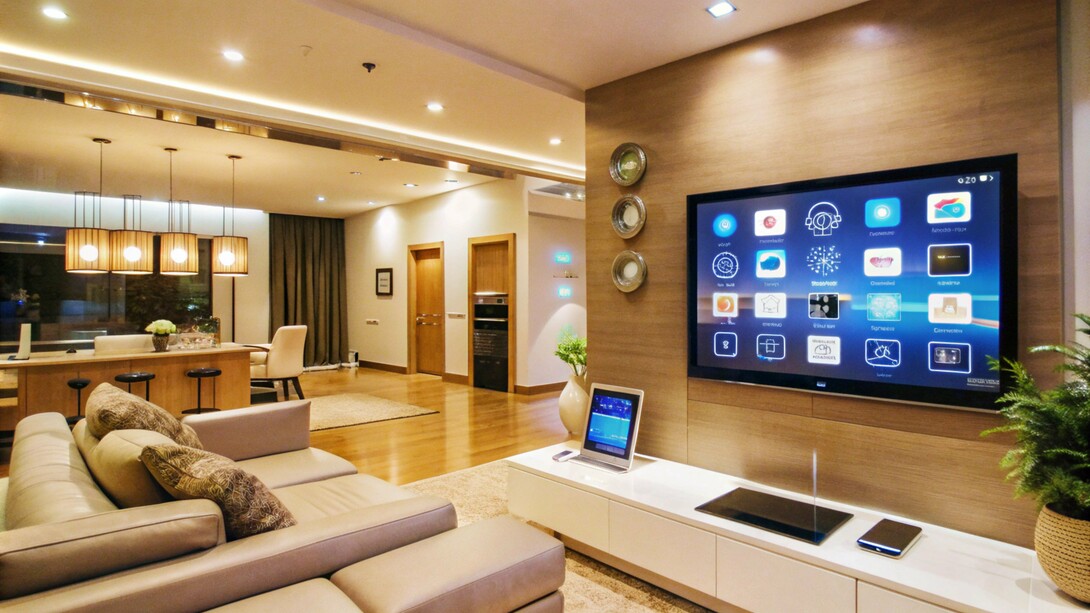
Architecture has always sought to balance form with function. Today, there is also an urgency to incorporate environmental considerations and prioritize the comfort of a building’s inhabitants. At the crossroads of this interest is smart home technology in architecture. Smart homes stem from innovative construction that works with, rather than against, nature’s conditions.
The concept of an integrated smart home
The best smart home ecosystem is more than a network of connected devices. It’s a foundational layer of the modern home. Technology is invisible, intuitive, and intrinsic to the structure. Traditionally, homeowners retrofitted their properties with aftermarket gadgets. However, new builds are now architecturally embedded with tech solutions from the ground up.
Consider a smart home a metasystem synced with electrical, heating, and plumbing infrastructure that makes living spaces an experience. With one click and sometimes even without human intervention, a home’s climate settings and lighting automatically adjust according to occupancy and environmental indicators.
The Edge in Amsterdam is a prime example. The 14-story building features 28,000 sensors1 connected to a central network. They monitor temperature, humidity, occupancy, and energy use. Six thousand square meters of photovoltaic panels run the entire structure. This intelligent system consumes 70% less power than conventional office buildings despite its extensively embedded technology.
Principles of seamless smart design
Here are the elements that define integrated smart home architecture:
Invisibility: Technology must be felt, not seen. Embed sensors, speakers, and controls into walls, ceilings, and furniture.
Interoperability: A unified platform makes it easier for different devices to communicate and sync.
Personalization: A well-designed adaptive space is specific to its occupants. Their routines and preferences become data that predict automation choices.
Sustainability: Intelligent technologies optimize energy consumption through climate, lighting, and water use management.
How smart home ecosystems revolutionize architecture
Innovations that bring together tech, daily human needs, energy management, and building design are changing the nature of architecture.
Integrating IoT in architectural design
The Internet of Things (IoT) is a network that connects each physical appliance to the building, allowing it to interact with its occupants. Detectors track air quality and adjust accordingly. They also monitor energy usage across spaces and work with environmental conditions, such as weather and temperature, to regulate indoor comfort. Detectors can help facility managers perform predictive maintenance based on usage for wiser resource allocation.
Professionals at 800 Fulton Market leveraged IoT capabilities to cut embodied carbon emissions by 65%2 compared to typical office buildings. Chicago’s smartest building seems to think for itself—lighting, ventilation, and shading respond in real time to occupancy and daylight levels. This shifts the designer’s role from creating static spaces to orchestrating living systems that evolve in response to their users and surroundings.
Using smart technology to enhance the spatial experience
Technology shapes the experience of navigating a space. With modular layouts and automated systems, interiors become adaptable.
Take, for example, Michael Jantzen’s Solar Vineyard House. The open-plan space can be reconfigured using cylindrical modules3 on wheels. Inspired by wine fermentation tanks, it can section areas for different activities. The wood slats filter sunlight and blur the distinction between indoors and outdoors. Everything is grounded in the vineyard, which is part of the landscape, rather than a mere view.
Automating security for convenience
The functionality of responsive houses extends to automated security. In the U.S., for example, 70% of people with smart garage doors4 consider remote monitoring and control capabilities essential. With a single click, residents can open the overhead door from their phone. Automated sensor lighting activates when movement is detected. It erases the inconvenience of navigating the dark when coming home late.
To alleviate concerns about energy consumption, the integrated management system promotes transparency. Residents can monitor and control consumption even when they’re away from home. Beyond entryway doors, homeowners are finding ways to do whole-house security systems that are virtually invisible or even artistic features in homes, blending function with design.
Fostering collaboration between professionals
Experts forecast that in 2025, 57% of Americans will have5 smart home gadgets, primarily speakers, TVs, and streaming devices. This growing demand continues to rise, and it takes more than one professional to bring it all together. The trend also extends beyond U.S. borders and is being rapidly adopted worldwide.
A smart building is a portfolio of the expertise of multiple disciplines. Designers, engineers, and tech professionals must consider wiring, sensor placement, and system compatibility. This collaboration informs material choices, air circulation, and sightlines.
Best practices for a seamless smart living experience
The design process is crucial to successful integration. These architectural smart home solutions address the common pain points that professionals encounter.
1. Start with architecture, not gadgets
While devices define an automated home, design must begin with the space. Intelligent systems should adapt to the built form and its function. Every appliance, detector, and interface must enhance the user’s spatial experience.
2. Integrate IoT early
Include sensor networks, cabling, and connectivity infrastructure during the earliest design phases. Treat IoT in smart homes as an essential element, alongside structural, plumbing, HVAC, and electrical frameworks. This avoids retrofitting costs later and ensures that your other systems are synchronized.
3. Design modular and flexible interiors
Create areas that can easily transform based on user needs. Movable partitions, adjustable furniture, and open-plan layouts enable spaces to adapt to changing activities and lifestyles.
4. Prioritize user interfaces
Smart controls, such as touch panels, mobile apps, or voice assistants, should feel natural and accessible. Interfaces must simplify interaction rather than add complexity. All residents should be able to operate them with ease.
5. Balance sustainability and aesthetics
Tech’s modern look can take away from residences with a traditional or vintage style. Incorporate solar panels, automated shading, and natural ventilation in ways that preserve visual harmony. The goal is energy-efficient systems that blend rather than disrupt architectural beauty.
The architecture of connection
Gone are the days when buildings were simply structures. Today, they have become interactive and responsive to their users' needs. Houses now function as living systems that help occupants thrive. People enjoy greater comfort and convenience, while homes grow more energy-efficient as data continually feeds into their network.
For design professionals, this evolution signals a new paradigm. Architecture is no longer static. It is dynamic, data-driven, and deeply human-centred. Architects must now bridge aesthetics with technology to create residences that improve lives.
Notes
1 University of the Built Environment, This Amsterdam office is one of the world’s most sustainable buildings, 13 January, 2025.
2 Skidmore, Owings & Merrill, 800 Fulton Market Team Presents at BuiltWorlds, 5 June 2023.
3 Yanko Design, Solar Vineyard House Blends Sculptural Architecture with Sustainable Living, JC Torres, 1 October 2025.
4 Clopay, How Technology is Changing the Garage Door Industry, November 2024.
5 Renovated, Building a Smart Home From the Ground Up, Olivia Elsher, 3 June 2023.