English
 Español
 Français
 Deutsch
 Italiano
 Português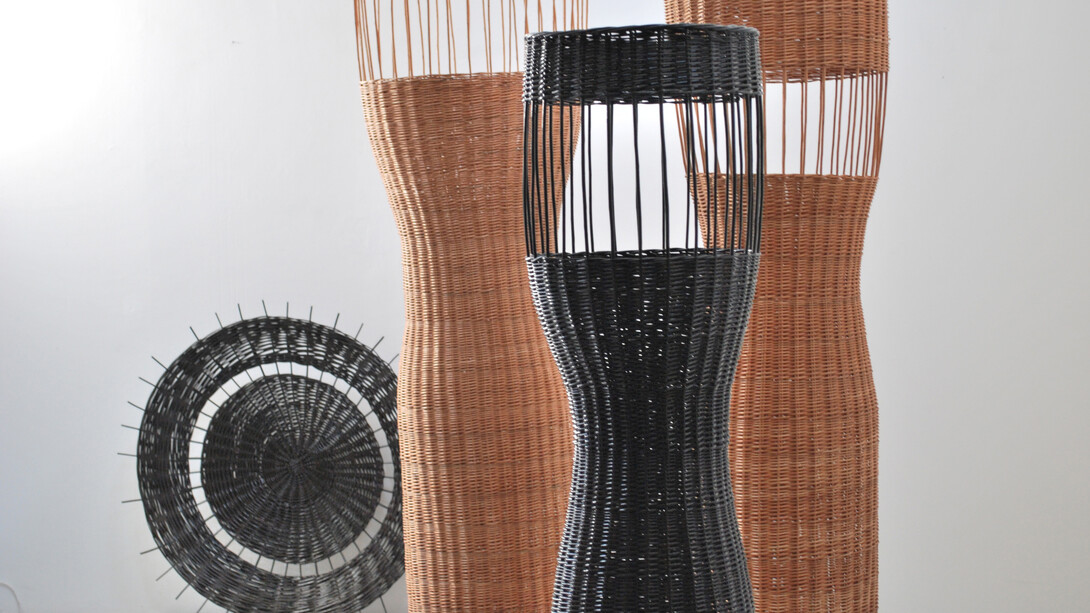
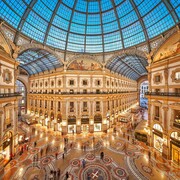
On the occasion of Milan Design Week, Galleria Vik Milano presents Design Vik 2026, a now well-established fixture in its exhibition program, returning once again this year to the Vik Pellico Otto spaces overlooking the Galleria Vittorio Emanuele II. As usual, Design Vik does not address design in the strict sense. It is neither an exhibition of functional objects nor a survey of industrial projects. Rather, it offers a lateral, free, and often disorienting perspective: that of artists who intersect with design, move through it, reinvent it, and question it.
The subtitle of this edition, The other side of design, immediately clarifies the purpose: the focus is not on design as a discipline, but on what happens when design is filtered through artistic imagination. The result is a hybrid territory in which objects, furnishings, and recognizable forms lose their original function to become visions, narratives, and perceptual devices.
The exhibition brings together around fifteen Italian and international artists who interpret design in an ironic, visionary, playful, yet also critical and conscious way, with particular attention to themes of sustainability, reuse, and the relationship with the environment.
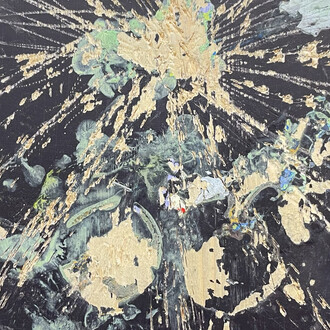
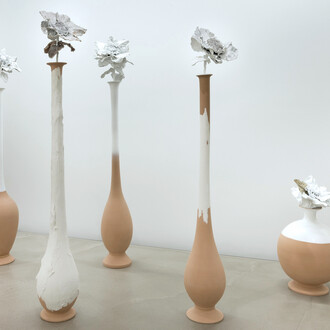
The exhibition unfolds through a series of thematic sections. The first part is dedicated to the relationship between nature, material, and design. Here we find the works of Monica Bispo and Vaprio Zanoni, who use raw earth and natural elements to create a sort of “living” painting, in which the design object returns to being an organism, ecosystem, or process. In the same direction is the installation by Dorota Koziara, which revives wicker craftsmanship to build an immersive environment composed of organic forms, between traditional craft and contemporary technology. Lucia Lo Russo also works along these lines, with pieces that integrate different materials and natural inserts: her works feature honeycombs, crossed by an internal light, transforming organic matter into a visual, evocative, almost architectural element.
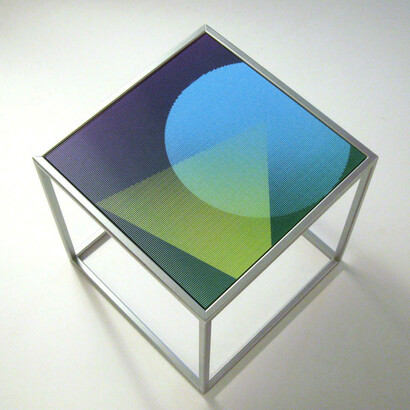
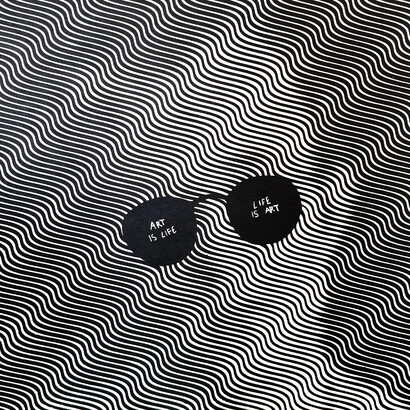
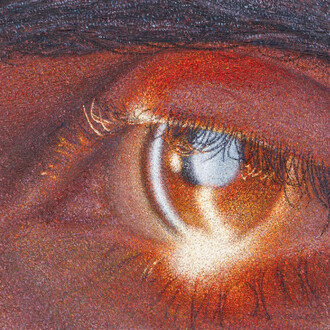
A second area concerns the relationship between technology and artistic language. The Quadri mediali by Davide Maria Coltro transforms painting into a continuous digital flow, bringing abstraction into a temporal and ever-changing dimension. Andrea Crespi, through his research between optical art and digital media, proposes imagery that plays with perception and pop imagination, while Matteo Mandelli, with his hybrid carpets, connects craftsmanship and technology, where the slow time of making meets electronic logic.
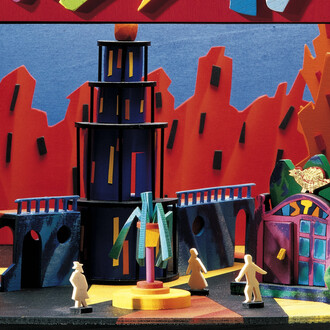
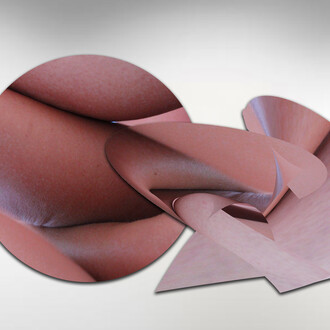
A third line of research explores the transformation of the object. Pao, one of the pioneers of Milanese street art, uses anamorphisms to alter the perception of space and everyday objects, which reveal themselves only from a precise viewpoint. Francesco De Molfetta works on linguistic and visual ambiguity with an “Electric Chair,” reusing stylistic elements and iconographies from heavy metal culture, becoming both a seat and an ironic conceptual device. Massimo Giacon, a key figure in the intersection of comics, art, and design, presents some of the projects that have made him well known in this field: works in which everyday objects take on a narrative, ironic, and estranging dimension, also stemming from his long engagement with industrial design and further developed in recent years through 3D and sculptural modeling. Finally, Sandi Renko intervenes on object and surface, pushing design toward perceptual and luminous dimensions.
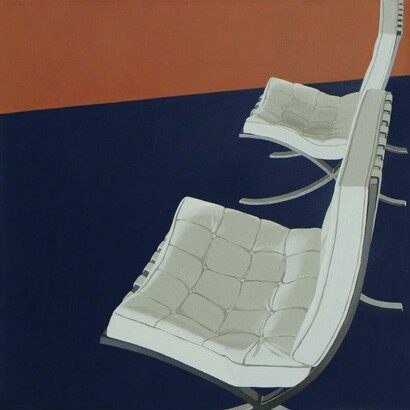
A further section is linked to the reinterpretation of imagery and the history of design. Tomoko Nagao reworks icons of artistic and visual tradition—from Hokusai’s Great Wave to Botticelli’s Primavera—through a hyper-pop, layered, and contemporary language. Ieva Petersone transforms seats and design objects into elements of interior landscapes, suspended between memory and abstraction. The theme of manuality and material returns in the works of Carla Mura, where cotton thread emerges from the pictorial surface and invades space, emphasizing the physical and installation dimension of the work. Finally, the exhibition includes Luigi Serafini, a unique figure in the contemporary landscape, presenting one of his iconic chairs and a plate from his visionary universe, where everyday objects are reinvented through an impossible and surreal language.
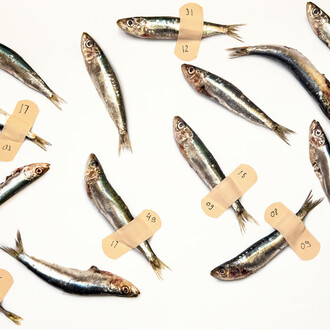
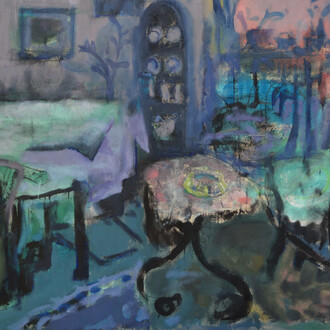
Alongside these are the interventions of Giordano Curreri, with his “anti-portraits” of everyday objects created using blind drawing techniques, and Enrico T. De Paris, who presents a series of small paintings arranged like a contemporary polyptych, in which fragments of daily life are observed from a lateral, lucid yet ironic perspective, capable of transforming ordinary scenes into micro-narratives suspended between logic and absurdity.
Overall, Design Vik 2026 stages a constellation of objects that have lost their function in order to acquire another: that of producing meaning, deviation, and imagination. Design is not denied, but displaced, diverted, at times contradicted. It becomes an open field where use gives way to vision, and form ceases to serve in order to begin to narrate. It is here, without declaring itself, that the other side of design is revealed.