English
 Español
 Français
 Deutsch
 Italiano
 Português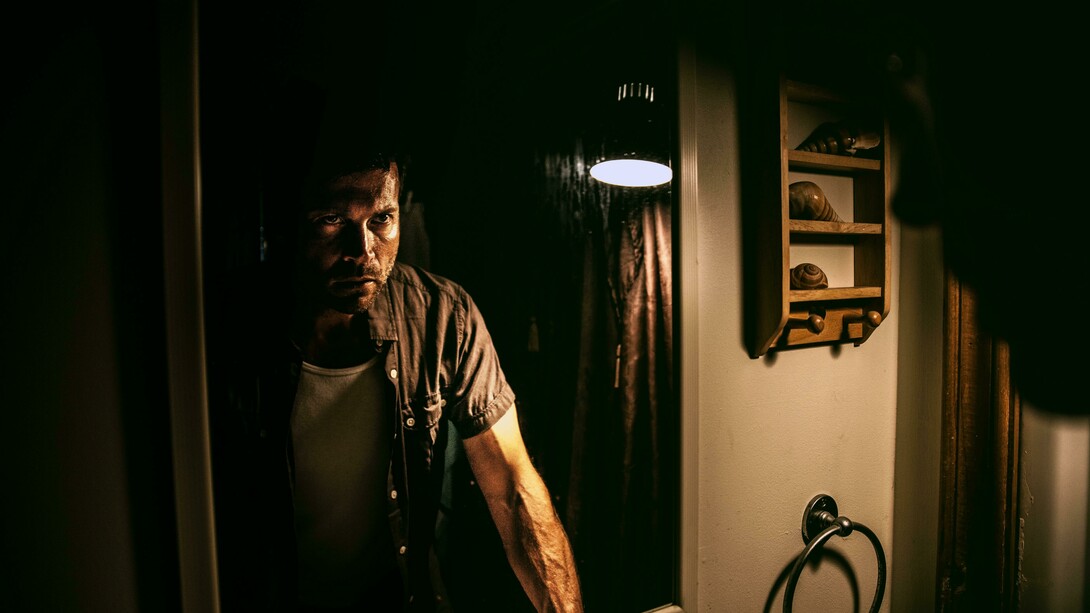
For some time now, the digital sphere has been contaminated by a phenomenon popularly known as the manosphere. It is a space in which lost boys, young men, and sometimes adult men gather, bound together by a kind of negative solidarity. The basis of this gathering is not the construction of male identity but the collective channelling of frustration toward a world they perceive as having left them behind. In their eyes, this is a world of tolerance, empathy, and respect for difference. A world they often contemptuously describe as feminised, precisely because within it they no longer find affirmation of the values they believe should form the foundation of masculine identity.
In this imaginary world, aggression, domination, control, and hardness are presented as desirable traits. However, the paradox of the manosphere is that many of its members would not be able to endure the very world they are calling for. Behind the rhetoric of strength often lies deep insecurity, and behind the calls for order, hierarchy, and "natural roles" lies a fear of change and the loss of their own place. In the spirit of contemporary culture, which often turns even vulnerability into a style, they too have been given a space to express their mourning and lostness. They, however, usually camouflage this with the language of stoicism, even though it is a kind of perversion of classical stoicism, adapted to the egocentrism and hedonism of today. Instead of self-discipline, we find self-pity, and instead of reason, a wounded ego.
The world, however, moves on. It changes independently of their desires. The world of contemporary, late capitalism, like every world before it, waits for no one. Precisely for this reason, this almost counterculture of our time reaches for the simplest tactic of resistance: it attempts to destroy the symbolic order it perceives as threatening. In this sense, the manosphere is a kind of paradoxical anarchism, not because it strives for freedom, but because it wishes to dismantle everything that characterises the modern world, without realising that it is itself a product of that very same world. In its effort to destroy the idea of a world marked by pluralism, equality, and sensitivity toward others, it fails to notice that it is, in doing so, undermining its own conditions for survival.
However, more important than the manosphere itself is the question it only symptomatically raises: what does it mean to be a man in the 21st century? Can one even survive with a male identity in a world where it is no longer predetermined? And what remains of masculinity once the social securities upon which it has rested for centuries collapse?
Being a man in the 21st century can no longer mean simply inheriting a readymade role. Once, male identity was more firmly tied to predetermined social patterns: a man was a provider, an authority, a protector, a disciplined bearer of order. These roles were not just expected; they were validated, socially recognised, and symbolically rewarded. A man did not have to explain who he was repeatedly, because the framework of his identity was already prepared in advance. Today, those patterns have not completely disappeared, but they are no longer unquestionable. In other words, no one will pat you on the head and say, 'Good job', just because you are a man. It is necessary to transcend that culturally conditioned primal narcissism.
This is why the manosphere is so appealing. It offers what the modern world often no longer provides: a simple answer. It tells a man who is to blame for his insecurity and whom he should oppose. It offers a clear vocabulary. In a world of complexity and fluidity, such solidarity acts as a refuge. But therein lies its fundamental weakness. The manosphere does not produce a mature man, but an embittered one. It provides an illusion of strength built upon an enemy and a sense of importance that exists only as long as there is someone to despise, accuse, or silence.
From a psychoanalytic perspective, the problem is not only that the external world has changed but also that the subject can no longer count on the symbolic order to validate their own importance. Where there was once a relatively stable image of the male position, there now appear uncertainty, competition, equality, and the need for self-reflection. For a mature person, this can be a challenge, but for a fragilely structured self, it is easily experienced as a narcissistic injury. A change in social circumstances is thus perceived as a humiliation of one's own self. The manosphere is attractive precisely because it offers a man who feels disoriented a ready-made defence against that injury. Instead of acknowledging his insecurity and the loss of his old self-image, he is given a narrative according to which the problem is not with him, but with a corrupt world. In this way, internal conflict is displaced outward. Such an outcome characterises a state of infantilism, not adulthood.
The crisis of masculinity, therefore, does not lie in the fact that a man can no longer be a man but in the fact that he can no longer be a man in the old way. Insisting on that is simultaneously infantile and impossible. Attempting to revive old patterns in a new world very often produces a caricature of masculinity.
How, then, to be a man, if not in that way? The process of reorganising male identity can be painful but not necessarily tragic. After all, it was not just society that was burdened by rigid models of masculinity; men themselves were burdened by them as well. Being a real man too often meant being emotionally closed off; being forced into a role you did not choose; being condemned to strength even when you were falling apart; and being condemned to silence even when you needed help. This kind of masculinity was unfavourable even for the man himself.
It is not difficult to be a man when society confirms your importance in advance. It is much harder to be a man when you must learn that importance is not something you are entitled to by birth but something you build through the way you live, act, and relate to others. The modern man can no longer count on his position to shield him from questioning himself. Precisely for this reason, he must become more reflective. He must learn to distinguish self-respect from narcissism, strength from coercion, boundaries from coldness, and authority from authoritarianism.
Instead of defining himself through power, emotional silence, the need to leash others, or the constant urge to dominate, the modern man thrives in relational integrity. He finds his footing in radical accountability, where his worth is not something he extracts from others but through his own self-reflection. He thrives in intentional vulnerability, where he is strong enough to be seen and reliable enough to be trusted. Ultimately, he thrives in the freedom of equality. To be a man means to embrace humanity not as a weakness but as a strength.
So, empathy, solidarity, and caring for others are not the opposite of masculinity but the condition for saving it from becoming a mere caricature of itself. It is true that these values are expected of everyone today, regardless of gender, and that is precisely the point. A man can no longer build his identity on an exemption from what applies to all human beings. He can no longer ask to be forgiven for emotional immaturity simply because he is a man nor expect that his gender alone grants him moral credit. Masculinity can no longer be an excuse for moral and emotional underdevelopment. It can survive as a specific way of being, but only if it integrates what it has for too long considered weak: considerateness, mutuality, self-reflection, and the capacity for connection. This is the masculinity of the 21st century, linked to the development of the person. Only such a man is not at war with the world.
In conclusion, the question of what it means to be a man today cannot be answered by restoring the past. Such a restoration is impossible, and insisting upon it can lead to very painful consequences for male identity, as we see in the case of the manosphere. If anything has truly collapsed today, it is not the man himself, but a historical construction of masculinity that was presented for too long as natural, eternal, and the only one possible. Ultimately, the goal is to reach a point where a man no longer needs an enemy to thrive, but rather other human beings with whom to mutually develop.