English
 Español
 Français
 Deutsch
 Italiano
 Português
Implicit bias is also called implicit prejudice or unconscious bias. It refers to attitudes and stereotypes that operate automatically and beyond your conscious awareness and shape perception, decisions, and behavior without intentional endorsements. These biases form from cultural messages, personal experiences, and learned associations. These biases can either favor “in-group” or disadvantaged groups and influence how quickly we make decisions and judgments.
Origins of implicit bias
The term “implicit bias” grew in psychological research in the late 20th century, mostly in the 80s and 90s, when cognitive and social psychologists began studying how automatic mental processes influence judgment and behavior.
The idea was that people can hold attitudes and stereotypes outside of conscious awareness, which explores how people think and make automatic associations about someone.
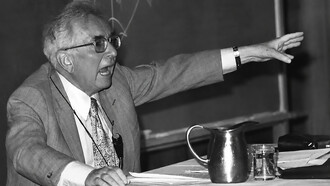
Anthony Greenwald, a cognitive psychologist, along with colleagues, developed the Implicit Association Test (IAT) in 1998. Along with Greenwald, Mahzarin Banaji, from Harvard University, worked together to expand this concept in social psychology and bring the concept into the modern framework of research. In late 1998, Brian Nosek worked together with Greenwald and Banaji on their project and co-founded Project Implicit to make IAT publicly accessible.
IAT, after becoming widely known, ended up being a popular discussion around race, gender, and discrimination through journalism, diversity training, and public policy debates. It became important as it could explain why unequal treatment could persist even among people who value fairness.
How researchers measure implicit bias
As implicit biases are something that are automatic and often unavailable to introspection, psychologists developed measures that infer association with the help of the response patterns. The best of them is known as the IAT, Implicit Association Test, which times how quickly people pair concepts, e.g., black and white faces with good or bad stereotypes. Faster pairings are often interpreted as stronger automatic associations. The IAT and related tools do not diagnose an individual as “racist” but will reveal the tendencies that come with a person’s associations to predict subtle discriminatory behavior in some settings.
Who does it affect most?
Implicit bias shapes real-world decisions. These are experienced in various domains—hiring, policing, healthcare, education, and more. The groups that are more affected are the groups that are historically marginalized by social structure as well.
Racial and ethnic minorities
There have been implicit racial associations documented and linked to disparities in policing outcomes, hiring callbacks in jobs, and everyday social interaction.
Women and gender minorities
Gender stereotypes with certain outcomes, like, e.g., associating men with science and leadership and women getting married or pregnant, end up influencing promotions, evaluations, and who is seen as more “fit” for the role.
Sexual minority groups
Homophobic or heteronormative associations have historically been common and have contributed to a lot of stereotypical and discriminatory attitudes. Well, these have also shown trends to go up or down in regard to some cohorts or regions.
People with disabilities, older adults, people with higher body weight, and other stigmatized groups.
Implicit negative associations translate into fewer opportunities, lower care quality, and even exclusion.
Along with the above groups, it is also confined to the majority and minority groups in the region. Showing implicit bias for the in-group preferences, and sometimes members of marginalized groups show implicit in-group preferences. Context, like culture, local norms, and the role of the person in the group, can shape how biases are expressed and what effects they produce.
Trends over time, increased or decreased?
Well, the answer is mixed. There are some places where the bias has decreased over time, but some persist. A large-scale analysis of Project Implicit data—IAT from 2007 to 2020—shows that implicit attitudes over some targets have reduced, like sexual orientation, and racial-related measures have decreased among young cohorts. At the same time, some biases have shown a very small decline, and some have remained persistent. Patterns of responses differ according to age, region, and political ideology.
Several forces, like younger generations, have shown a weak sense of implicit bias due to changes in social norms, media representation, and changes in education. Changes in attitudes about sexual orientation and race-related associations have shown more shift than the attitude about people with body weight or disabilities. Implicit biases are not monolithic; they will be different for some and have no changes for some.
The changes are important, as they can influence the decision-making in seconds. E.g., who needs to be in an important meeting, or a doctor spending a good amount of time explaining a treatment, or whether the person’s qualification and experience will help the work, rather than their race. When people in authority carry biases, those small effects show and can increase systematic disparities. There are some persistent biases still left where just spreading the awareness is not enough.
What reduces implicit bias and what does not
There are several research points made that can help reduce bias or its harmful effects.
Structural change: hiring and decision procedures, blind review, accountability, and policies that reduce discretionary bias are more reliable.
Long-term contact and representation: increased positive intergroup contact and diverse representation, not only in media but also in workplaces and leadership, can help reshape the associative networks over time.
Training, practice, and system changes: having short workshops about awareness produces short-term shifts in measures; having sustained programs that combine training with measurable policy or process changes is more promising.
In conclusion, implicit bias is an automatic and often hidden behavior that influences judgment and behavior that contributing to outcomes that could be unequal for historically marginalized communities or groups. Large-scale data with years of research from the years 2007-2020 show some declines that are absolutely important to show in certain implicit attitudes, like those around sexuality, race, and gender measures. Well, these changes are not necessarily seen in all aspects; some biases have not declined yet and remain strong enough to affect real-life decisions. The challenge is translating the promising trends into durable changes in institutions and everyday practice so that declines in implicit association can produce fairer outcomes for the people who need them most.