English
 Español
 Français
 Deutsch
 Italiano
 Português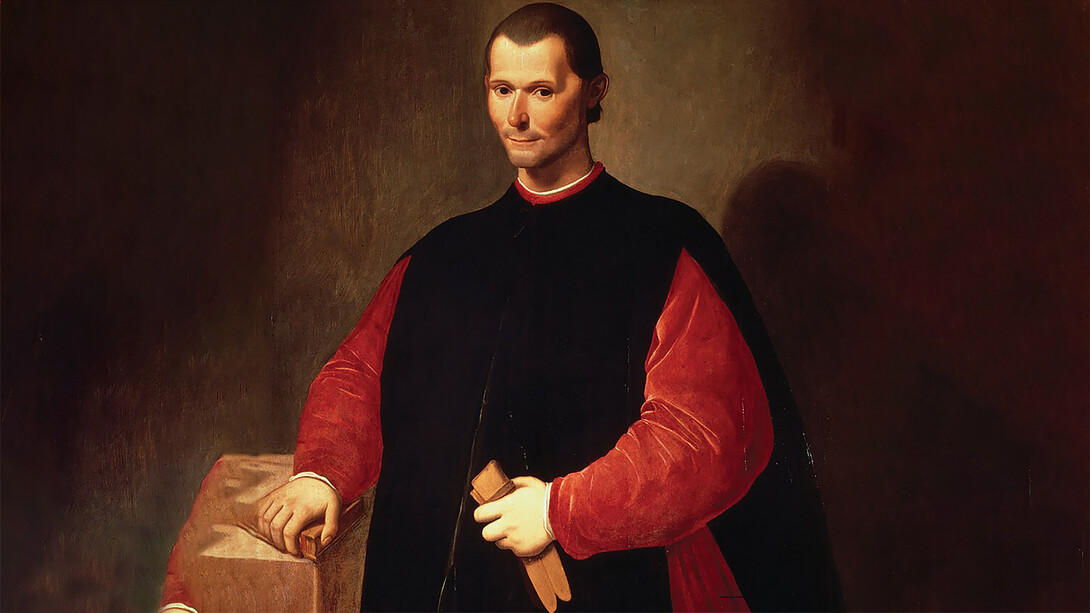
This analysis explores how Niccolò Machiavelli conceptualizes fortune (fortuna) in the success or failure of a political leader in The Prince. Drawing upon key historical references and philosophical reasoning, it examines how Machiavelli balances the unpredictable nature of fortune with the decisive qualities of virtù—an individual’s capacity to act wisely, courageously, and decisively in ever-changing political landscapes. Through the lens of Renaissance politics and human nature, the text reveals how rulers can, and must, bend fortune to their will to secure political stability and personal power.
In The Prince, Machiavelli offers a compelling account of how fortune influences a ruler’s ability to maintain power and respond to political change.
At the heart of Machiavelli's argument lies the fact that politics has its ethical logic and that, if necessary, political actions can be condemned in a moral society to preserve the principle of the state. In other words, pragmatic practices, which are later called the "state of existence," are necessary for the preservation of the principle of the state's prime minister when traditional moral codes must be left aside. The Catholic Church also became vulnerable because of the widespread misgivings about the rise of strong states in the race to come to power and the corruption caused by the papal authority.
Martin Luther, in a four-year period, plastered the plaque to the Wittenberg Palace Church door (October 31, 1517), which led to the initiation of the reform movement and ultimately led to the disintegration of Western Christianity. Machiavelli's Prince is still a remarkable feature because of the proposals he made in his state administration activities, although he did not refer to it as a common reference point in Renaissance thought in Europe or as a substitute for the human being in God's Great Chain.
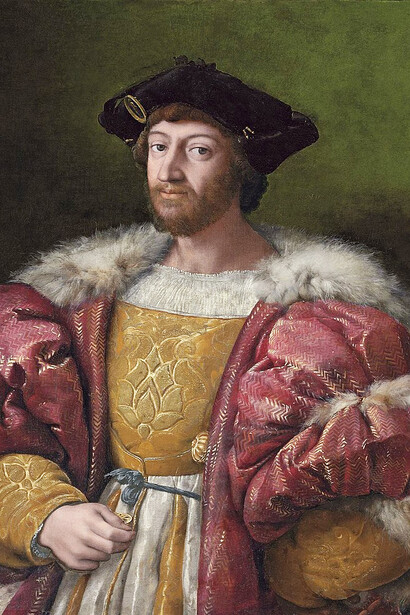
Machiavelli dedicates the "Magnificent Lorenzo de Medici," who, with the help of the Prince's Book and the Assemblies, brought the previous ruler Pier Soderini to power. Nicollo Machiavelli himself was a Florentine patriot who, in essence, said, "I love the country more than my soul," and the Prince that he wrote caused the book to be repeatedly betrayed in his painful collapse. The aim was to determine the reasons for the misfortunes of the cities of their predecessor, Florence, and to find ways to deal with these problems. By setting the basic realities and main rules of politics, it is necessary to create a state structure that can defend itself against both internal and external attacks in the country. The establishment of a republic—he believed he could help. The author examines the interaction between material means and human activities by taking into account the concepts of fortune and virtue.
The power of all the princes/rulers (and, in fact, the experience of all people) is also connected to other social and natural factors that are greater than themselves. Machiavelli insists, however, that human free will can not be denied. Although fate is decisive in half of human movements, it still can not prevent it from controlling at least the other half of human movements. Despite the fact that events of fate and variance are important in the course of history and history, gifted statesmen can determine their own destiny by developing a virtuous leader and giving a new shape to the state they are heading. The concept of "virtue" should not be misinterpreted, as it is defined in Christian moral teaching (which implies integrity, philanthropy, humility, and the like). Much more knowledge and courage are the qualities of humans who deserve to be awarded in classical antiquity, including the subjects of cunning, pride, and power.
I conclude, therefore, that fortune being changeable and mankind steadfast in their ways, so long as the two are in agreement, men are successful, but unsuccessful when they fall out. For my part, I consider that it is better to be adventurous than cautious, because fortune is a woman, and if you wish to keep her under, it is necessary to beat and ill-use her; and it is seen that she allows herself to be mastered by the adventurous rather than by those who go to work more coldly. She is, therefore, always, woman-like, a lover of young men, because they are less cautious, more violent, and with more audacity command her.
(Niccolò Machiavelli, The Prince)
But confining myself more to the particular, I say that a prince may be seen happy today and ruined tomorrow without having shown any change of disposition or character. This, I believe, arises firstly from causes that have already been discussed at length, namely, that the prince who relies entirely upon fortune is lost when it changes. I believe also that he who directs his actions according to the spirit of the times, and he whose actions do not accord with the times, will not be successful. Because men are seen, in affairs that lead to the end that every man has before him, namely, glory and riches, to get there by various methods: one with caution, another with haste; one by force, another by skill; one by patience, another by its opposite; and each one succeeds in reaching the goal by a different method.
One can also see of two cautious men the one attain his end, the other fail; and similarly, two men by different observances are equally successful, the one being cautious, the other impetuous; all this arises from nothing else than whether or not they conform in their methods to the spirit of the times. This follows from what I have said, that two men working differently bring about the same effect, and of two working similarly, one attains his object and the other does not.
Machiavelli proposes a policy conception that centralizes the idea of choosing an appropriate target for the current policy mechanism, that human nature is in the act of being evil, selfish, glorious, and rich, and that it is nothing else that directs politics. That is, consciously lower the standards of social action. The intention of Machiavelli's lowering of standards is to raise the likelihood of the realization of the plan established in accordance with these degraded standards.
Thus, loyalty is reduced; Fortune will be conquered. According to Machiavelli, people should have the ability to restrain their luck and fortune and thus achieve their goals. Hence, people take pride in their luck and fortune in pursuing idealized moral and political goals that Machiavelli can not unrealistically realize in the classical conception but in actions that do not fit into the present situation. According to him, people lived in the hope that luck would help them, and this commitment brought them to believe that luck was their own intelligence.
Fortune is sometimes portrayed as a beauty laughing at people's faces and sometimes seen as an arrogant goddess who turns to people. The Roman writers, however, did not define luck as a completely bad power. On the contrary, fortune is defined as a charming goddess who carries his goodness within himself. In addition, fortune is in itself, and prizes are carried. Cicero emphasizes their richness and population while defining these awards and favors. "Everyone agrees that the most wonderful gift of luck was the honor and the fame that came with it." Luck is an act that affects human actions.
There is also a structure that determines it. This capricious goddess can leave the ones who trust her to face. Especially those who rely on their own luck and are loose in their actions: "(...) That prince is totally based on fortune, and fortune has fallen face to face." Prevention of failure is possible by virtue of Machiavelli. Virtue: "Man has the abilities such as wisdom, courage, honesty, and cunning," and in difficult situations, man can change his fortune through virtue.