English
 Español
 Français
 Deutsch
 Italiano
 Português
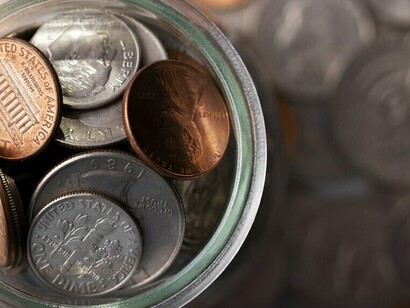
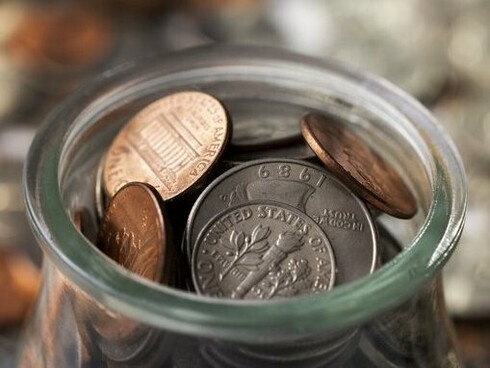
Two people stand facing each other, locked in a friendly dispute about who goes first, who chooses dinner, or who wins a trivial but emotionally charged argument. To break the stalemate, someone reaches for a coin. It flicks upward, turning and glittering, then lands with satisfying finality in a waiting palm. Heads or tails. A clean and peaceful end to indecision.
It feels fair. It feels neutral. It feels like the universe has briefly stepped in to make a decision for us.
But beneath that simple ritual lies an uncomfortable truth: the coin toss is not the perfect symbol of randomness we assume it to be. Far from it. For centuries, mathematicians have suspected something was off, and only recently has an enormous experiment finally confirmed it. The coin toss is twisted, subtly, invisibly, but consistently, and the real surprise is how easily that twist can be manipulated.
Why we trust the toss
Across cultures and decades, the coin toss has been elevated to a position of quiet authority. It’s used in playgrounds, sports stadiums, parliaments, business negotiations, family disputes, and even politics. People trust it because it looks impartial. It offers a way out of conflict without favouring either side.
This trust has shaped real moments. The Wright brothers used a coin toss to determine who would attempt humanity’s first powered flight. The 1968 European Championship semi-final between Italy and the Soviet Union was decided not by skill but by the outcome of a coin. In various elections across the world, ties have been broken not by policy or persuasion but by a small piece of metal flipped by hand.
These decisions rest on one belief: that the coin obeys pure chance.
But scientists have always suspected the opposite. The movement of the coin follows physical laws; it is predictable, measurable, and far from random. What looks chaotic is actually structured, and the structure skews the odds. (Heidelberg)
The physics of an imperfect flip
A tossed coin does not tumble freely in the way most people imagine. Its motion depends on the way the thumb strikes it, the force with which it’s launched, the angle at which it leaves the hand, the air it passes through, and the coin’s own weight distribution.
A crucial detail sits within that motion: the coin rarely rotates on a perfectly clean axis. Instead, it wobbles. That wobble slows down its spin and subtly preserves whatever side was facing upward at the start. When the coin completes its arc and returns to the palm, that original side is more likely to remain on top.
In 2007, statistician and former magician Persi Diaconis helped build a mathematical model predicting that a coin should land on the face it started on around 51% of the time. A 1% tilt doesn’t sound like much, but in probability, such a small imbalance can have vast implications, especially when the coin is treated as a symbol of absolute fairness.
Yet, proving this bias required hundreds of thousands of throws. No one had ever attempted it on a meaningful scale.
That changed when a determined Ph.D. candidate from Amsterdam decided to test the theory himself. (Heidelberg)
A global experiment in patience
František Bartoš didn’t set out to become the world’s authority on coin tossing, but his curiosity left him little choice. After initially failing to recruit volunteers for the mind-numbing task of flipping coins thousands of times, he eventually convinced colleagues, friends, and researchers across six countries to help.
They flipped coins from morning to evening, sometimes wearing headphones to keep themselves sane, sometimes chatting, and sometimes falling into a zen-like silence. Some worked in short bursts; one dedicated participant flipped coins for 12 hours straight. They recorded every starting position and every result. They worked with coins from dozens of currencies. Everything was documented carefully.
Across the group, they produced an astonishing total of 350,757 coin flips, the largest dataset ever gathered for an experiment of this kind.
When the results arrived, they were exactly what physicists had long suspected. The coin landed with the same side facing up as it started 50.8% of the time. Not a dramatic margin, but a statistically overwhelming confirmation that the toss is biased.
The experiment also revealed another twist: the bias is not consistent from one person to another. (Kim)
The hidden skill behind a coin toss
One of the unexpected findings was the enormous difference between individual flippers. Some people produced a strong bias in favour of the starting side. Others flipped with almost perfect symmetry. A few showed a bias in the opposite direction.
This variation revealed something fascinating: flipping a coin is not a standardised action. It is a personal skill. The way you hold the coin, the angle of your thumb, the speed of your flick, the height of your throw, and the wobble introduced by your fingers—all of these shape the trajectory.
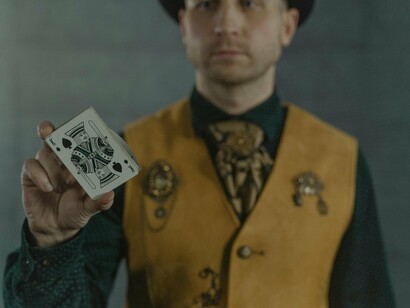
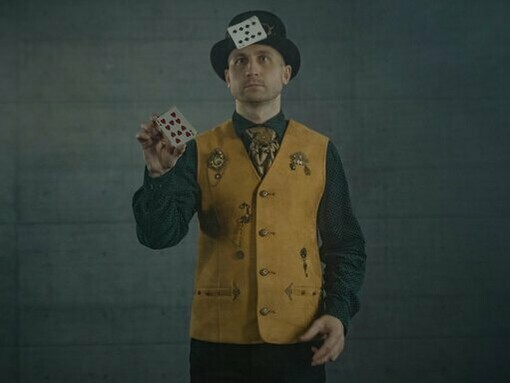
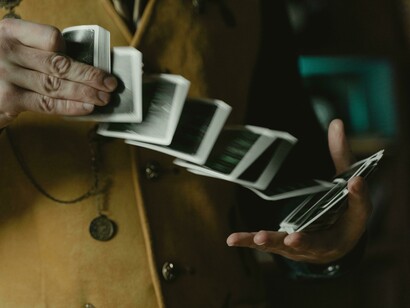
Magicians have long known this. Skilled performers can flip a coin in a way that heavily favours a chosen outcome, a subtle form of manipulation used in gambling scams and stage illusions. Ordinary people do a much milder version without realising it.
This means that if someone knows which side of the coin is facing up before the toss, they can, even accidentally, tilt the odds. If they know how they typically flip, the advantage becomes even stronger. Over thousands of flips, even a slight bias compounds into a meaningful edge.
The coin toss feels fair because we don’t perform it enough times to see the underlying pattern. But at scale, the illusion collapses. (Matthew Sparkes)
Rethinking what counts as fair
If the coin toss is biased, what should replace it?
One simple modification can dramatically improve fairness: hide the starting side. If neither participant sees which face is on top before the flip, the bias no longer favours anyone. This single change corrects most of the problem.
Some researchers advise shaking the coin between both hands before slapping it onto the palm, a motion that removes directional bias and interrupts any consistent rotation. Mechanical coin flippers can standardise the launch, though they still need to randomise the starting orientation to prevent inheriting the same flaw.
Digital alternatives exist, although most random number generators rely on deterministic algorithms that only simulate randomness. These can be predictable under certain conditions.
True physical randomness comes from natural processes: thermal noise, electrical fluctuations, or radioactive decay. The gold standard lies in quantum processes where outcomes genuinely cannot be predicted even in principle. Quantum “coin tosses” are already used in advanced cryptography, though perhaps not in pubs when deciding who buys the next round.
Despite these sophisticated alternatives, the physical coin remains the most familiar option in everyday life. It is portable and easy, and for small decisions its imperfections rarely matter. But knowing how to use it fairly, or when to avoid using it altogether, now becomes part of the equation. (Heidelberg)
The illusion at the heart of randomness
After more than three hundred thousand recorded flips, the conclusion is simple: coins are biased. The bias is small, subtle, and easy to ignore, but it exists. And once you understand the
mechanism, the ritual becomes easier to dissect. The toss is not a moment of pure chance. It is a predictable dance between physics and human motion.
This doesn’t mean we must abandon the coin. But it does mean we should reconsider the unquestioned trust we place in it. The coin toss is a comforting illusion, a tiny ceremony that helps us believe in impartiality even when reality introduces a gentle nudge.
The next time someone flips a coin in front of you, you’ll see the hidden structure. You’ll notice the starting side, the flick, the height, and the catch. You’ll recognise the wobble and the tiny tilt in the odds. And you’ll understand that randomness, especially when performed by human hands, is rarely as random as it appears.
The coin toss was never perfect. It only looked that way.
Notes
Heidelberg, Newsroom. “Fair Coins, Flipping Outcomes, and the Subtle Bias of Physics: What Makes a True 50-50?” Heidelberg Laureate Foundation, 2025.
Kim, Shi En. “Scientists Destroy Illusion That Coin Toss Flips Are 50–50.” Scientific American, 1 Jan. 2024.
Matthew Sparkes. “Coin Flips Don’t Truly Have a 50/50 Chance of Being Heads or Tails.” New Scientist, 17 Oct. 2023.