English
 Español
 Français
 Deutsch
 Italiano
 Português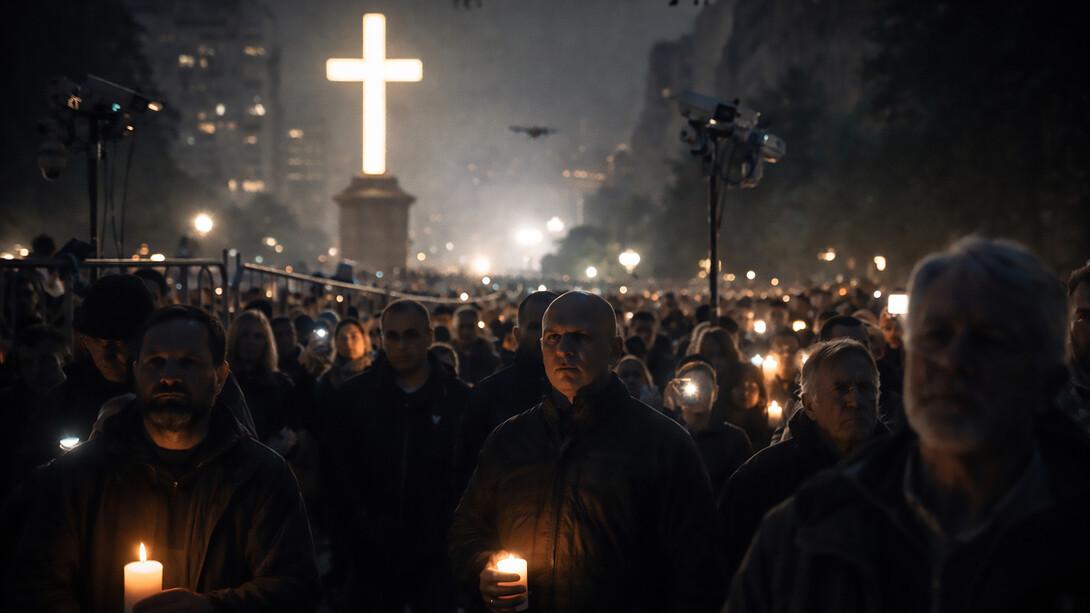
One of the most influential interpretations of 20th-century fascism is that fascism was a rebellion against the secularism of the modern era, which proposed a transcendent society both on a practical level (progress) and on a theoretical level (the possibility of transcending all limits). This rebellion led to the return of political religion (religion as a form of temporal power) in various guises as a political factor. This interpretation has been the subject of intense debate, and it is not my intention to analyze that debate.
I am interested only in addressing the question of the relationship between fascism and religion. Speaking of fascism of the past and fascism of the future may entail the trap of thinking that there is no fascism in the present. It can also lead one to believe that fascism is a monolithic entity and that, therefore, there is only one type of fascism. Usually, definitions of fascism all refer to fascism as a political regime. I, on the contrary, distinguish between political fascism and social fascism; the former occurs in strictly political relations, and the latter, in social relations.
Fascism and religion in the 20th century
The relationship between political fascism in the first half of the 20th century and religion is complex. The secularism of modern society (the separation of church and state) was never complete and operated only in the metropolises, not in the colonies. As both religion and the secular state continued to vie for their place in society, the contradictions and disputes between the two coexisted with convergences, complicities, and mutual exploitations. In the case of Italian fascism, we can say that the sacralization of politics (the veneration of the fascist state, fascist rituals and symbols) signified the emergence of a political, secular, laic religion that came to exist in parallel with traditional religion (the privileged recognition of Catholicism). In 1932, Mussolini, unlike Robespierre, asserted that the fascist state did not have its own theology, but it did have its own morality.
Traditional religion was pragmatically used to reinforce the subjugation of the masses to the political designs of fascism. Conflicts existed and were intense between secular religion and Catholicism in the realm of education, since fascism did not want to relinquish its monopoly on the education of new generations. But the goal was always to abolish the boundaries between the political and religious spheres. None of this was entirely new.
Since the 15th century, movements had emerged to create civic religions, ranging from secret societies (Freemasonry, the Illuminati, Opus Dei) to Jacobinism and positivism. Faith in the nation and in nationalism was a way to combat socialism and contain Catholicism. The revolutionary socialism of the early Mussolini was intended to be more of a belief than a science. As he often said: “Humanity needs a belief.” It was about appealing to an experience of faith in the religion of the Nation. The patriotic religion. Giovanni Gentile argued that fascism had a religious character, “insofar as it takes life seriously,” and “as a movement it arose from the very soul of the nation.” It aimed to create an ethical state.
The sacralization of politics has always involved the sacralization of war, purifying violence: the ultimate sacrifice of body and soul for a sublime cause. Death and resurrection appear transfigured in the cult of martyrs and heroes. The connection between war and the awakening of religious sentiment is as evident in D’Annunzio as it is in Marinetti. In Il Fascio from 1921, it was written: “We are the custodians of a generation that, long ago, transcended the limits of its own historical reality and advances unstoppably toward the future... We are the highest of the high... The Holy Communion of war has molded us all with the same spirit of generous sacrifice.” Fascist belief transcended the natural attachment to life on earth.
In 1932, the Fascist youth newspaper asserted that “a good Fascist is religious.” And in 1930, young university students in Milan established a school of Fascist mysticism centered on the Duce as a living myth. A certain syncretism with Catholicism was evident, and potential conflicts of interpretation were resolved through devotion to the party. The leva fascista was a ritual of initiation for young people similar to “confirmation” in the Catholic Church, through which young people were “consecrated as fascists.” The ceremonies were held in public in every city and included, in addition to the consecration ceremonies, oath-taking ceremonies, the veneration of flags, and the cult of the fallen martyrs. The celebration of the founding of Rome, Rome Day, romanità, and the “Latin spirit” were transformed into archetypal models of the greatness of the fatherland and the “civilization of Italy.”
The various religious elements converged in the struggle against “the triumphant beast of Bolshevism.” The blessing of the gagliardetto, the flag of the fascist “esquadras,” was initially used as a ceremony of redemption for a community that had previously been governed by the socialists. If fascism were a religion, dissidents were “traitors to the faith.” The will of God and the will of the state merged. Traitors were excommunicated and banished from public life. Augusto Turati, party secretary from 1926 to 1930, preached to the youth “the need to believe blindly; to believe in fascism, in the Duce, in the Revolution, just as one believes in God... We accept the Revolution with pride, just as we accept these principles – even if we realize they are wrong, and we accept them without question.” In short, the supreme commandment: “believe, obey, and fight.”
Faith had been transformed into the supreme virtue, and the headquarters of the National Fascist Party were regarded as the “altars of the religion of the Fatherland.” The rejection of rationalism and the adoption of mythical thinking are clearly evident in this passage from a fascist book: “The masses cannot distinguish nuances; they need spirituality, piety, religious principles, and rituals.” The political program was far less important than the belief system, rituals, and symbols. Only in this way could massive, intense, and long-lasting support be guaranteed.
The sacralization of violence was linked to the aestheticization of politics, as Walter Benjamin rightly noted: politics as a rupture of civilizational constraints. It was this rupture that led Ezra Pound to feel drawn to fascism. Fascist irrationality is aesthetically reconfigured as spontaneity, intensity, and authenticity. Extreme nonconformity toward the world is the flip side of blind obedience to the fascist leader. Hence, too, ultimately, the misery of the aestheticization of violence, especially when bodies began to be thrown into the crematoria.
Fascism seeps drop by drop into the very heart of democracy
In the post-1945 period, analyses and interpretations of the fascist phenomenon proliferated. A significant school of thought considered fascism a rupture in the historical continuity of European culture, and some viewed it as a social pathology or as an imposition by manipulative minorities lacking a coherent doctrine or ideology. In other words, fascism, being the result of political manipulation, had no genuine social base. Selfish interests or intimidation tactics had created the body of fascism’s followers. The opposing school of thought saw fascism as a continuation of the French Belle Époque and considered that fascism had a highly coherent system of thought.
These interpretations shared two characteristics. On the one hand, they conceived of fascism as a phenomenon of the past—a past that had been irreversibly overcome. On the other hand, they constituted an external view of fascism. They did not analyze the internal experience of fascism – the way it was lived by the populations where it functioned as a political system or how it was passively accepted or enthusiastically celebrated by those populations. Much less were they interested in the facets of personality or psychic drives that made fascist life a “natural” or “normal” way of living for the vast majorities who actively or passively lived under fascism. How was it possible that Nietzsche or Heidegger were proto-Nazis and that the combination of evolutionary theory, civilizational cycles, and racist biology led to fusions between Charles Darwin and Oswald Spengler?
More recently, the field of analysis has diversified. Internal interpretations of the fascist way of life have emerged, based on the idea that, while fascism sought to be religious and appealed to the irrational or mythical, pragmatic reasons of self-interest or intimidation were insufficient to explain adherence to fascism. On the other hand, renewed emphasis has been placed on psychoanalytic readings previously advanced by the Frankfurt School, which conceive of fascism as a permanent potentiality of communal life; consequently, it makes no sense to speak of fascism as something historically outdated. It is not a matter of theorizing the return of fascism, but rather of theorizing the continued presence of fascism in different forms and potentialities. In a recent book, Vladimir Safatle eloquently defends this theory in a book titled The Internal Threat: Psychoanalysis of the New Global Fascisms (available in Portuguese).
This analytical shift has a very clear sociopolitical rationale: the global rise of far-right political forces that advocate political fascism and, when in power, effectively seek to implement it. Perhaps what best characterizes the present time is the fact that liberal democracy is being used more and more frequently to enable anti-democratic fascists to come to power. These are politicians who are democratically elected but who, once elected, do not exercise power democratically. It is fascism seeping drop by drop into the very heart of democracy. The phenomenon is not new. It happened with Hitler after the 1932 elections. But the intensity with which it is occurring causes the quantity to transform into a new quality. The greater intensity of drip-feed political fascism feeds on the interstitial growth of another type of fascism: social fascism.
Social fascism is the entire system of social relations characterized by extreme power inequality, in which the stronger party holds a veto over the weaker party’s opportunities for life and survival. It consists of situations where people or groups are at the mercy of unilateral powers, without rights or legal defense, even if they formally live in a democracy. It is extreme social exclusion, abysmal exclusion, where human life is devalued by the logic of the market and power. Unlike political fascism, social fascism is pluralistic. I distinguish five forms of social fascism:
Contractual fascism, in which the weaker party has no choice but to accept the conditions imposed by the stronger party, however unjust they may be, on pain of not surviving;
Social apartheid fascism, in which excluded populations live in ghettos – urban areas that are not urbanized – and are at the mercy of all kinds of violence;
Parastatal fascism, in which state violence is subcontracted to paramilitary groups, organized crime, and militias that commit the most extreme violence against populations with impunity;
Financial fascism, in which powerful sectors of financial capital manipulate the state to, through usurious interest rates, extract a significant portion of the workers’ wages and to engineer permanent crises that justify the theft of the middle classes’ savings or the expropriation of assets pledged as collateral for debts;
Insecurity fascism, which consists of using situations of extreme insecurity—accidents, extreme weather events, etc. – for which insurance policies do not exist or are inaccessible, and in which the protective intervention of the state is absent.
The intensification of these different forms of social fascism is largely due to neoliberalism as the dominant form of global capitalism. The gradual intensification of fascism aims to create the conditions for a new phase of political fascism. There is no determinism in this. There is only one objective, and it is up to Democrats not to allow it to materialize.
21st-century fascism and the antichrist
Emerging fascism is more extremist in its religious identity than the fascism of the past. Like the latter, it is based on the sacralization of violence and the sanctification of elites, but it feeds on a dystopian vision of the future that crystallizes in the concept of the Antichrist. It is primarily present in the U.S., but its capacity for dissemination is enormous. Through the idea of the Antichrist, neo-fascism (or neo-Nazism) exacerbates its Christian identity and conceives of present-day society as a life-and-death struggle between good and evil where there is no room for negotiations or ceasefires, but only surrender and the extermination of the loser. Society is in a state of perpetual civil war, and its future is the apocalypse unless it is saved by racially and religiously supremacist states equipped with cutting-edge technologies for controlling populations.
On the religious front, there are significant differences between 20th-century fascism and 21st-century fascism. 20th-century fascism created a secular religion but maintained a relationship of cooperation and tension with traditional religion that presupposed the latter’s relative autonomy. 21st-century fascism takes its Christian identitarianism to the extreme and seeks to absorb the traditional religion closest to it: Pentecostal evangelical movements. The fusion between the political and religious spheres is now much more intense, if not total.
Twentieth-century fascism was based on the idea of a better future society, so much so that socialism was originally present in both Mussolini’s and Hitler’s convictions. In contrast, 21st-century fascism is dystopian and apocalyptic, and thus the Antichrist is not only communism and socialism; it is also democracy itself and the kind of coexistence it promotes, leading to the stagnation of technological progress, which is the only path to redemption. The politics of hatred that sustains civil war knows no political adversaries; it knows only enemies to be eliminated.
Given its apocalyptic nature, it is no surprise that 21st-century fascism, unlike 20th-century fascism, is promoted by sectors of the elite – generally the wealthiest, the billionaires, of whom Peter Thiel is a paradigmatic example. While for 20th-century fascism democracy was merely a decadent regime, for 21st-century fascism democracy, like human rights, is the embodiment of evil. So too is the ecological struggle or any demand that places obstacles in the way of the infinite accumulation of wealth and the technology upon which it depends.
The relationship between 21st-century fascism and Zionism deserves special consideration. 20th-century fascism was anti-Semitic, understood as a radical racist policy against the Jewish people whose extermination it proclaimed and actively sought. Zionism, understood as the aspiration to create a Jewish state, was at that time a minority view among Jews. It found greater acceptance among Russian Jews and those from Eastern Europe (the Baltic states, Belarus, Ukraine, Poland). The Zionist organizations of the time sought and reached agreements with the Nazis, particularly regarding the relocation of Jews to Palestine and the establishment of the State of Israel (agreements that, incidentally, met with little success among the Jewish people).
Shortly after World War II, many Jewish intellectuals drew attention to the danger of Zionism and to the similarities between Zionist methods and those of fascism and Nazism. In 1948, Albert Einstein and Hannah Arendt signed the famous letter to the New York Times, highlighting such similarities in the case of Menachem Begin’s party, today known as Likud.
Extremist Zionists, currently dominant in the Israeli government, share with fundamentalist evangelical Christians the idea of the apocalypse based on the same biblical readings, particularly the Book of Daniel (Dan 7-12) and the Apocalypse of John in the New Testament. Hence the emergence of Christian Zionism, which has greatly strengthened the global fascist movement of this century.
The Antichrist is, as Robert Fuller states, an American obsession. The fight against the Antichrist is today personified in the figure of billionaire Peter Thiel, founder of PayPal and Palantir, whose artificial intelligence was apparently responsible for the deaths of the Iranian ayatollahs and the 208 children, elementary school students at the Shadjareh Tayyebeh School in the city of Minab, Iran.
Peter Thiel, without any theological training, travels the world denouncing as manifestations of the Antichrist leading to the final apocalypse all those political achievements for which we have fought over the last two hundred years to restore a modicum of dignity to the classes and social groups excluded by capitalism, colonialism, and patriarchy: a minimally redistributive state, through social policies (public health, housing, and education); democracy as a system of peaceful coexistence and a means of curbing the “excesses” of capitalism; human rights and the struggle for human dignity in societies where the prosperity of a few is achieved at the cost of the dehumanization of many; ecological struggles to build a new relationship with nature that allows for the reconstruction of natural cycles of vital regeneration.
All of this is anathema that stands in the way of the salvation that only the intelligent technology of AI can bring. The existential threats are not climate change, the atomic threat, the nuclear threat, or the threat of AI. The existential threats come from resistance to the full development of these “advances.” All of this is a manifestation of an anti-Messiah, the triumphant beast of the end times.
The new promised land is Silicon Valley, theorized with reference to Carl Schmitt and, in a distorted and perverse way, to René Girard (the theory of the scapegoat and imitation as the flip side of rivalry). The new Antichrist is the entire historical accumulation of knowledge, organization, and struggle that has been warning of the existential risks humanity and planet Earth face if nothing is done to curb social, historical, environmental, racial, and sexual injustice; if democracy cannot defend itself against anti-democrats; if imperial will replaces international law; if war, genocide, and the plundering of resources are the only means of “resolving” conflicts. For the fascists of the Antichrist, all this historical accumulation of the last two hundred years is a training ground of stagnation that impedes the only possible redemption, technological redemption.
The fascism of the Antichrist and the extremist identitarianism—both Christian and Zionist—on which it is founded, are nonetheless manifestations of Eurocentric thought, which should come as no surprise since every civilization contains “its own” barbarism. And in true European fashion, the “laboratory” experiments of this fascism begin outside the Eurocentric metropolises, in Western Asia (Iraq, Palestine, Syria, Iran, and Lebanon), but one never knows where they end. After all, wasn’t the genocide of the Herero and Namaqua peoples of Namibia carried out by the Germans between 1904 and 1908 a rehearsal for the Holocaust of the Jews in Europe?