English
 Español
 Français
 Deutsch
 Italiano
 Português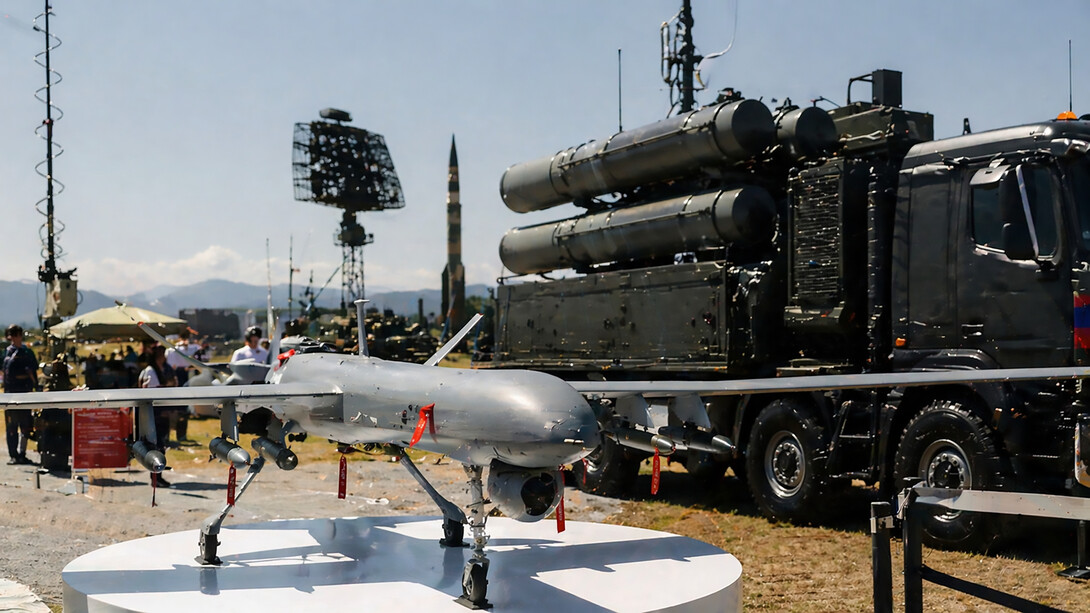
Humanity has had thousands of years to do things right, and now we are on the brink of destruction.
War and fear create high demand for arms, boosting profits for weapons manufacturers. Rising insecurity is seen as a driver for the increased production and sales, creating a 'no business without enemies. Unprecedented rise in global military expenditure—Global military spending hit a record, driven by rising geopolitical tensions and efforts to modernize arsenals against potential threats. This surge is fuelled by a pursuit of security through deterrence, leading to a worldwide record-high demand for advanced weapons (SIPRI).
The record spending has sparked concerns that nations are prioritizing security over development, with the total expenditure being 13 times higher than total global development. Major powers like China and the U.S. are investing in advanced high-tech weaponry. NATO members are increasing budgets, partly due to concerns about the long-term reliability of U.S. security guarantees. The global arms trade is heavily concentrated among a few countries, with the United States ahead of every other supplier. Among the top European arms exporters are Italy, Germany, France, and Sweden. Unfortunately, the world's weapons-producing companies have seen record-high profits fueled by conflicts in Ukraine, the Israel-Palestinian war, Africa (Sudan, DRC, Nigeria), and many others. The militarization of AI has profound implications for global security.
The widespread development of AI weapons could lead to their proliferation to non-state actors or rogue states. And AI systems often struggle to distinguish between combatants and civilians in complex environments, leading to higher risks of civilian deaths. So, stop killer robots, and ban autonomous weapons. Although the use of all available advanced AI technology in the production of arms is a subject of intense debate, there is no balancing of significant military advantages against profound ethical, security, and humanitarian risks. While AI offers better situation awareness and improved precision in targeting, it also threatens to accelerate arms races and remove human responsibility from life-and-death decisions.
Delegating killing decisions to AI creates a 'responsibility gap' where no human can be held accountable for unlawful deaths, eroding the ethical foundation of war. AI-powered autonomous weapons represent a new era in warfare and pose a concrete threat to scientific progress and basic research. AI is revolutionizing how wars are waged with enhanced precision, but a lack of oversight in decision-making in warfare raises ethical and legal concerns. So, should robots be allowed to kill? An AI system does not have morality, which means it cannot understand and see humans as moral subjects. Autonomous weapons deployed in warfare are unable to reflect and comprehend the value of life, and people become a simple data point and potential targets that must be eliminated.
Before listing all types of advanced weapons with their incredible destructive and lethal capabilities, we have to wonder why so much genius and scientific knowledge and huge money have been invested in the research, development, and production of these weapons, which serve to make people kill each other and destroy everything.
The development of hypersonic missiles by multiple countries has the potential to increase global tensions. With such powerful weapons in play, nations might feel more inclined to use them in the event of a conflict. Hypersonic missiles are cutting-edge weapons, fast, precise, and have the potential to change the way we approach military strategy. Hypersonic missiles pose a significant threat due to their reduced warning time, unpredictable trajectories, and ability to penetrate dense layered air defense networks. These weapons, comprising Hypersonic Glide Vehicles and Hypersonic Cruise Missiles, are designed to evade existing missile defense systems at speeds exceeding Mach 5.
These features make them a tricky target for current defense systems. They weave to avoid interception. The combination of speed and precision makes them a devastating weapon, capable of overwhelming even the most advanced defenses. Given the challenges hypersonic missiles present, countries around the world are developing defenses like advanced radar systems, faster interception technologies, and countermeasures that target the nature of the hypersonic threat. Russia and China are considered leaders in the field of hypersonic missile developments. The Russian Avangard glide vehicle is the fastest hypersonic missile capable of reaching speeds between Mach 20 and Mach 27, and the other is the Kinzhal, an air-launched ballistic missile.
Chinese DF-41 reported speeds around Mach 25. Fatah-1 (Iran) reported a speed of 13-15. China tests orbital hypersonic weapon. The U.S. Navy is actively developing carrier-based hypersonic weapons, expanding the operational capabilities of its aircraft carriers. Hypersonic missiles combined with advanced electronic warfare (EW) and AI-driven systems constitute a transformative shift in global military strategy. Electronic warfare consists of three major subdivisions, electronic attack, electronic protection, and electronic warfare support. Electronic warfare systems can jam enemy radar and communication systems, making it more difficult for them to detect hypersonic weapons. Electronic warfare systems are military technologies that exploit, disrupt, or protect the electromagnetic spectrum to gain tactical advantage. Electromagnetic warfare can be applied from air, sea, land, or space; be crewed or uncrewed systems; and target communication, radar, or other military and civilian assets.
Israel Aerospace Industries announced a new electronic warfare system named Scorpius that can disrupt radar and communications from ships, UAVs, and missiles simultaneously and at varying distances. Electronic warfare is a strategic enabler of multi-domain operations, and cyber forces all depend on secure and reliable access to the electromagnetic spectrum. Electronic attack systems, including jammers and directed energy weapons (high-powered lasers), are critical for neutralizing threats and are increasingly used in combination with kinetic defenses. The integration of electronic warfare with cyber capabilities creates hybrid threats using both electromagnetic operations and digital attacks to compromise enemy infrastructure and systems.
The development of these weapons is fueling an arms race, which creates ‘first-strike temptation,' and both sides act quickly in a crisis. A combination of kinetic defenses (electronic warfare and cyber) is deemed necessary to maintain security. The lack of international agreements explicitly covering hypersonic weapons, like the New START treaty, leaves a gap in strategic arms control, contributing to increased instability. Space-based sensor layers are crucial to track hypersonic vehicles.
Today, satellite networks are a cornerstone of modern military operations. Military satellite technology provides secure space-based capabilities for national defense, real-time secure communication, high-resolution Earth observation (GPS), navigation, and early missile warning systems. Operating across orbits, these systems enhance command, control, and reconnaissance, with modern developments focusing on artificial intelligence, laser communication in space, and AI-driven threat detection. Satellites provide precise positioning data for weapons guidance, vehicle tracking, and synchronized operations.
Modern military satellites offer high-throughput and secure data transfer via multi-orbit architectures, essential for real-time battlefield coordination. Satellites use electro-optic (daylight) and synthetic aperture radar (SAR) technologies to capture high-resolution imagery and video, allowing for monitoring troop movements and terrain, regardless of weather or time. AI-driven systems can analyze vast amounts of data to detect jamming attempts and cyber instructions in real time, allowing for rapid countermeasures. The revolution of military satellite communications underscores the critical interplay between technology and security in the modern era.
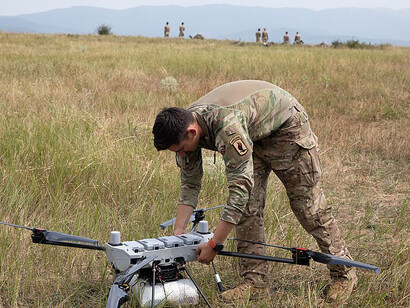
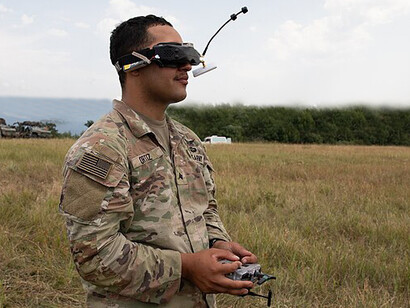
Drone warfare is a form of warfare that involves the deployment of military robots and unmanned systems, which may be controlled by a pilot or have varying levels of autonomy during their mission. Drones find application in a variety of military operations, including electronic warfare, explosive ordnance disposal, training, and logistic support. Drones are most frequently employed in intelligence, surveillance, target acquisition, and reconnaissance missions, enabling direct attacks on targets as part of a kill chain or through manned-unmanned timing. The US Mojave drone is depicted carrying a load of laser-guided rockets.
Mojave is also envisioned as launching its own kamikaze drones, escorting friendly helicopters, spotting targets for artillery, and even transporting small cargoes. Stealth drones are advanced aerial vehicles (UAVs) designed with low-observable technologies to evade radar, infrared, and audio detection, operating in contested airspace for reconnaissance and combat. With a capability for surveillance and strike, optimized for intelligence, surveillance, and reconnaissance in contested environments, as well as penetrating enemy air defenses for air-to-ground attacks. And are autonomous drones that team with manned fighter jets to increase effectiveness and decrease pilot risk. Top ten most advanced military drones: Russian Sukhoi S-70 Okhotnik-B, a stealthy heavy combat drone designed to operate alongside manned fighter jets.
The U.S.-locked Martin RQ-170 Sentinel, known as the Wraith… This US platform is used for surveillance in denied areas. The Kratos XQ-58A Valkyrie is a low-cost, stealthy, long-range tactical drone. Australia/US, Boeing MQ-28 Ghost Bat, part of the collaborative combat aircraft initiative, designed for teaming with manned fighters.
Turkey's TAI Anka-3, a flying wing drone, is designed for deep strikes, radar suppression, and intelligence.
Indian stealth drones—India is developing indigenous stealth, including high-altitude and long-endurance options. Nano stealth smaller drones, such as the 70-gram Black Hornet, now incorporate technology to fly in GPS-denied, contested environments. Unmanned Combat Aerial Vehicles (UCAVs) are designed with technology to penetrate advanced air defenses and perform high-risk missions without endangering human pilots. Modern systems—from simple surveillance to autonomous ‘layer wingmen' that operate alongside manned fighters like F-35 or J-20. Tactical and armed drones are pivotal assets to modern defense operating systems, which support frontline forces with real-time data and advanced targeting.
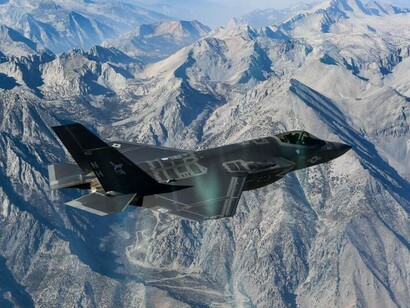
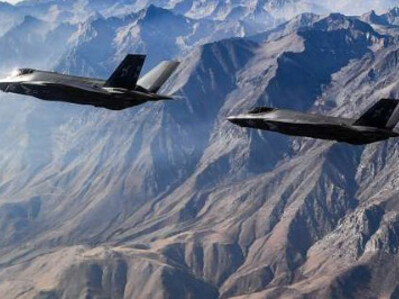
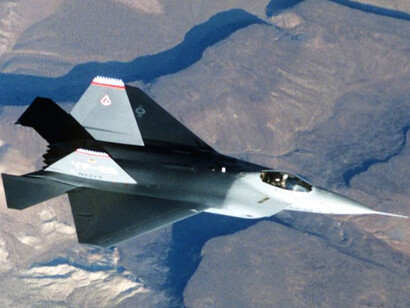
Modern fighter jets feature advanced avionics, low-observable technologies, and high maneuverability and are dominated by 5th-generation stealth platforms. The top best and most feared fighter jets on earth right now are the Eurofighter Typhoon, Russia’s Su-57, China’s J-20, the F-35, and the F-22 Raptor. The F-35 is the only fighter jet that can take off and land vertically on a moving ship, thanks to its unique design and powerful engines, with advanced sensors and communication suites operating close to the battlefield. And the fastest fighter jet in service today is the Mikoyan-Gurevich MiG-25 with a top speed of Mach 3.2.
Military robots are rapidly evolving autonomous or remote-controlled systems, including humanoid robots, drones, and unmanned ground vehicles, designed for reconnaissance, logistics, and combat support to enhance soldier capabilities. Robots are primarily designed to work alongside soldiers, acting as ‘smart partners,' including AI-driven suicide drones that track targets without human intervention. China is developing humanoid robots that replicate human soldier movements for scouting and logistics, including voice-controlled bomb disposal bots. China just built an autonomous AI army of killer robots. The U.S. military is testing Tesla Optimus prototypes for patrol, casualty evacuation, and urban warfare, aiming to deploy thousands by 2030. The European Land Robot Trial serves as a key platform for testing new robotics technology, including field exercises with unmanned systems.
A submarine is a watercraft capable of independent operation underwater. Submarines conduct a vast array of missions, including anti-surface and anti-submarine warfare, intelligence gathering, mine reconnaissance, land attacks, polar operations, special forces support, and defending other fleet ships. Submarines in service include seven Russian Kilo-class submarines, four German HDW submarines, five Scorpène-class submarines, the nuclear ballistic missile submarine INS Arihant, the U.S. Virginia-class Block V and Sea Wolf-class, France's Barracuda-class, and the UK's Astute class. All are noted for their advanced stealth sonar and armament capabilities. Royal Navy submarines are equipped with cutting-edge technology, including sonar systems that enable them to detect enemy vessels from over 50 miles away and hunt and destroy enemy submarines.
Modern nuclear submarines can stay underwater for 20 years, create their own air and water, and carry 24 missiles with multiple warheads. Russia has the largest nuclear submarine fleet (66) in the world, and the United States has 64, entirely nuclear-powered. Russian Belgorod is the world’s largest operational submarine. Poseidon is a Russian nuclear-powered weapon. It is an autonomous unmanned underwater drone, designed to destroy coastal cities and infrastructure, with a massive ‘radioactive tsunami,' capable of traveling thousands of miles underwater for months, carrying a nuclear warhead up to 2 megatons.
There is time for nations to strengthen their defenses and create international agreements that limit the spread of these and all weapons. The focus must be on innovation, collaboration, and ensuring that these powerful tools are kept under controls.