English
 Español
 Français
 Deutsch
 Italiano
 Português
In recent episodes of All Things Unexplained, I have examined two seemingly separate missing persons cases that, upon closer inspection, share a common institutional thread. The disappearance of aerospace engineer Monica Reza and retired U.S. Air Force Major General William Neil McCasland has drawn increasing attention—not because of speculation, but because of verifiable overlap within one of the United States’ most advanced research ecosystems.
Both individuals operated, at different levels, within the orbit of the Air Force Research Laboratory (AFRL), a central hub for propulsion, materials science, and next-generation aerospace technologies. While there is no confirmed evidence that Reza and McCasland worked directly together, the convergence of their careers—and their subsequent disappearances—warrants careful, fact-based examination.
The disappearance of Monica Reza
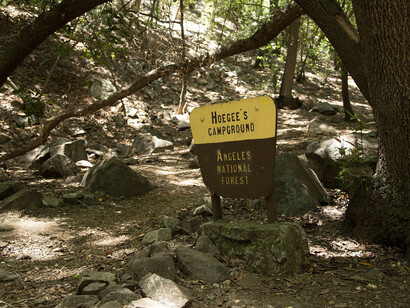
Monica Reza, also known professionally as Monica Jacinto, was a materials scientist whose work focused on high-performance alloys for aerospace applications. In June 2025, she disappeared while hiking in California’s Angeles National Forest. According to reports, she was walking with companions and was last seen approximately 30 feet behind one of them, smiling and waving before vanishing from sight. Despite extensive search efforts involving helicopters, dogs, and ground teams, no trace of Reza has been found.
Independent field observations provide additional context. YouTuber Alex Navarrow (@PHARRAOH), who visited the location, described the trail as a semi-popular route near a highway that splits roughly 4.7 miles in. According to his account, there may have been multiple companions, and the terrain includes steep slopes, loose rock, and numerous areas where a person could fall out of view.
This detail is significant because it challenges the assumption that Reza disappeared in a remote or inaccessible wilderness. Instead, she vanished within a known and navigable trail system, albeit one with hazardous features.
Mondaloy and the AFRL connection
Prior to her disappearance, Reza—under the name Monica Jacinto—co-invented a family of nickel-based superalloys known as Mondaloy alongside materials scientist Dallis Ann Hardwick. The pair worked with Aerojet Rocketdyne, a major defense contractor, and collaborated with AFRL’s Materials Directorate in developing the alloy.
An official Air Force release dated May 5, 2016, confirms that Mondaloy 200 was successfully tested in an oxygen-rich staged combustion rocket engine environment. This represents one of the most extreme conditions in propulsion engineering, requiring materials capable of withstanding extraordinary heat and oxidative stress.
Hardwick, whose career spanned Boeing, AFRL, and leadership in advanced gas turbine materials research, passed away on January 5, 2014. Her obituary notes that her work—continued by Aerojet Rocketdyne and AFRL—plays a critical role in next-generation U.S. launch systems.
Following her death, Reza would have emerged as one of the foremost experts on Mondaloy, a material central to modern propulsion systems.
Neil McCasland and AFRL leadership
During the key development period for Mondaloy, Neil McCasland served as Commander of AFRL from 2011 to 2013. In that role, he oversaw research programs in propulsion, advanced materials, and aerospace systems—the very domains in which Mondaloy was developed.
McCasland later retired from the Air Force and settled in Albuquerque, New Mexico. On February 27, 2026, he was reported missing after disappearing from his home within a narrow timeframe. According to available information, his phone, glasses, and wearable devices were left behind, while his wallet, firearm, and a backpack were missing.
Eight days later, a sweatshirt believed to be associated with him was discovered approximately 1.25 miles from his residence, though it was not definitively confirmed as his and showed no signs of blood.
The FBI has since become involved, and official updates have been limited.
The 911 call: a new layer of context
A recent development discussed on All Things Unexplained involves the release of a 911 call placed by McCasland’s wife on the day of his disappearance. In the call, she describes a narrow window—approximately 50 minutes—during which McCasland vanished after she left for a medical appointment and returned home.
She notes that he left his phone behind, turned off, which she found unusual, and suggests that his actions may have been deliberate. She also references ongoing medical concerns, including anxiety, sleep issues, and short-term memory loss.
Importantly, she states that he had never behaved this way before, describing him as responsible and reliable. The call ultimately contributes to a more nuanced understanding of the case, reinforcing both the suddenness of the disappearance and the ambiguity surrounding his state of mind.
Below is the transcript of the 911 call made by General McCasland’s wife, Susan Wilkerson:
Dispatcher: This is April. How may I help you?
Caller (Susan Wilkerson): Hi, April. My name is Susan Wilkerson. Um, my husband is missing.
Dispatcher: Okay.
Caller: And he’s—it’s been about three hours, and I have some indication that he must have planned not to be found. He’s left his phone. He changed his clothes into—I don’t know what. I think he’s on foot. All of our cars and bicycles are in the garage. I left for a doctor’s appointment at about 11:10, and he was here at that time at the house. And I got back from that at noon, and he was gone. He turned it off and left it behind, which seems kind of deliberate because he’s always got his phone. He has a smartwatch. I don’t know if that’s with him or not.
Dispatcher: Has he ever done this before?
Caller: Never. Nothing even remotely like it. He’s a retired Air Force major general. He’s very responsible… but he’s also facing some medical issues.
Dispatcher: Do you have any video at your home?
Caller: No.
Dispatcher: Has he been diagnosed with any mental disorders or anything like that?
Caller: Well, we’ve been seeing a doctor for both physical and mental—in terms of anxiety, short-term memory loss, lack of sleep. The same doctor I went to see today.
Dispatcher: Does he carry any weapons on him?
Caller: Well, not generally. I—he does have a gun safe, and I went to look in the gun safe to see if anything was missing, but I couldn’t tell if anything was. There’s—okay—he has quite a number of pistols and rifles. Other than saying if his brain and body keep deteriorating, he didn’t want to live like that… But it seemed to me that was just a man—“I hate how this is going” kind of thing. Because I told him, “Yes, you do. Yes, you do.”
Dispatcher: Okay, we’re going to send some deputies up to talk to you, see if we can search a little bit and see what’s going on.
Caller: Okay. Sure. Thank you very much.
Dispatcher: You’re welcome.
Public commentary and expanding context
The case has also drawn attention from public officials. Congressman Tim Burchett has referenced McCasland in the context of classified aerospace and UAP-related work, suggesting that individuals within this domain operate within a “small fraternity” and that unusual events affecting one member are noticed by others.
While such statements remain unverified and should be treated cautiously, they reflect broader public interest in the intersection of advanced research, national security, and unexplained events.
A shared system, not a proven link
What can be stated with confidence is this: Monica Reza and Neil McCasland were both connected to AFRL’s research ecosystem during a critical period in the development of advanced propulsion materials. Reza contributed to the invention of Mondaloy, while McCasland oversaw the laboratory responsible for its testing and implementation.
There is no evidence of direct collaboration between the two. However, their careers intersected within a highly specialized and tightly controlled research environment—one that operates largely outside public visibility.
Conclusion
As of this writing, the disappearances of Monica Reza and Neil McCasland remain unresolved. Each case, on its own, presents a complex and troubling set of circumstances. Taken together, they highlight a convergence of advanced science, national defense, and unexplained absence.
In fields such as aerospace propulsion and materials science, the individuals behind major technological advances are often unknown to the public. Their work shapes the future of national capability, yet their personal stories rarely surface.
Until they do—and until more information is released—these cases remain open, grounded not in speculation, but in the facts we can verify.