English
 Español
 Français
 Deutsch
 Italiano
 Português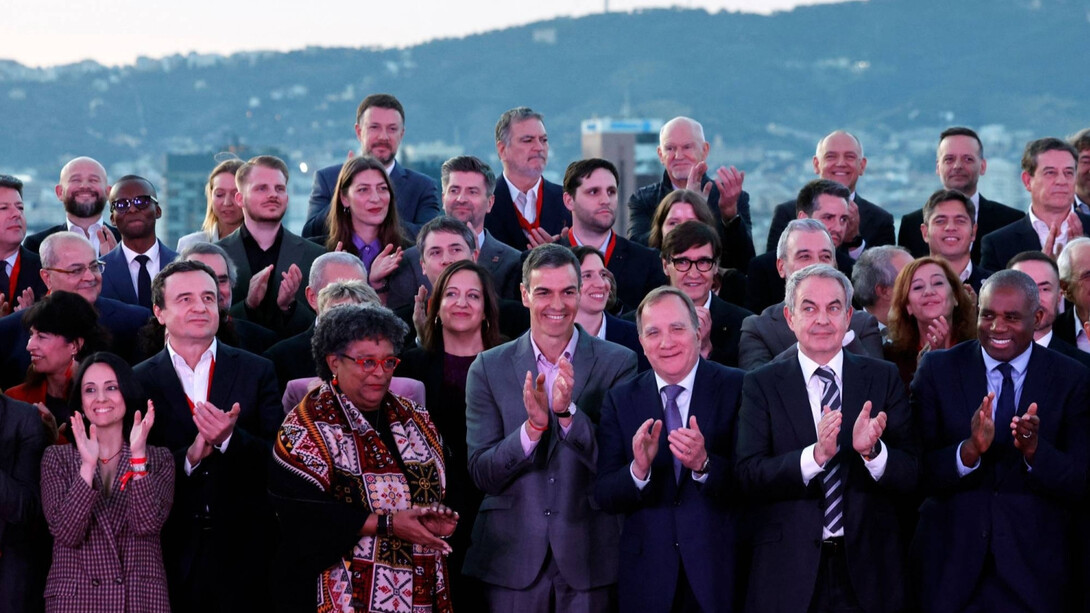
The city of Barcelona is symbolic for the global left. It was there that, on July 19, 1936, Franco’s coup against the Spanish Republic failed, sparking the civil war that would last three years. Barcelona was one of the last strongholds to fall, on January 26, 1939, when Franco’s army and Moroccan troops captured it. Socialists, communists, anarchists, Trotskyists, and Republicans—who defended the Second Republic of the Popular Front led by Manuel Azaña and which had won the February elections of that year—all converged there to fight for a revolution that would come and put an end to capitalism. It was also the place where the International Brigades arrived, volunteers from more than 50 countries ready to fight against fascism, with their numbers estimated at close to 60,000 fighters.
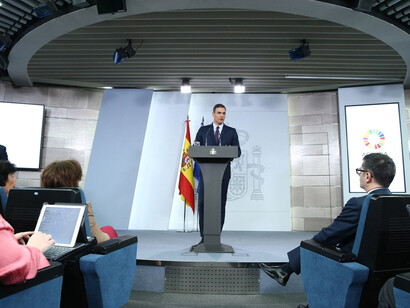
On April 17 and 18, the Global Progressive Mobilization (GPM) summit took place in Barcelona, bringing together politicians from Latin America and the Caribbean, Europe, Africa, and the United States, represented by a senator and the governor of Minnesota, Tim Walz, who surprised those present by speaking out against President Donald Trump’s “fascism.” This meeting was coordinated by Spanish Prime Minister Pedro Sánchez, Brazilian President Luiz Inácio Lula da Silva, and former Swedish Prime Minister and current President of the Party of European Socialists, Stefan Löfven. They seek to coordinate a global movement—an international alliance of progressivism—to halt the growing rise of the far right, which undermines political systems by seeking to impose an authoritarian vision that limits democratic practice.
On the international stage, it has been President Donald Trump who has succeeded in mobilizing progressivism by violating the basic principles of international law in an attempt to impose policies that prioritize U.S. interests over those of other nations.
Today, we are witnessing the indiscriminate use of power, whether through military or economic force, tariffs, visa suspensions, or other measures against all those countries or individuals who refuse to accept or prioritize U.S. policies over their own national interests. In the case of the Americas, we have seen the political will of the two leading Latin American countries, Mexico and Brazil, whose presidents attended the meeting in Barcelona, demonstrating independence, leadership, and a courageous stance, without fear of the U.S. president’s tantrums.
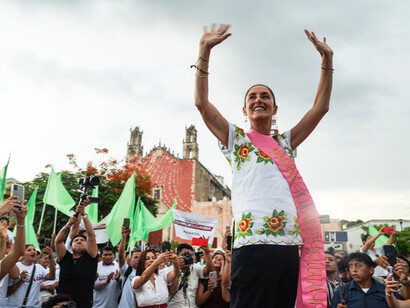
Mexican President Claudia Sheinbaum proposed allocating 10% of military spending to reforest the planet, which is increasingly affected by the ecological crisis, and expressed her firm opposition to any potential military intervention in Cuba. In defending democracy, she concluded by quoting President Abraham Lincoln: “Democracy is government of the people, by the people, and for the people.”
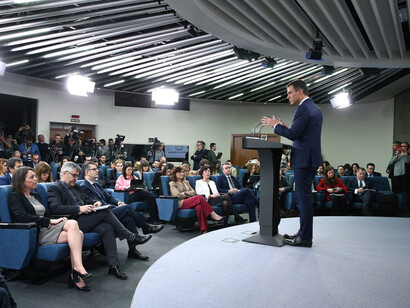
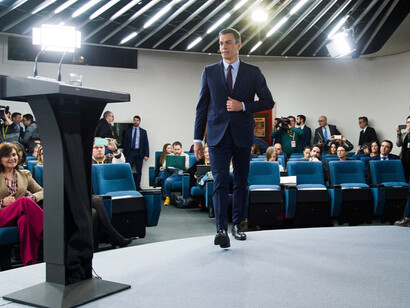
For his part, President Lula, who will seek re-election next October, criticized far-right policies as well as disinformation targeting migrants, defended the rights of women and minorities, and issued a clear call for peace and for the Security Council powers to fulfill their responsibilities. For his part, the main host, President Pedro Sánchez—who has become a true European leader in opposing and confronting President Trump’s hegemonic policies—also addressed the misinformation rampant on social media and the need to protect democracy from the far right, emphasizing that Spain “is a child of migration and therefore cannot be the mother of xenophobia.” Furthermore, he reiterated his call for “no to war and yes to peace,” which has been his motto.
The attendance of around five thousand people reflects the interest in denouncing the current situation. This was expressed by the presidents of Colombia, South Africa, and Uruguay; the prime minister of Barbados; politicians such as the former senator Isabel Allende, leader of Italy’s Democratic Party, Elly Schlein; and many others, alongside recorded messages with greetings from Hillary Clinton, Michelle Bachelet, Zohran Mamdani, and Bernie Sanders.
All the leaders mentioned the need to reform multilateralism, which implies strengthening international law. The irrelevance of the United Nations has been starkly revealed in its inability to prevent or stop ongoing wars, invasions, assassinations, kidnappings, and human rights violations—which have led global public opinion to lose faith in the system. The GPM seeks to bring together similar perspectives on issues such as inequality, climate change, war, the arms race, immigration, hunger, poverty, and others that have been on the agenda for years but have become empty words—and will remain so unless we act together.
The only way to attempt to influence and bring about change is through united action on the key issues, and one of these is the United Nations Security Council, composed of the five members with veto power: China, the United States, France, the United Kingdom, and Russia. Its archaic structure, out of touch with reality and based exclusively on the power of its members, is responsible for many of today’s problems. Nothing will change unless its structure is reformed; in practice, it is an authoritarian body that administers a multilateral system protected by the five major powers. It has become an institution that fails to fulfill its primary mandate due to the defense of its own interests or those of countries under its protection, which can act with impunity in violation of international law—the very foundation of civilized coexistence.
The upcoming election of the United Nations Secretary-General was a topic of discussion throughout the two-day conference. Michelle Bachelet, the most qualified of the candidates, emphasized the importance of strengthening multilateralism, democracy, peace, and human rights, which are the foundation of international coexistence. Many agree that it is time for a woman to lead the organization, after 80 years of existence.
Spanish President Pedro Sánchez put it with subtlety, prudence, and elegance when he noted that “the United Nations must be renewed, reformed, and led by a woman,” for reasons of justice and credibility for the international system and to renew global public confidence in the organization. For his part, former Chilean President Gabriel Boric was clear in stating that Bachelet is the most qualified to undertake a process of substantial reforms.
This will only be possible with the resolute support of the countries that must target the heart of the system: the Security Council. The role of the GPM will be fundamental if it manages to maintain a functional support structure and coordination that unites countries around concrete objectives, but more importantly, the five permanent members must be convinced of the necessity of this. Mexico and Brazil are staunch supporters of the candidacy, while the Chilean government of President José Antonio Kast, in an attitude incomprehensible to the world, offers trivial explanations for not supporting the candidacy—which only confirms the ideological nature of its approach to international policy.
Barcelona, with its long history of triumphs and defeats, has witnessed this GPM meeting and has renewed the hope of progressivism. Let us hope that the principles and unity of purpose to uphold multilateralism are maintained, initiating a process of renewal of the United Nations under the leadership of a woman who has demonstrated courage and fortitude and who must open the doors of the Security Council to let in fresh air, reflecting the reality of a world entirely different from that of its creation in 1945.