English
 Español
 Français
 Deutsch
 Italiano
 Português
Dawn breaks among mountains covered in deep forests, where silent rivers reflect the sky like ancient mirrors and the air seems to hold stories in every breath. Inside the houses, time slows down: families gather around the abundant table, sharing breads, cheeses, spreads, and sweets passed down through generations, and glasses are raised in toasts celebrating life.
Laughter echoes, stories emerge spontaneously, and the walls are adorned with photographs of loved ones. Amidst long conversations and songs, hand-stitched colors appear on fabrics, delicate designs that move with the bodies and carry an ancient memory. It is a place where nature embraces culture, where the everyday is ritual, and beauty lives in the details.
This is Slovakia, the heart of Central Europe and a little-known destination among travelers. Beyond the imagery, the geography reveals itself. Set between Poland to the north, Hungary to the south, Austria to the west, and Ukraine to the east, the country’s capital is Bratislava, incredibly just one hour away from Vienna. The Slovak Republic covers approximately 49,000 km² and is largely mountainous. It has a population of around 5.4 million people, according to the 2024 World Bank census, and its official currency is the euro.
Amidst charming towns, serene countryside, and lands rich in history and tradition, I found a place that felt like a hidden home to me. Like many readers, I had little idea of Slovakia's existence before; in fact, visiting such a country hadn't even crossed my mind. Everything changed when I met my Slovak fiancé and his family. Over time, Slovakia stopped being just a destination and became something more personal. With each visit, the country revealed itself in quiet moments—shared meals, long walks through small towns, and the unspoken warmth of family life.
Perhaps my first trip was from a tourist's perspective, but as I spent more time in Slovakia, I learned to appreciate its culture, where I was able to perceive, in an intimate, familiar, and authentic way, the essence of Slovakia and its people. Far from following a traditional itinerary or simply visiting tourist attractions, I experienced Slovak daily life alongside my fiancé and his family. I became familiar with home-cooked meals, celebrations of special occasions, shared games, and a genuine human warmth—so often said to be absent in Slavic countries.
The country is undeniably beautiful, with breathtaking landscapes, lively music, and comforting food. But it is the people — the Slovaks — who make the place truly special. In the way they speak, welcome you, and genuinely connect, they challenge everything I once believed about Slavic cultures being distant or cold.
To truly get to know Slovakia, you need to see it, taste it, and walk through it. Its landscapes, traditions, and everyday rituals give shape to the connection I felt and can make you feel as well. From nature to food, the country reveals itself through simple, lived experiences.
History that still lives
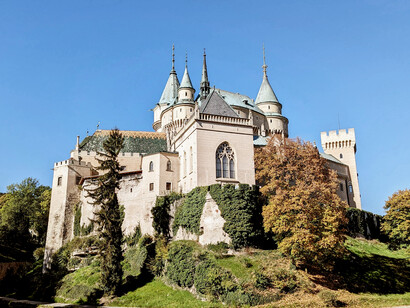
Slovakia's history is not just something to be remembered; it is alive every day. From the countless medieval castles scattered across large cities and small villages, the past is visible and accessible to all. Its territory reveals a rich medieval and aristocratic past, with around 180 castles throughout the country and more than 1,200 manor houses—châteaux. Mostly used as defensive structures, displays of power, and residences for the nobility, many Slovak castles today are ruins open to visitors and have been transformed into museums.
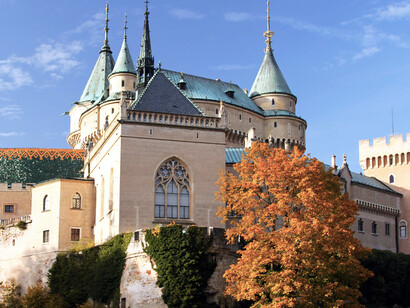
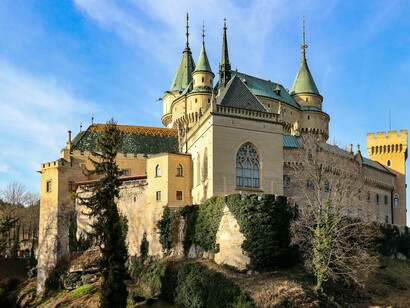
Among the most famous is Spiš Castle (Spišský hrad), considered by UNESCO to be one of the largest castle complexes in all of Europe. Bojnice Castle (Bojnický zámok) is also a popular destination for travelers due to its medieval, romantic architecture. Orava Castle (Oravský hrad), Bratislava Castle (Bratislavský hrad), and Devin Castle (Devínsky hrad) are also frequently listed as some of the most significant in the entire country. They are a defining feature of the landscape and a testament to Slovakia’s medieval history.
These medieval constructions did not exist in isolation. They helped structure cities, trade routes, and centers of power that, centuries later, would be incorporated into the vast administrative system of the Austro-Hungarian Empire, which redefined borders, administration, and cultural identity. The Austro-Hungarian Empire persisted for centuries and left deep marks on urban organization, architecture, and local customs. Slovaks, Germans, and Hungarians found themselves mixed and coexisting as a single people dominated by the crown, even while clearly sharing their differences.
In addition to the capitals and major administrative centers, the Austro-Hungarian Empire organized a network of small towns focused on trade, mining, and local administration. It was in these places that the imperial legacy became part of everyday life until nowadays. Cities like Banská Štiavnica, Levoča, Kremnica, and Bardejov are preserved historical cities and reflect the Baroque architecture of the houses, central squares, and churches.
Narrow streets, colorful facades, and central squares maintain the atmosphere of centuries past, while cafes, markets, and residents bring contemporary life to these historic settings. Traveling through Slovakia is like walking between different centuries at the same time—a country where history has not been erased by modernity but rather incorporated into it.
Silent nature
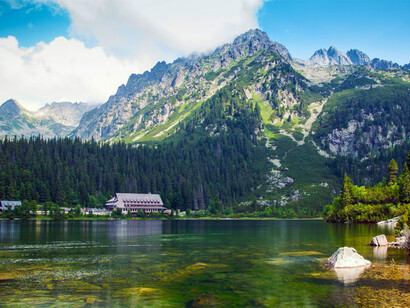
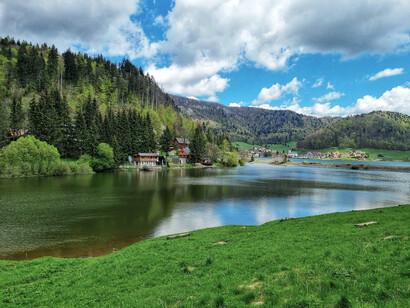
Despite being a small country, Slovakia is rich in natural diversity, featuring lush valleys, dense forests, crystal-clear alpine lakes, and dramatic mountain ranges. For those seeking a closer connection to nature and ecotourism, Slovakia is a special, sure-fire destination.
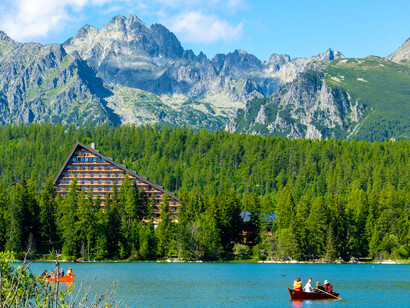
It is impossible to talk about the country without mentioning the High Tatras—Vysoké Tatry—the highest part of the well-known Carpathian mountain range. A natural symbol of the country, the Tatra Mountains boast rugged peaks, trails, and glacial lakes reminiscent of the Alps. During the summer months, visitors come to enjoy hiking trails, lake tours, cycling routes, and family picnics. In winter, the region transforms into a leading snow sports destination in Central Europe, offering alpine skiing, snowboarding, sledding, and more. The festive season in December brings an extra layer of magic, with Christmas decorations lighting up the landscape.
For those who aren’t into adrenaline sports and prefer a more relaxing experience, Slovakia also has plenty to offer. The country boasts many national parks, forests, and traditional villages with well-structured and signposted trails.
A standout attraction is the Slovak Paradise National Park, known for its trails that pass through narrow gorges, cascading waterfalls, and wooden walkways fixed to the surrounding cliffs. The country is enchanting not only for the beauty of its nature but also for its preservation. Large parts of Slovakia remain protected and are home to a diverse fauna, such as deer, wolves, and bears.
Moreover, to its surface landscapes, Slovakia also stands out for its natural caves, including ice formations and protected underground systems. This close relationship with the natural environment helps shape the rhythm of local life, influencing habits, leisure, and how the country connects with its own territory.
Daily life and culture
Like virtually all modern countries, Slovakia lives in two different time periods. In the capital, Bratislava, and many other large cities, such as Košice, Prešov, Žilina, and Banská Bystrica, people live a more hectic urban life, with busier schedules and a more hurried pace. This is due to the greater proximity of these large centers to modern ideals, mass tourism, and the concentration of studies and job opportunities there. Slovak culture and identity in these cities are maintained in an environment where life unfolds automatically, without waiting for anyone.
When we shift our focus of observation to the countryside and small towns, life in Slovakia unfolds on a different level. There, people also work, study, and have commitments, but, without generalizing, daily life is less chaotic than in large cities. The feeling is that there is less of a rush in things, people have a routine closer to nature, and human relationships are closer and more binding.
In the countryside, it's not just the slower pace of life that prevails, but traditions and customs also become stronger. Although few people know it, Slovakia has a very rich culture, which extends from popular festivals, religious celebrations, folk music, traditional dances, typical costumes, and other family customs passed down through generations.
Among the most popular festivals in their community, the Východná Folk Festival is the largest and most famous in the country. Celebrated for several days, the festival brings together numerous participants who present traditional music and dance performances, crafts, typical foods, activities, and other important customs of Slovak culture.
It is very common to see performances of traditional dances such as the Karička—a women's circle dance, common in villages—and the Verbunk—a traditional men's dance. The festival attracts tourists from all over the world, and it takes place every year in the village of Východná, in the north of the country, usually in the summer. Other popular festivals include Dožinky and Fašiangy, which celebrate the harvest and carnival, respectively.
Easter (Veľká noc) and Christmas (Vianoce) are also two very important religious dates for Slovaks. These two celebratory dates are always marked by lavish meals, traditional drinks, long conversations, and rituals that vary from family to family. During Easter, there is a rather funny and peculiar tradition among families called "oblievačka." Men often throw water on the women of their family as a ritual of purification and fertility. This cultural practice can be done in various ways, from hoses and buckets to more creative objects.
At Christmas, in addition to the traditional dinner, the exchange of gifts, and the Christmas tree, it is also customary to spread honey on the forehead in the shape of a cross during the Christmas Eve dinner, a task performed by one of the older members of the family, such as the grandmother or mother-in-law. I have to admit, when it was my turn, I’d completely forget about the honey on my head—then inevitably run my hand through it and end up a sticky mess.
Moving on, it's impossible to talk about Slovak culture without mentioning the country's traditional costumes known as kroje. They vary from region to region, but generally feature fantastic, colorful, hand-embroidered designs and are often worn at parties, dances, and official celebrations. Women wear embroidered, full skirts with white blouses, and men wear vests, embroidered trousers, and hats.
At the center of family culture and the emotional memory of every Slovak household is food. Seen as an extension of family history and local identity, the meals are enjoyed at home with simple yet substantial recipes. The country's home cooking emphasizes potatoes, cheese, smoked meats, honey, and other delicacies. The country's culinary symbol is Bryndzové halušky, potato dumplings served with sheep's cheese (bryndza) and crispy bacon. This will most likely be the first dish you'll try as soon as you set foot in Slovakia. Other main dishes that are very common on Slovak family tables are the following:
Kapustnica: a sauerkraut soup with smoked meat, sometimes with mushrooms, served especially at Christmas.
Zemiakové placky: fried potato pancakes, served as a side dish or snack.
Smotana: basic ingredient of Slovak cuisine and present in the vast majority of dishes, it consists of a sour cream that is found in variations of smotana na varienie and kyslá smotana.
Langoše: a recipe originally from Hungary but extremely popular in Slovakia. It consists of fried dough, sometimes topped with garlic, cheese, or sour cream.
Lokše: thin potato pancakes, used with sweet or savory fillings.
Medovník: honey cake, typical of festivals and Christmas.
Makovník: It is a sweet cake or roll made with ground poppy seeds, usually mixed with sugar, honey, or molasses. Common, especially at holidays, Easter, and Christmas.
The country is known for its diverse array of cheeses, typical of the Slovak mountains, from smoked and sheep’s milk cheeses to wide blue varieties. While Parenica and Oštiepok are particularly delicious, if I had to recommend one in particular, it would be Tvaroh. Made from cow’s milk, tvaroh is a fresh cheese similar to ricotta, but with a gentle, distinctive flavor. Soft and slightly grainy in texture, it works beautifully in both sweet and savory dishes. I have to give a special mention to the best tvaroh pâté I’ve ever tasted—the one my mother-in-law makes for breakfast.
Beyond the obvious Europe, for travelers used to the busy streets of Paris or Rome, Slovakia feels like a refreshing alternative: familiar European charm, but without the crowds and long lines. The country preserves its European attractiveness, authenticity, and cultural richness without being overtaken by mass tourism. Remarkably diverse for its size, it offers a wide range of landscapes, outdoor activities, and natural environments, many of which remain genuinely untouched.
Its well-preserved nature is one of its defining features, setting it apart from parts of Europe where wilderness has largely been domesticated. Slovakia’s identity is shaped by a unique blend of Slavic, Germanic, Hungarian, Czech, and Slovak influences—and rather than diluting its character, this mix has strengthened a strong sense of pride in local traditions, folklore, and history.
Compared to much of Western Europe, Slovakia combines a solid quality of life with a lower cost of living, making everyday experiences more accessible and less performative. It’s a place where nature is easy to reach, history feels present rather than staged, and daily life hasn’t been redesigned to cater primarily to outsiders. For travelers, Slovakia offers discovery without exhaustion; for curious readers, it challenges the idea that Europe has already been fully explored—proving that some of the continent’s most rewarding places are still quietly being themselves.
What mentally always brings me back to Slovakia isn’t a landscape or a landmark—it's the table. I think of sitting with my fiancé's family, everyone talking at once, sharing food, raising their glasses, and lingering longer than planned. There’s nothing formal about it, yet it feels deeply meaningful. In those moments, I don’t feel like a visitor. I feel at home. That quiet warmth — the simple act of making space for one more person — is, to me, the truest expression of Slovakia.