English
 Español
 Français
 Deutsch
 Italiano
 Português
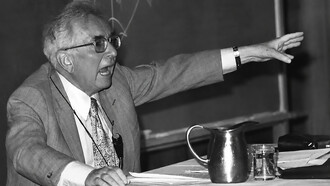
Today, writing “like Mario Praz” is not merely difficult: it is unthinkable. Not for lack of talent, but because the cultural, linguistic, and moral conditions that made a voice like his possible have vanished. Praz was not only a great Anglicist or one of the most refined literary critics of twentieth-century Italy; he was an intellectual who inhabited the margins, did so deliberately, and turned that position into a tool of knowledge. His marginalization in life and his distance from our present are two sides of the same coin.
Mario Praz wrote in an era when literary criticism was still a creative act. His prose—dense, allusive, and erudite to the extreme—arose from a vision of literature as a total symbolic system in which art, life, eros, death, and memory were in constant dialogue. Today, critical writing is almost always functional: it serves to explain, clarify, simplify, and classify. In Praz, by contrast, criticism is an autonomous aesthetic experience. It does not accompany the text: it reinvents it.
This difference alone is enough to explain why no one writes like him anymore. Our time mistrusts ambiguity, excess, and slowness. Prazian prose requires a patient, cultivated reader willing to lose themselves in references, silences, and shadows. It is a form of writing that grants nothing to immediacy and does not fear appearing “difficult.” In an age dominated by simplification, compulsory accessibility, and rapid communication, such a stance appears not only anachronistic but almost provocative.
But there is more. Mario Praz belonged to an intellectual tradition that has largely been erased: that of the solitary scholar, who builds a method out of a personal—often eccentric—sensibility, rather than from a school or shared paradigm. His attention to the macabre, to the aesthetics of decadence, to the nocturnal side of European Romanticism placed him outside the reassuring canons of the idealist criticism dominant in Italy. Praz did not seek reconciliation: he sought the truth of forms, even when that truth was uncomfortable.
This liminal position contributed to his marginalization in life. Though an internationally significant figure, more respected abroad than at home, Praz was never truly “integrated” into the Italian cultural system. Too aristocratic for mass culture, too individualistic for academia, too restless for a criticism that privileged order, clarity, and explicit civic engagement. In a country historically inclined to mistrust isolated figures, Praz paid the price for his irreducibility.
His lifestyle also contributed to making him a difficult figure. His celebrated Roman house-museum—today an object of admiration and visits—was in his lifetime a space of solitude and obsessive devotion to memory. There, Praz built a private universe of objects, portraits, and furnishings that silently conversed with his critical work. In a culture that favors extroversion, public gestures, and ideological belonging, such radical interiority appeared suspect, if not openly off-putting.
Nor should another element be overlooked, often left unspoken yet central: Praz’s estrangement from the dominant models of masculinity and sociality of his time. His writing on eros, always filtered through art and symbol, revealed an unaligned sensibility—a perception of desire as an ambiguous, unsettling force, never fully reconciled. This contributed to surrounding him with an aura of eccentricity that, rather than being valued, was often used as grounds for exclusion.
Why, then, does no one write like Mario Praz anymore? Because there is no longer space for a form of writing that is not immediately usable, classifiable, or assessable. His prose arose from a lofty, almost sacred idea of literature, as a site of deep knowledge and confrontation with the shadowy regions of the human. Today, criticism tends to be performative, measurable, and oriented toward the rapid production of content. Risk, excess, and obsession have become flaws, no longer tools of inquiry.
And yet, precisely for this reason, Mario Praz remains a necessary figure. Not as a model to imitate—it would be impossible—but as a counterpoint. His work reminds us that critical writing can be style, vision, and body. That marginality is not always defeat but sometimes a form of resistance. That erudition, when animated by a true passion for knowledge, can become literature.
Praz’s marginalization in life was not the result of a momentary misunderstanding but the sign of a deep fracture between his idea of culture and the dominant one. Today, even as he is celebrated, there is a risk of neutralizing him, reducing him to an icon, a museum figure. To write still “with” Mario Praz means, instead, to accept the discomfort his work provokes, his refusal of all domestication.
Perhaps no one writes like him anymore because we are no longer willing to pay the price he paid: solitude, misunderstanding, being out of time. Yet it is precisely in this untimeliness that his strength resides. Mario Praz continues to speak to us not because he belongs to the past, but because he shows us what we are no longer willing to defend: a form of writing that asks no permission, seeks no consensus, and does not fear the shadow.