English
 Español
 Français
 Deutsch
 Italiano
 Português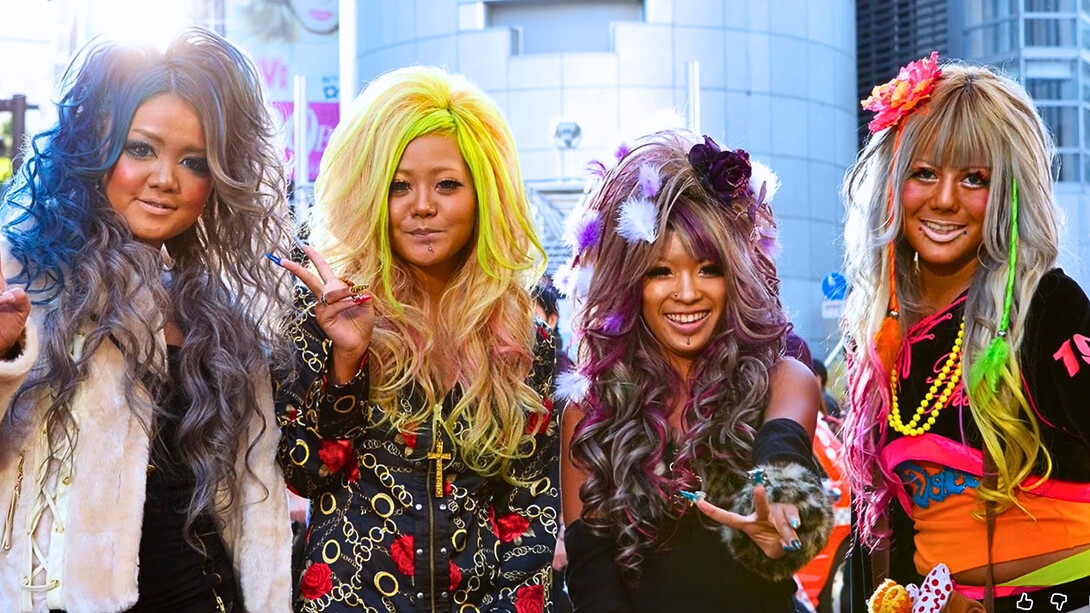
In a fast-paced world where keeping up with the times is a social currency meant to feed not just the consumerist market but also our need to relate and belong, we witness, both on social media and in real life, the spread of trendy Japanese subcultures and their respective features. Visual Kei, Gyaru, Decora, and Rockabilly, be it just fashion or commitment to the lifestyle, many such subcultures have (re)surfaced on the streets and SNS platforms with overwhelming popularity, both in Japan and abroad. However, a peculiar correlation is the consistent pattern of subcultures of foreign origin shifting towards Japanization.
The Western mind may recall Japanization hailing back to Edo Japan, which opened its borders and horizons to find a world full of progressive and evolving concepts at the mere tip of their fingers should they wish to reach out and finally grasp it. While the word itself actually means “to make something, or become, Japanese in form, style, or character,” it hasn’t always had a particularly positive connotation, especially during times of war, colonization, and other expansion-related matters.
Nevertheless, in the case of modernizing Japan, upon entering the Meiji Restoration in 1868, the land of the rising sun sought to modernize and optimize its systems, structures, and overall function, with an important element in mind: the need to apply any external teachings and structures in a uniquely Japanese way. This applied to government structures, parliamentary procedures, education, the military, and other such institutions.
When it came to culture, while Japan did receive a large amount of information and influence from the West unaltered, they also sought to familiarize the public with some of those foreign concepts and, in the process, add their own twist. Japan is notorious for their ability to borrow and tailor elements to suit their societal values and beliefs, moulding them into something uniquely “Japanese.”
With Tokyo quickly becoming one of the world’s fashion capitals, alongside London, Paris, and Rome, introducing new trends, unique styles, and high-end fashion that rivalled the leading runways of old, street fashion in particular soared, with Harajuku becoming the epicentre of street fashion trends.
The '90s saw a boom of fashion magazines such as the iconic FRUiTS, Kera, and Boon, featuring unique takes on style and rewriting both runway and street fashion as we knew it. Suddenly we witnessed maximalism in the form of Decora, styles such as Gothic Lolita and Visual Kei, and the aforementioned Gyaru, Japan’s own Y2K, to name a few.
While nowadays Harajuku has lost some of its originality, as tends to happen with underground trendsetters once they go “viral,” new waves of fashion and self-expression are very much alive there, as well as in the Shimokitazawa area, known for its music scene, often featuring underground concerts in bars and entertainment spaces, primarily of rock elements, that also sports vintage elements and thrift stores with predominantly Western fashion.
This neighbourhood, primarily known for its cozy cafes, record shops, and second-hand clothing stores, often has open-air markets, where one can witness this wave of vintage, grunge, and other forms of street fashion in Tokyo and indulge in it themselves.
While Western fashion and influence have certainly made a mark, the Japanization wave is just as influential, marrying West and East in a uniquely Japanese way. This is in part due to the recent rise in popularity that Japan has seen in general—while it was once a country worshipped by predominantly tech and Otaku (anime, manga, and video game fan base) hobbyists, with the popularization of Japan as a tourist destination and culture hub through social media, we have seen a rapid incline in idolization from the rest of the world.
All things Japanese, particularly fashion, are seen as unique and a must-have, with things like tabi shoes, obi belts, and techwear dominating the Japanophiles’ closets. And yet, while many Japanese fashionistas indulge in modernized Japanese fashion elements, one will predominantly find an influx of Western clothes and fashion on the Japanese streets.
Thrifting culture, ever so popular, curates a selection of American and European brands, with items going as far back as the 80s and 90s. Baggy-fit clothes, old-school and grunge outfit pieces and second-hand, recycled fashion dominate the streets of Tokyo. Still, among those more casual fashion fans, those “committed to the bit” always stand out; allow us to introduce two Western-based subcultures that the Japanese “upcycled”: rockabilly and gyaru.
Rock ‘n’ roll
Rockabilly and rock ‘n’ roll elements first entered Japan in the 1950s, and under the Japanese Rockabilly Boom (Rokabiri bumu), adaptation flourished as Rockabilly Zoku (tribe) in 80s Harajuku Hokoten (pedestrian paradise). In a carefully cultivated preservation of 50s Americana nostalgia, this subculture nowadays features denim on denim and leather goods; carefully combed, old-school hairdos like greased-back pompadours and victory rolls; and vintage attires and accessories.
Biker and rock culture, followed by punk and metal, also appeared, although they never quite strayed from their standard form the way Japanese rockabilly did. Coming as far as establishing its own day, February 8th serves as Rockabilly Day in Japan, thanks to the Nichigeki Western Festival on February 8th 1958, where the “Three Rockabilly Men,” namely Keijiro Yamashita, Masaaki Hirao, and Mickey Curtis, credited as the trendsetters of the movement, first performed rockabilly for the Japanese crowd, drawing an ecstatic reaction much like Elvis Presley had in the United States, that would go on to build a vibrant Japanese rockabilly scene that lives on even today.
A notorious community group to come out of this subculture is the Harajuku Strangers, often found tirelessly dancing in Yoyogi Park in Tokyo today, as well as at more intimate events within the rockabilly community. Another one of the prominent figures of this subculture some may be familiar with is that of Johnny Daigo Yamashita, a musician and performer of the genre, and his band, Johnny Pandora, creators of “Samurai Rock’n’Roll.” Featured in many such shows and music events, he’s certainly considered a cultural ambassador, sharing the gift of Japanese rockabilly with the West it originated from.
This community often receives comments akin to “Leave it to the Japanese to be more American than the Americans,” praising some of the trademark features and principles like Kaizen—a change for the better, but in actuality referring to refinement to the point of perfection, not actual change. A spectator in the crowd that gathers around Yoyogi today to watch the Harajuku Strangers can easily see the painstaking effort and practice that has gone into those seemingly effortless rock ‘n’ roll moves, and while the rockabilly zoku does do this for the love of the game, it takes incredible zeal and dedication to be that devoted to the craft.
Stuck in time, as if straight out of a time capsule, they incorporate the '50s Americana spirit whilst transcending into a distinctively Japanese fusion. A form of breaking the Japanese mould, it captures both the qualities of Japanese spirit and the need to stand out, to rebel, and to have fun all the while.
Gyaru
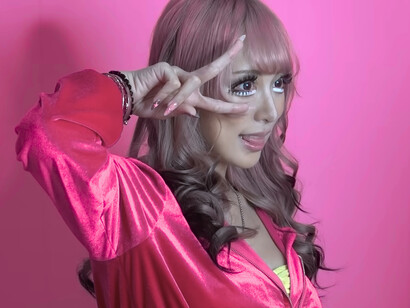
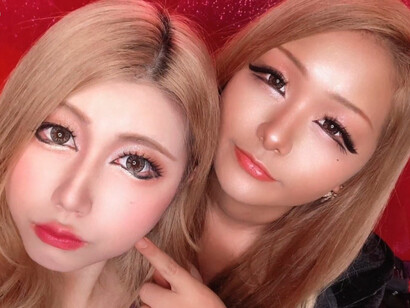
The Gyaru subculture is considered one of the most eye-catching ones, alongside Decora, in the Japanese world, particularly because it boasts westernized fashion and make-up, a not-so-quiet revolution in the face of Japanese conformity and beauty standards. A descendant of the Bodikon subculture, it’s a true Harajuku and Shibuya district native. Peaked in the 1990s and 2000s and now resurfacing, this style originates from the English word “gal” and features tan skin, dyed hair, and gaudy makeup and outfits, with all kinds of patterns and materials that can be traced mostly back to Y2K fashion.
A male equivalent of this subculture is the Gyaruo, with a similar fondness for tan skin, bleached/dyed hair, and a fashion-forward style that often includes tight-fitting clothes and brand logos, while their outlook on life shows an affinity for partying and dance. Both male and female components of this subculture are based on a party-centric, materialistic lifestyle, while standing against the traditional Japanese society’s expectations and beauty standards.
One by one, we can easily trace their rebellion against classic Japanese beauty standards—pale skin replaced with fake tans (or for the more committed members, an upkept year-round summer tan); bleached blond or dyed hair in bright colours, as opposed to natural dark hair tones; and dramatic, heavy makeup with a particular focus on the illusion of overlined, droopy, and enlarged eyes; contoured features; and a lot of bronzer. Another tell-tale sign of Gyaru is the iconic, long acrylic nails and flashy jewellery and accessories.
Gyaru fashion has an elaborate range, as this subculture has its own many subtypes, some of which include:
Classic, with bleached hair, long nails, mini skirts, and fuzzy leg warmers, often seen in popular (Western) media
Hime gyaru (princess gyaru) with a fondness for all girly things such as frills, lace, bows, pastels, and sweet, floral patterns, playing into the fondness of girlhood
Ganguro with a notable, extremely dark (and slightly controversial according to the West) tan and a cool and confident attitude that contrasts the humble and quiet standard for the average Japanese woman
Kogyaru that leans into the middle and high school gyaru style, including school uniforms and elements, is nowadays popular with the Heiwa era gyaru and schoolchildren—combining trend and functional daily life, standing out, and individuality
Agejo, also known as the hostess style, for the more glamorous and mature gals, followed closely by Mode, a classy and high-fashion gyaru subtype fond of brand names, as well as the Onee Gyaru, for the sophisticated and elegant type, all of which circulate the lavish lifestyle that goes beyond settling for a simple, routine life
Rokku, catering to the more rock and punk gals of smoky eye makeup, tattoos, and piercings, as well as another close subtype known as Goshikku, showcasing gothic gals, both of which are considered rebellious even in the West and more so in Japan, given their dark/rugged aesthetic, a far cry from the ideal yamato nadeshiko archetype the older generations idolize.
For men, there are also several Gyaruo subtypes, such as:
Natural, with more discreet, daily life gyaru elements, while still preserving their functional resistance to societal currents
Amekaji, coming from the phrase “American Casual,” looking flamboyant with layered, bright clothes featuring pop culture references, once again breaking out of the mould of muted and dark, neutral colours expected of Japanese men
Biker, borrowing elements from biker culture like leather jackets, denim, and boots, which are naturally perceived as rebellious and unruly
Military with camouflage prints and earthy tones, another uncommon choice for Japanese fashion until recently
Rokku, which displays punk and rock elements, skull motifs, and crosses
Surfer, showcasing a summer look of bright colors and beachwear, despite being found in the big city where “No Shirt No Service” judgement would most certainly apply
Street, featuring streetwear, a wave that has been becoming more and more popular, yet still far from expected in Japanese men’s polished and casual elegance fashion
Onii Kei, which references the “Older brother” look, is popular with older Gyaruo and club hosts
Sentaa guys, known for their deep tan, extreme hairstyles, and bold white makeup, all of which are hardly ever seen on non-subculture residents.
As we can see, a pattern of pushback weaves itself in the form of rejecting “natural” colours, patterns, and combinations, effectively embracing a style that is perceived as individualistic and self-expressive. In a society where the phrase “The nail that stands out is hammered down” persists, despite globalization’s steady gallop into our lives, we notice that in this environment, the collective is ever so persistent in preserving the peace and functioning with as few odd parts as possible in the machine of progress.
The steady influx of foreign information, media, and culture has touched parts of Japan and transformed them into something else entirely—when an individual finds that embracing their uniqueness has positives, they tend to start finding the shadows of crowds less appealing, if nothing else for the sake of a little more dopamine earned by being true to ourselves.
Still, one could argue that such change is bound to bring complete destruction of the collective and its traditions and culture. However, one must also consider: are “traditions” that push down positive feelings worth cultivating? The schism between the older and younger Japanese generations has certainly made itself known in more recent years.
A fascinating element is the detail and evolution of these subcultures in fields outside of fashion as well—the Gyaru subculture happens to have its own language, known as Gyarugo, an informal, English loanword-ridden “dialect” meant to be endearing and open in spirit, as the subculture members themselves are seen as loud, cheerful, and rebellious. Their speech is nowadays sometimes used by social media and brands, incorporating some of their phrases in a marketing effort to seem more approachable and hip.
In reality, gyaru and gyaruo use their “language” liberally both in and out of their subculture circles and even have their own gyaru alphabet—gyaru moji or heta moji, a youth-based Japanese writing system predominantly used in texting, featuring a replacement of Japanese characters with similar-looking symbols, numbers, or letters. This system first became popularized by teenage girls and slowly trickled into other layers of Japanese society, as it is perceived as friendly and approachable, yet also considered a form of gender resistance, meant to treat this system as a communication code safe from prying adult and guardian eyes and therefore not necessarily well-perceived by older Japanese generations.
Much like many other aspects of gyaru subculture, it rejects tradition and conformity, and as such, it often faces criticism. The vast difference in female and male Japanese speech is often overlooked by textbooks, but it is painfully evident in real life and coincidentally showcases the imbalance between the two genders in both societal expectations and benefits.
Female speech is standard Japanese—it uses honorification, polite grammar forms, and proper structure (although syntax can sometimes be rearranged, though it always retains understanding). Female-presenting Japanese speakers are expected to use gendered language associated with politeness, gentleness, and respectfulness, all while maintaining a perfect image of someone competent but not too outspoken.
Men, on the other hand, use far more informal language in daily life, often shortening their words and sentences for the sake of convenience, with less politeness in form (except for when addressing superiors). Their gendered language vastly differs from that of women, as their vocabulary and grammatical construction often expresses masculinity through somewhat coarser presentation, and it is often excused and/or overlooked, unlike that of women.
The Gyaru and Rockabilly subcultures often boast their own slang and casual demeanour, regardless of gender. They both show signs of respect and politeness where it’s due, but their day-to-day communication is a lot warmer and more approachable, offering a sense of not just belonging but also a laid-back attitude.
Gyaru women often use “coarse,” unfeminine vocabulary, as well as less polite forms, in order to simplify communication into something human and genuine, that is often perceived as rude or uneducated by outsiders and older generations. It is however this very choice, that has made them a symbol of not only approachable, but also safe to turn to individuals on the road.
In a society where speaking or acting out of turn is deemed an inconvenience, these subcultures form a safe bubble to just be and to have fun. Not unlike bikers and metal scene individuals in the West representing a safe person, Gyaru girls have often been the image of the “big sister” that will loudly come to one’s rescue, defending other girls from stalkers or sexual harassment, be it in clubs or trains to and from school—the fearlessness of standing out encourages others to stand proud, even if less committed to such a lifestyle.
Bright colors and patterns, loud clothes and makeup, and all of this, combined with a social, tight-knit community that loves to party and enjoy life and everything it offers to the fullest, is the M.O., even if it receives disdain from elders and more conservative members of society.
Notorious for dance music such as para-para and eurobeat, perfectly synchronized choreographies have been a Gyaru phenomenon; social media has seen a rise in popularity of Gyaru and Gyaruo videos performing choreographies alluding to trance and eurobeat influences. Para-para includes simple, synchronized repetitive movements with either older Western songs or the newer, extensive collection of gyaru-related music with Japanese rap lyrics that feature an array of English slang and loanwords.
Similar to current trap songs, they often offer a borrowed beat and lyrics relevant to the subculture’s experiences and trends. Rockabilly, on the other hand, showcases polished rock ‘n’ roll moves, done for mostly Western rockabilly songs (though, of course, there are many Japanese covers and even original rockabilly songs), usually settling for individual dancing in a circle or alongside others while everyone does their own thing. In either subculture, they require a lot of practice and repetition in order to achieve such levels of effortless fluidity, as it befits the zeal of Japanese culture and its streak of practiced perfectionism.
As previously mentioned, the particular, more popular in media case of Gyaru reflects that this 90s and 00s nostalgia has shifted into a modern Japanese youth resistance towards societal norms and expectations from the older Japanese generations. While the younger Reiwa Gals like Kogyaru may be straying towards standard Western trends that social media like TikTok and fast fashion brands like Shein enable, the core principle of this subculture has always been a Japanized Western look that inspires individuality and unapologetic display of self and interests, while still being uniquely Japanese at heart.
The Gyaru subtypes are often compared with Western equivalents such as the Bimbo and/or Mean Girl stereotypes—and while that may overlap in some cases, the Gyaru community is a largely separate organism, built with meticulous attention to detail, dedication to perfected dance routines and immaculately styled outfits that exude 90s and 00s nostalgia.
This brings us back to Japanization and the unlikely similarity these two subcultures share—their eagerness to rebel against the Japanese standard. Despite the initial romanticization of Western things and the English language, the fundamental principle in the aforementioned subcultures is the need to go against the current, promote self-expression even if it means standing out, and live life as true to oneself as possible, with core values that often go against the traditional Japanese societal currents.
Yet, like most trends tend to do, these subcultures restart the tumble-dry load of international culture exchange, combining the Japanese influence that is bound to seep through the layers, even if the point is to stand against it, with their Western counterparts. For every Western trend in Japan, a subculture has tailored and optimized it to fit their needs and ideals, and in turn, thanks to online platforms and the accessibility of social media, they are reintroduced to a Western crowd that is in turn romanticizing Japan and all it promises in its full soft power.
Japanism and Japanization, therefore, tend to be somewhat interwoven together in a web spun by the human need to belong yet also be recognized as individuals and the capitalistic influence of the 20th and 21st centuries that threatens to consume everything we produce and, in turn, spit out something vaguely conforming that uses the human fascination of the unfamiliar against itself.
Japanese efficiency and detail-oriented nature, combined with Western eccentric individualism, often produce fruit like the Rockabilly and Gyaru movements—circles where one can be oneself and feel proud to have contributed to something, while also risking being overtaken by the mainstreamism mindset; creating the inescapable fable cycle our ancestors warned us about.
Still, perhaps this author, like many others, is overthinking this; after all, these movements, much like those that came before them and those that will come after them, are firstly about indulging in things society either deems unnecessary or inappropriate for functional adults. Yet, one cannot help but wonder: who are we to limit whimsy when it oh so desperately attempts to burst at the seams of our human vessels?