English
 Español
 Français
 Deutsch
 Italiano
 Português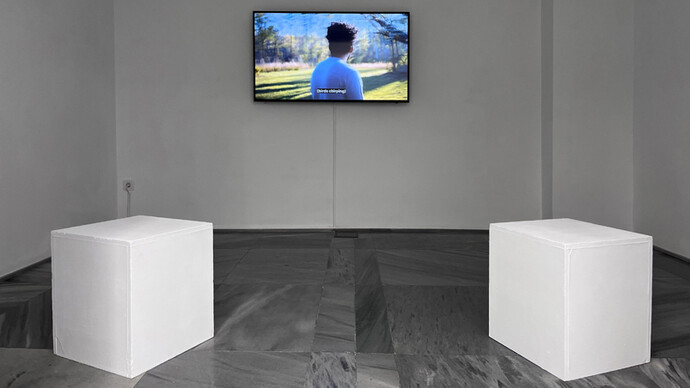
Listen to the hummingbird
Whose wings you cannot see
Listen to the hummingbird
Don’t listen to me…(Leonard Cohen, Listen to the hummingbird, 2019)
Espacio Mínimo presents the second solo exhibition by artist Donna Conlon in its space. Listen to the hummingbird brings together recent works, two previously unreleased videos, and a series of sculptures that combine recycled metals and feathers, in which her exploratory process once again uses birds as symbols of our fragile and precarious relationship with the natural world.
As a biologist turned artist, her principal concerns have long been the conflicts and contradictions between humans and nature, and the idiosyncrasies of human nature and the social, political and environmental contradictions inherent to our contemporary lifestyle.
The video [birds chirping] is made up of film clips featuring birdsong, a resource used to create an emotional effect in the soundtrack. When this song becomes particularly important as a dramatic element, it is also included in the optional subtitle menus. The birds themselves are not visible; rather, they are tools of sound design used to communicate suspense, violence, or melancholy. Bird symbolism has always been part of our mythologies, arts, and traditions, capable of evoking a multitude of sensations and moods.
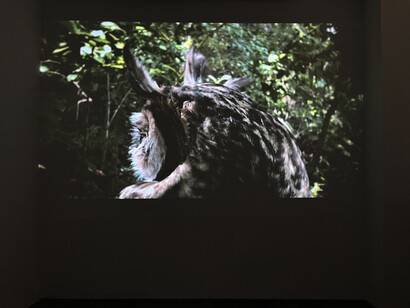
The Last owl is a video set in the very near future, showing a woman surrounded by inanimate objects representing birds, reminders of a time when the world was full of living birds. In her haunted and tormented dystopia, the protagonist remembers, dreams, and searches for the last living owl.
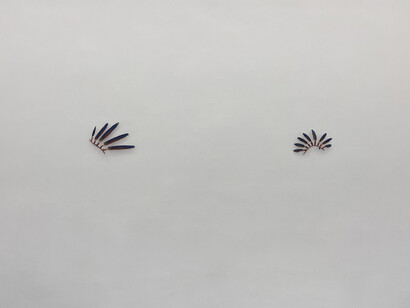
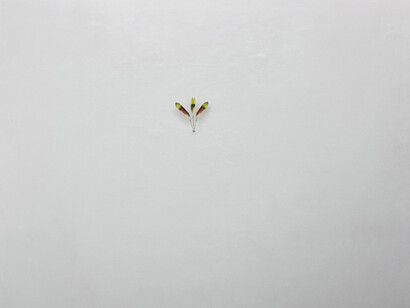
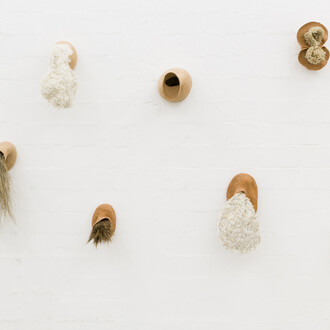
For the creation of the wall sculpture series Talismans and Exvotos, the artist used recycled copper and silver, and macaw and parrot feathers, respectively. Regarding this, Donna Conlon comments: “Macaws have been sacred birds for many cultures and are now endangered. Scientists have documented a drastic global decline in bird species, representative of the general decline in biodiversity, and have shown that this loss is human-induced. Primary forests, necessary to protect biodiversity and historical ways of life, are threatened by capitalist and multinational development initiatives, including those in the mining sector.” Hence the artist’s use of recycled copper as a reference to and critique of extractive practices, thus avoiding participation in the extraction market. The feathers used in these pieces, whether found or donated, also reflect an ethic of artistic production. Like talismans, the ex-votos are simultaneously a celebration, a petition, and a wish for recovery.
Finally, there is the work Vestige, a glass dome of the kind once used to display butterflies, birds, or preserved flowers, which, in this case, is filled with feathers the artist found by the roadside, all from the same bird. It serves as a metaphor for the loss of untouched nature, as well as the desire to preserve the memory of what once was. Ultimately, this collection of works houses a series of meditations and reflections on impermanence, transience, uncertainty, and hope.