English
 Español
 Français
 Deutsch
 Italiano
 Português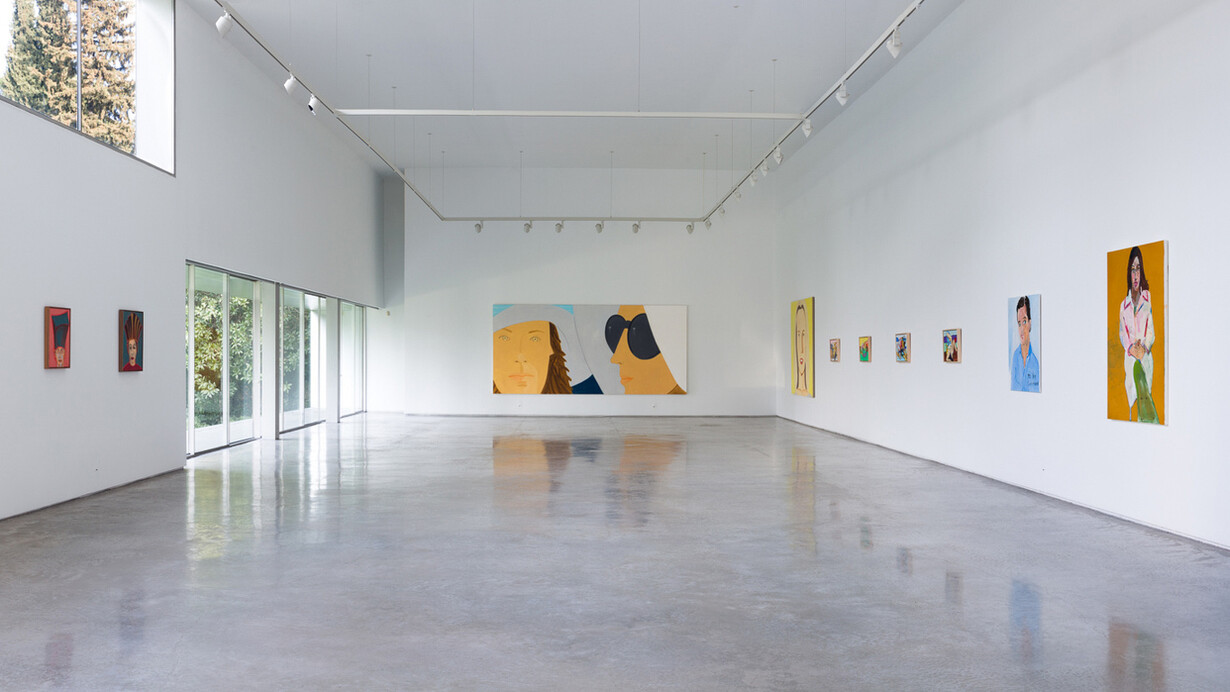
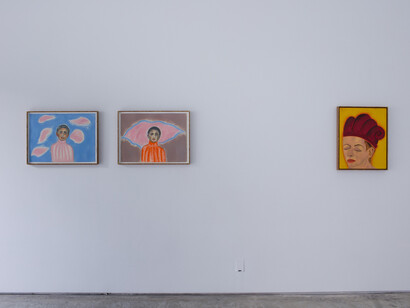
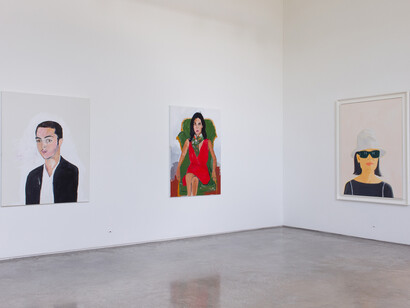
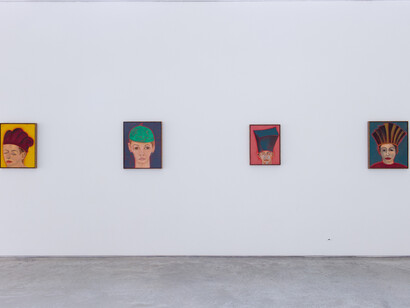
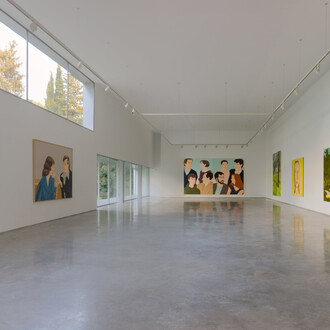
López de la Serna CAC presents a collective exhibition on the redefinition of portraiture in contemporary painting, a genre in constant revision that no longer responds solely to the representation of a model or the search for their individual essence, but rather questions how identity is constructed in postmodernity —as a spiritual symbol, a media image, a cultural fragment, or a political statement—. The show brings together works by Francesco Clemente, Alex Katz, David Salle, and Henry Taylor, in which the use of monochrome backgrounds and the presence of the female figure interpreted from different approaches predominate.
The visit would begin with one of Francesco Clemente’s (Naples, 1952) iconic New York muses, a series that was featured in his portrait exhibition at the Warhol Museum in Pittsburgh in 1997 and exemplifies his transcultural style. Within his body of work, these pastels on paper represent a transition between the male portraits of poets and visual artists from the 1980s and his later portraits of New York high society. These monumental busts of anonymous women with direct gazes embody a mythical vitality, like powerful urban Amazons, both intimate and mysterious at the same time. Two groups of works by the same artist dedicated to his partner and muse Alba, an ideal of beauty and sophistication for other authors as well (from Warhol, Basquiat and Schnabel to Katz and Mapplethorpe, among others), are also on display. Clemente explores sensuality and mysticism, the corporeal and the spiritual, reflecting on desire and a multifaceted, changing identity, from a symbolism with clear Eastern references.
The small-format paintings by David Salle (Norman, Oklahoma, 1952) included in this group exhibition display his characteristic fragmented figures and images juxtaposed in collage style on the same canvas, with the representation of the female body as a recurring motif. Salle’s work is articulated in various layers of meaning, combining the languages of figuration and abstraction, writing and icons of visual culture. The sources for these compositions come from photographs found and sometimes taken by him with models in his studio, as well as from art history and popular culture (cinema, advertising, magazines, illustrations), incorporated as cut-outs and evoking erotic iconography, which generates his unmistakable narrative ambiguity with hints of provocation.
Alex Katz (Brooklyn, New York, 1927) features some of his regular models: Katherine and Elizabeth, Ariel and, of course, his wife Ada, the main character in his best-known works. In these large-format paintings, faces with serene and distant expressions are silhouetted against flat backgrounds of vibrant colours. In his paintings, Katz aims to capture the immediate appearance, focusing on the pose, the gesture and the framing, and the beauty of his surroundings, with a predilection for the elegance of the modern woman. In addition to his family members, he has also drawn on his social circle and personalities from the world of culture to explore the possibilities of figuration, eschewing psychological introspection in favour of developing a synthetic language with defined contours, more interested in the pictorial surface and visual perception under the influence of the media.
Henry Taylor (Ventura, California, 1958) portrays a wide variety of subjects in an expressive style characterised by intense, contrasting colours, far removed from convention and idealisation, highlighting their presence as individuals, their dignity, their vulnerability and their humanity. Taylor chooses characters from his immediate environment (family, friends, people from his community or marginalised individuals) and linked to collective memory (historical figures, cultural references) to show them in everyday situations and sometimes in new contexts that give them a political dimension. In his narrative, he intertwines the personal and the social, focusing on African-American identity, filtering the tradition of Western portraiture through humour and criticism to give voice to those who have historically been invisible.