English
 Español
 Français
 Deutsch
 Italiano
 Português
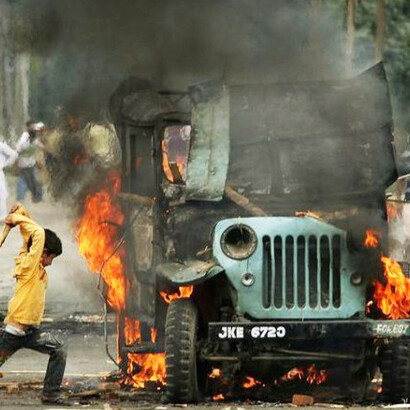
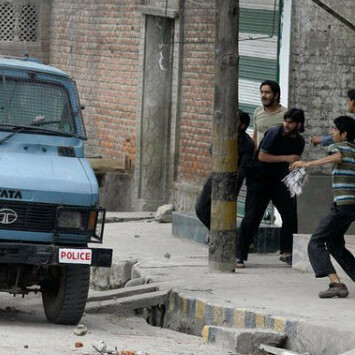
Asiya Andrabi is one of the most prominent and controversial female figures associated with the Kashmir movement. As the founder of Dukhtaran-e-Millat, she emerged as a strong voice advocating for self-determination in Kashmir. Her life has been marked by activism, repeated arrests, and long periods of imprisonment, making her a significant figure in the political landscape of the region.
Asiya Andrabi founded Dukhtaran-e-Millat (DeM) in the late 1980s, during the early years of unrest in Kashmir. The organization primarily mobilized women and encouraged them to participate in political and religious activism. It aimed to promote what Andrabi described as Islamic values alongside political resistance in Kashmir.
Over time, her movement gained attention for its grassroots mobilization, especially among women. Andrabi used networks within villages and communities to organize protests and support wider resistance movements. She became known for her outspoken speeches and her ability to influence public sentiment during periods of unrest.
However, her ideology and methods were also heavily criticized. Authorities in India accused her and her organization of promoting separatism and supporting anti-state activities. In 2018, Dukhtaran-e-Millat was officially banned by the Government of India.
Asiya Andrabi’s political journey has been deeply intertwined with repeated arrests and legal battles. Her first major arrest occurred in 2010, when she was detained on charges related to inciting violence and waging war against the state.
In 2015, she was again arrested after being accused of raising the Pakistani flag and addressing a conference in Pakistan via phone. These actions were interpreted by authorities as acts of sedition.
The most significant turning point came in July 2018, when India’s National Investigation Agency (NIA) arrested Andrabi along with her associates. She was charged under multiple sections of the Indian Penal Code and the Unlawful Activities (Prevention) Act (UAPA), including allegations of sedition, conspiracy, and promoting separatist ideology.
Following her arrest, she was transferred to Delhi and held in Tihar Jail under judicial custody. This marked the beginning of a prolonged period of incarceration that would ultimately lead to her conviction.
After years of investigation and trial, a major development occurred in March 2026. A Delhi court sentenced Asiya Andrabi to life imprisonment under the UAPA. The court found her guilty of conspiring to secede Kashmir from India and engaging in activities considered threats to national security.
According to the judgment, Andrabi and her associates were involved in promoting separatist ideology and allegedly encouraging unrest in the region. The court viewed these actions as part of a larger conspiracy against the state.
Supporters of Asiya Andrabi consider her a symbol of resistance and a key figure in the Kashmiri freedom movement. They argue that her struggle represents the demand for self-determination and political rights for the people of Kashmir. From this perspective, her repeated arrests and imprisonment are seen as attempts to suppress dissent.
On the other hand, critics and the Indian government view her actions differently. They argue that her activities went beyond peaceful protest and entered the realm of unlawful and destabilizing behavior.
One of Andrabi’s most notable contributions has been the mobilization of women in political activism. Through Dukhtaran-e-Millat, she created a platform for women to participate in protests and express political views. This shift was significant in a region where public political spaces had traditionally been dominated by men.
However, her advocacy of strict social codes also drew criticism. While some saw this as part of cultural identity and resistance, others viewed it as restrictive and limiting for women.
Beyond her immediate political role, Andrabi’s life reflects broader transformations within the Kashmir conflict itself. Her rise coincided with a period in which resistance movements became more organized and socially embedded. By encouraging women’s participation, she altered not only the structure of activism but also its public image, making it more visible and community-driven.
At the same time, her leadership became highly personalized. Andrabi’s identity, rhetoric, and actions became closely tied to the movement she represented. This increased both her influence and the level of scrutiny directed at her. As a result, public perception of her remains deeply polarized, shaped by political, ideological, and national perspectives.
Her case also raises wider questions about the boundaries of dissent, the role of legal frameworks in addressing political movements, and the extent to which alternative voices can operate within contested regions. The intersection of gender, activism, and state authority in her story makes it particularly complex.
Asiya Andrabi’s life reflects the layered and contested nature of the Kashmir conflict. Her journey—from a grassroots activist to a leader facing life imprisonment—highlights the tensions between state authority and movements seeking self-determination.
For her supporters, she remains a symbol of resistance and a voice for freedom. For her critics, she represents a figure whose actions challenged the legal and political framework of the state.
Ultimately, her activism, arrest, and imprisonment continue to spark debate, illustrating the broader and ongoing struggle over identity, power, and political legitimacy in Kashmir.