English
 Español
 Français
 Deutsch
 Italiano
 Português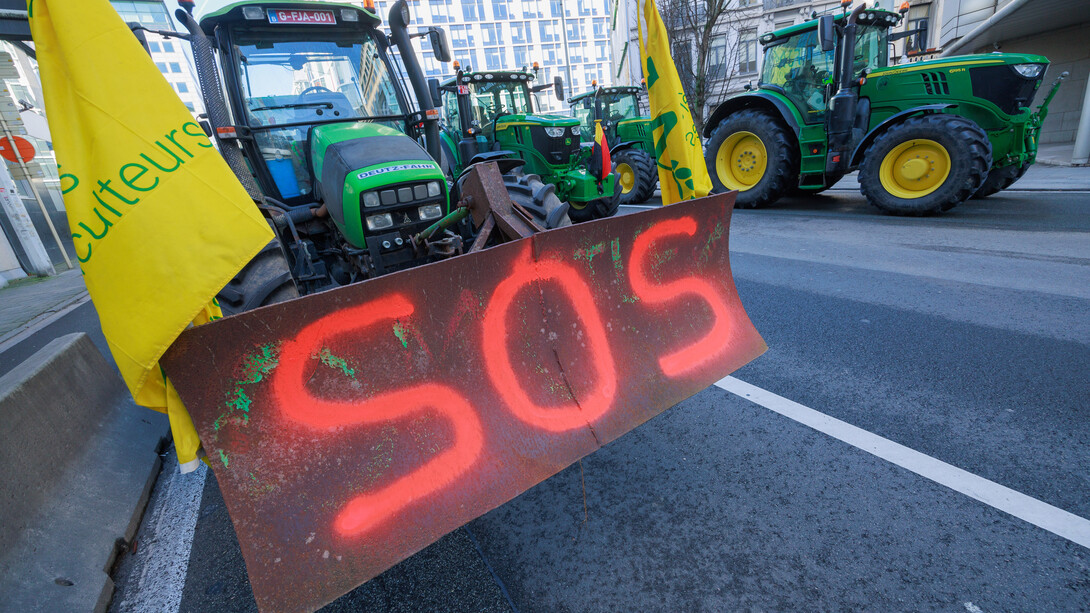
Every so often, some of the European Union’s1 top dogs get together for a meeting of the EU Competitiveness Council. Boosting the single market, cutting red tape, and preparing for one country to hand over the presidency of the Council to another are all on the agenda. Amid the sprawling and complicated map of EU institutions, the Competitiveness Council has emerged in recent years as a key bellwether of EU regulatory sentiment, especially as the long-tailed fallout2 from Mario Draghi’s dramatic report continues.
As the first presidency handover since US president Donald Trump’s inauguration in January and the subsequent chaos around tariffs and trade barriers with the US, Europe should use this opportunity to stake its flag as the global home of free trade. As well as dealing with Washington, that will require some sincere introspection.
Trump’s unabashedly protectionist worldview casts America as the protagonist in the trade narrative. He frames other economies, including the EU, as villains exploiting the US; hence, the apparent need for aggressive reactionary tariffs from America’s side. The EU has fought back against Trump on both rhetoric and policy, although it has failed to replicate Britain’s success3 in signing a deal to carve out tariff reductions and exemptions for key sectors like steel and car manufacturing.
But if the EU is serious about lowering trade barriers, it should not stop with relations with the US. A huge number of trade barriers in Europe, which obstruct businesses from growing and investing, are self-imposed and far predate Trump. A recent analysis4 from London School of Economics professor Luis Garicano on Silicon Continent sheds light on the problem.
Mutual recognition has failed within the single market, he writes, leading to absurdly restrictive regulatory barriers to trading across borders within the EEA. “The IMF puts the hidden cost of trading goods inside the EU at the equivalent of a 45% tariff,” he says. “For services the figure climbs to 110%, higher5 than Trump’s ‘Liberation Day’ tariffs on Chinese imports—measures many saw as a near-embargo.”
The EU has paid lip service to this problem in recent months, but genuine changes to lower trade barriers are few and far between. Rather than simplifying the plethora of Brussels red tape, as officials say they want to, the direction of travel seems drawn to unnecessary, over-cautious regulatory drives like the AI Act6, the Green Deal, and revisions to the Tobacco Excise Directive.7 Businesses crave certainty—specifically, the certain knowledge trade barriers are becoming smaller, not larger. Europe can ignore this fact no longer.
Upcoming meetings of the EU Competitiveness Council are likely to set the continent’s policymaking direction for the following months. Each successive presidency must choose its priorities carefully. Leaders must make a conscious effort to avoid becoming distracted by shiny new initiatives or lurching for chances to expand Brussels’ remit even further. It must return to its core functions and signal to the world that its top priority is reducing trade barriers in the single market.
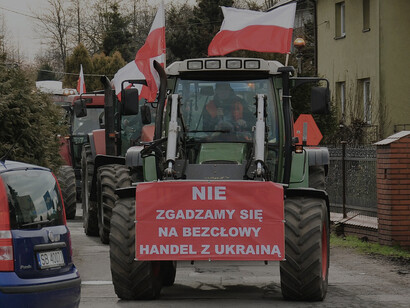
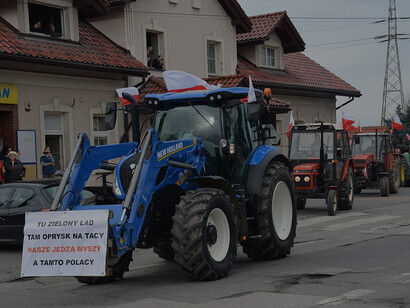
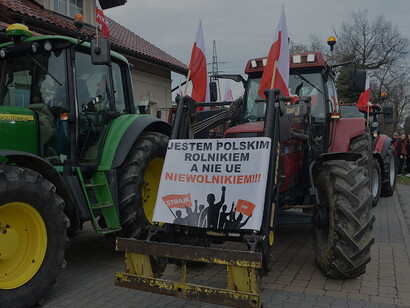
For key sectors like agriculture8 and tobacco, betting on Europe is nigh-on impossible, thanks to out-of-control policymaking. Private sector decision-makers don’t know which way the EU will turn its regulatory focus next, making it unnecessarily risky to make a vote of confidence in the continent. That leads to less choice, higher prices, fewer job opportunities, and stagnant economic growth for ordinary Europeans.
The EU tends to let its paperwork pile up. It only just signed a very basic post-Brexit agreement9 on fishing and food regulations with the UK. Even there, many details are waiting to be filled in. In today’s fast-moving world, Brussels cannot afford to be sluggish. In laying the groundwork for the next presidency, which usually lasts for the next six months, EU leaders should set aside the impulse to embark on sweeping new regulatory endeavors. Instead, they should hone in on areas where they can make real change by simplifying and scaling back existing rules.
Ironically, this ought to be the path of less resistance. By piling more and more red tape onto its existing bureaucracy in recent years, Brussels has given itself more homework than it can handle. The most straightforward approach for the immediate future is to avoid announcing any large new regulations and instead focus on what is in front of us. There are ample opportunities to lower trade barriers and make it easier to do business in Europe.
For example, the EU could inspire confidence in public health by using the Tobacco Excise Directive to lower taxes on vapes and novel nicotine products and roll back bans on nicotine pouches. It could commit to deregulating nuclear energy to allow a clean energy boom. It could reduce its ability to impose huge fines on tech companies through the Digital Markets Act10. As Trump reroutes the American economy, the world is crying out for Europe to show leadership on lowering trade barriers. Now is the time to act.
References
1 Brussels Morning. (n.d.). EU institutions.
2 Kobeshavidze, L. (2025, February 25). Europe needs economic growth — Poland shows us how to achieve it. 4Liberty.eu.
3 US and UK agree deal slashing Trump tariffs on cars and metals.
4 The myth of the single market.
5 At a glance: Trump's tariffs on China, EU and rest of the world.
6 The EU’s Artificial Intelligence Act threatens both civil liberties and innovation.
7 I’m a non-smoker – but I still don’t want high cigarette taxes.
8 In Brussels, agricultural policy is becoming an afterthought.
9 UK and EU agree Brexit reset trade deal as Sir Keir Starmer declares 'Britain is back'.
10 EU’s War on US Big Tech is Handing China the Future.