English
 Español
 Français
 Deutsch
 Italiano
 Português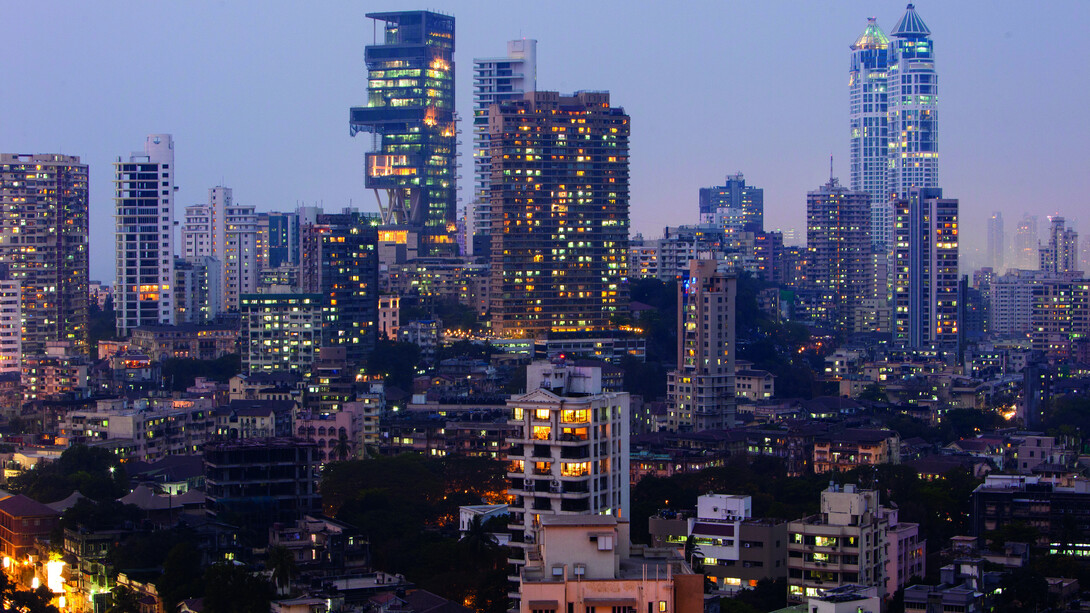
The world is reeling from the crises generated by the war in the Gulf, the disastrous climate and ecological collapse, deepening inequalities, genocides, and other mass atrocities. Multilateral institutions like the United Nations appear to be unable to do much about these. International platforms like G77, BRICS, etc., which were supposed to be countervailing powers to the imperial might of the USA, are in disarray as some of their prominent members are themselves involved in authoritarian, destructive activities or are cozying up to bullies whom these institutions were supposed to counter (witness Russian aggression in Ukraine or Indian Prime Minister Modi’s bonhomie with Trump and Netanyahu and failure to criticize the attack on Iran). After 30 Conferences of the Parties, we are further away from tackling the climate crisis than we ever were. Trillionaires continue to flourish, while half the world suffers various forms of deprivation. How do those of us seeking a saner world negotiate all this? Is there light at the end of a very gloomy tunnel?
The original word for ‘crisis’ in Greek, krisis, means 'opportunity.' To begin seeing our current situation in such terms, we need to take many steps. Firstly, we need to understand that we are stuck deep in a quagmire, not because the ‘world order’ built on agreements between nation-states and on the back of economic globalization is being badly implemented. Rather, it is because such systems themselves engender conflict, unsustainability, and inequality. When we combine an ideology of perpetual economic growth (called ‘development’ to make it sound positive), which is impossible to achieve for all countries in a world that has limited resources; when this is based on ever-increasing use of fossil fuels; and when those holding the reins of economic and political power are a handful of trillionaires, there is an inevitability in nation-states fighting against each other.
These fights can be economic, as in the struggles to control financial and fuel reserves and land; or they can be political, as in regimes using technologiCAL and other means to influence elections of other countries; or they can be military, as in the current wars. Increasingly, they are all three, the most blatant example of which is the aggression shown by the USA and Israel in recent times. Dominant religions and their historical or recent animosity against each other (again, controlled by a handful of people) add to this toxic mix.
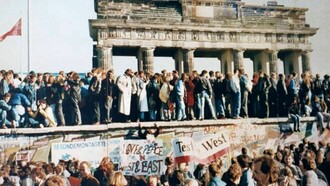
Such an understanding leads us to realize that sanity can only come by challenging the dominant ideologies of globalized development, nation-states, and dogmatic religions. As also structures and relations of inequity and domination that these embed: patriarchy (have you noted that nearly all those ‘leaders’ going to war against each other are men?), racism, and speciesism (the notion that the world was made for humans). Currently, movements of resistance to wars, ecological devastation, and so on seem to be on the back foot, but history tells us that even the most despotic dictators can be overthrown. Resist, we must!
The second step is to combine such resistance with our own notion of the kind of world we want. We know what we are saying ‘no’ to—and to be consistent, while we protest the USA/Israel war on Iran, we also side with victims of the despotic Iranian regime over the last few decades. We also need to get better at what we are saying ‘yes’ to. I’ll come back to this in the last section, but first, a little foray into processes that have made us all more vulnerable to external shocks.
Globalization and vulnerability
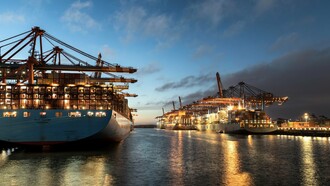
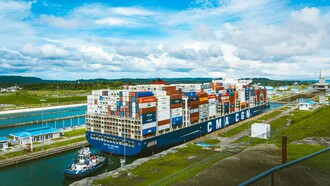
The last few decades have seen an intensification of economic globalization. In the name of development, supposedly to help alleviate poverty and other forms of deprivation in countries that had not yet tasted the fruits of industrial modernity, institutions like the World Bank and IMF, backed by the USA and Europe, have spread the ideology of globalization worldwide. Loans from such institutions have bolstered the process. Various regions and countries have gone through this at different points in recent history, but common to them all is a catastrophic increase in debt; a weakening of regulations and laws relating to labor, human rights, and the environment; a debilitating dependence on long-distance fuel supplies and economic relations; and more. One clear fallout of this is that while USA-Israeli bombs are not hitting the rest of the world, their war on Iran has sent shock waves through countries very far from the Gulf1.
My colleague Aseem Shrivastava and I wrote in meticulous detail how globalization has made India dangerously vulnerable in our book Churning the Earth: The Making of Global India2. The story we tell is similar to what can be told for dozens of countries in Asia, Africa, and Latin America, with differences more in detail than in essence. It is a story of corporate greed for profits, backed by nation-state governments that have been increasingly sold, or forced to adopt, neoliberal economic policies in the name of development.
The same ideology has led governments of these countries to engage in internal colonization3. Dozens of countries that were once colonized by European powers have turned their own internal ‘frontiers’ (regions with valuable commercial resources that are often inhabited by Indigenous peoples or other traditional local communities and/or are crucial areas for biodiversity and wildlife) into zones of exploitation. Some have even turned to colonizing other nations and regions, conveniently forgetting their own colonized histories, entailing the grabbing of land and minerals and the displacement of local communities and wildlife. Examples of such neocolonialism include what Chinese and Indian companies are doing in Africa and Latin America.
In all such processes, communities, and sometimes countries as a whole, are made substantially more vulnerable to shocks of the kind I’ve spoken about above. The antidote to this is two-fold: resisting globalized development and neo-colonialism, including the corporate and state agencies backing it, and moving towards community-led alternatives for meeting basic economic and social needs and aspirations.
Towards radical localization
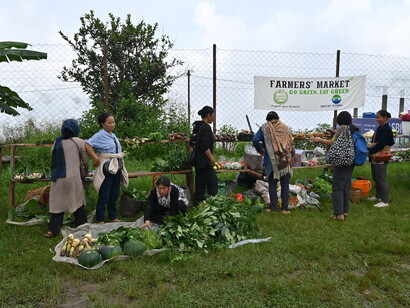
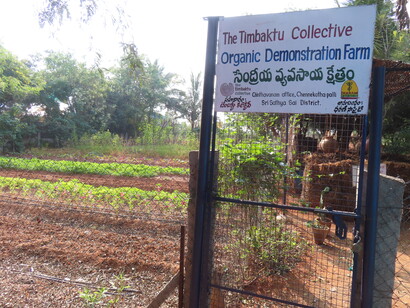
Imagine if we were in a community that was not dependent on fossil fuels and where most of our basic needs were met from within a close radius. We would be relatively free of disruptions caused by wars in some part of the world, or by global epidemics such as COVID, or by the collapse of monetary and financial systems, such as what took place in 2008. Utopian? Well, there are hundreds, possibly thousands, of examples of communities that have not just been able to survive but have actually thrived through such shocks. In the COVID pandemic period, for instance, the networks Vikalp Sangam and Global Tapestry of Alternatives documented about 100 examples of such resilience, which were counter-trends to the more common health and economic collapse seen across the world (caused as much by governmental lockdowns as by the epidemic itself)4.
The key lesson learned from such examples is that such communities and collectives were able to survive COVID much better when they had robust communal systems of decision-making (continuing from before or quickly established when the pandemic hit), collective means of preventing and curing disease, strong systems of mutual aid, local self-reliance in food, water, and other such immediate needs, and localized economic exchange that helped sustain livelihoods. This is a lesson learned in many other disaster situations too, including times of war and conflict, droughts and floods, large-scale economic breakdowns, etc.
Other than during such events, thousands of initiatives across the world are demonstrating one or more of the following5:
Economic self-reliance for crucial aspects like water, food, energy, housing, sanitation, and exchange.
Political self-determination, or radical democracy, with processes that assert the centrality of decision-making by local assemblies (rural or urban)6.
Sustaining or reasserting cultural and social identity, but not in ways that undermine the identities and uniqueness of other communities and collectives.
Communal innovation and management of aspects like education, health, mobility, and communications.
Sustaining or reviving practices of conservation of local ecosystems and species, embedded within ideologies or cosmologies that consider humans as part of nature, connected to all of life in material-cultural-spiritual ways.
Several aspects are crucial to such initiatives. Unlike a globalized world where my production and consumption patterns could impact people and wildlife hundreds or even thousands of kilometers away, and therefore make me unknowing or uncaring about such impacts, in these initiatives, the feedback loops are much shorter and more visible. Dumping my waste in my own backyard is going to bite back at me at some point, but it is unlikely to if I can send it off to some distant lands or seas. The globalized economy is even capable of outsourcing its problems to future generations, e.g., in the case of nuclear waste; not so easy in localized ones.
Such initiatives also sustain the incredible diversity of knowledges, worldviews, cuisines, languages, faiths and beliefs, art forms, and so on, that the world has been blessed with. As in the case of nature, diversity is a vital foundation of resilience, whereas homogeneity is a recipe for disaster. Replacing a rainforest with a plantation of a few species makes the ecosystem much more vulnerable to disease, fire, etc. In agriculture, crop monoculture may increase productivity (of single elements, like grains) in the short run, but a single bad year can wipe out the entire field, whereas a multi-cropped farm would produce at least something. Similarly, a homogenized society has many fewer possibilities of adaptation, which is going to be more and more crucial in the face of uncertainties thrown at us by climate crises, wars, and so on.
Localized economies can also very substantially reduce the debilitating dependence on global markets by producing and locally exchanging most daily needs (products and services). Ela Bhatt, who founded SEWA, one of the world’s biggest women’s cooperative movements, envisaged that such self-reliant economies could be established in a 100-mile radius7. SEWA has taken some initial steps in this direction through its multiple local enterprises.
Many such initiatives also build in processes of dealing with internal inequities (gender, caste, class, ability, etc.), for without this, they can be extremely exploitative or discriminatory. They do this by outrightly challenging such structures and relations and/or by asserting economic, social, cultural, and political rights and capacities of marginalized sections. For instance, the Mahalir Association for Literacy Awareness and Rights (MALAR), a women’s credit society in southern India, has helped its 30,000 members deal with gender discrimination by becoming economically empowered.
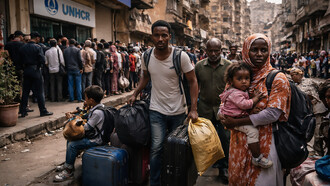
Many also explicitly reject forms of exclusionary localization, such as the kind of xenophobia seen in many parts of Europe (and now the USA) with movements against migrants and refugees, or in South Asia with hostility towards people from minority religions. As against this, open or radical localization welcomes migrants and refugees who have a genuine need to enter. The ‘Solidarity Cities’ movement in Europe is an example. Eventually, of course, as the movement for such alternatives spreads, the long-term hope is that the conditions pushing people out of their own territories would themselves change. Thriving, relatively self-reliant communities across the world are a key ingredient of peace, significantly reducing the need or desire to conquer other regions or colonize one’s own people and nature.
Another key feature of such initiatives is that they put all of nature back at the core of human decision-making, rather than treating it as a commodity to exploit. They re-recognize that we are part of nature, not outside of it. They sustain, or learn from, cosmologies and practices of earthy governance, in which humans and other life forms are interconnected in relations of kinship and reciprocity8.
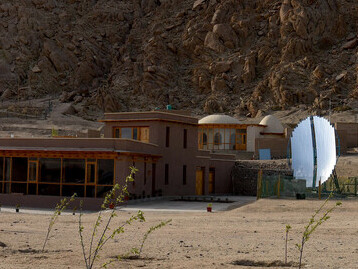
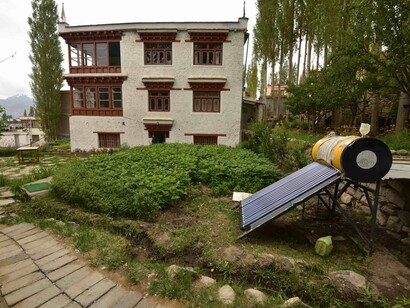
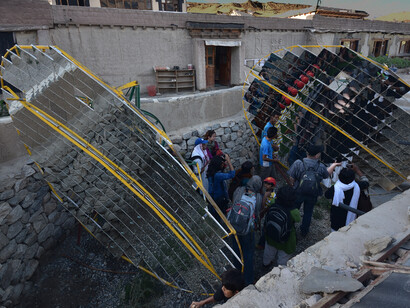
Importantly, such processes are also a crucial response to the climate crisis. Economic globalization, with the frenetic movement of products and services and people across the globe (itself a major factor in the spread of the coronavirus), is one of the biggest causes of emissions, causing climate change. Even the dominant ‘solution’ to the climate crisis, such as the movement towards EVs and mega-RE projects, is dependent on extraction and global movement of critical minerals and products. The more one builds local self-reliance, the less the need for such long-distance movements. For instance, in energy, there are already very viable technologies of decentralized RE, combined with self-restraint on energy consumption, which is more likely when a community is generating its own energy. Decentralized RE, such as rooftop solar and local biomass sources, can significantly reduce dependence on fuels like LPG, currently in the news because of Iran’s blockade of the Strait of Hormuz.
As in the case of 'localization,' the narrative of ‘self-reliance’ can also be hijacked. Since the COVID pandemic, the government has been talking about atmanirbharta (hindustani for self-reliance), but its conception of this is not so much about communities and collectives sustaining or becoming self-provisioning for basic needs, but rather about India as a whole being internally sufficient in its energy, food, and other needs. While this could also be a worthy goal, successive budgets and plans that have come under this banner have entailed considerable internal colonization, including, ironically, extending coal mining or mega-RE projects into lands occupied by adivasis (Indigenous people) or other communities who already practice relative self-reliance9! Such co-optation of concepts and practices by the state or by private corporations is globally commonplace now.
Does this mean an end to globalization?
An argument for radical localization does not mean the end of regional and global connections between communities and peoples. It is not a plea for fragmentation and isolation—far from it. It challenges the global hegemony of capital and the power of the state, the key components of economic globalization practiced in the last few decades. It challenges the global reach of the military-industrial complex, as represented in one of its worst avatars by Trump. And in doing so, people’s movements have connected from local to global levels in what has been called alter-globalisation10, with platforms of resistance like the Occupy movement and the World Social Forum, or those of radical alternatives such as La Via Campesina and the Global Tapestry of Alternatives.
Alternative globalization embraces global cultural, social, and ecological connections, and even economic ones that are based on relations of caring, sharing, and mutual aid (the economy is not only about finance). Such cross-cultural and cross-geographic relations have existed for thousands of years and have enriched societies across the world. It is only when they undermine local self-reliance, create conditions for exploitative profit-making and political domination, and threaten the ecological integrity of the planet that they should be considered unacceptable. If Europeans want to continue getting coffee from Colombia, it should be fine as long as it does not distort the economic or ecological well-being of Colombian communities and if sustainable modes of transportation can be used.
Some strands of ‘fair trade’ are attempting to move in this direction. And if people want to move from one place to the other, not because they are being pushed out by conditions of deprivation and violence but because they are genuinely attracted to other cultures and geographies—well, this too has taken place for thousands of years. This is to be welcomed as a means of cultural and intellectual enrichment and mutually beneficial interaction amongst the pluriverse of ways of living and knowing that exists across the planet. Global connections would also be needed, in these transition times, for people to stand in solidarity with each other when threatened by hegemonic powers.
Perhaps we then combine radical localization with alternative globalization, or a glocalization of sorts.
Also necessary are global institutions of inter-people coordination and cooperation, beyond the current United Nations, which has been very useful in many respects but severely constrained by its architecture of decision-making being in the hands of nation-state governments. There is no clarity yet on what a global governance system that does not concentrate power could look like. But there are many ideas worth exploring, such as Kurdish activist-ideologue Abdullah Öcalan’s proposal for a World Democratic Confederation11, with local radical democracy as its core building block.
Is it possible?
In a world that is so intricately interconnected through global finance and capital, in which the currently powerful have the upper hand, the scenarios painted above would appear impossible. They are certainly going to be very, very difficult, a steep uphill struggle. But radical systemic transformations have happened throughout human history—witness, for instance, the demise of hundreds of years of rule by kings, or the overthrow of colonial empires, or the rise of feminist narratives and practices, or the revival of Indigenous and community narratives incorporating the voices of nature—all of these have challenged and, in some cases, dramatically altered deeply set structures of oppression.
As the painful consequences of our current world disorder become more and more apparent to everyone, perhaps more people will turn to radical solutions. Can each of us play our part in this? Can we at least support and nurture the many grounded initiatives at keeping hope alive in an atmosphere of deepening gloom? Or are we going to capitulate simply because we think it’s all doomed?
I know what my answer is—I refuse to give up.
References
1 Guardian correspondents. (2026, March 20). How the Iran war has sent shocks rippling across the globe: Effects and key takeaways. The Guardian.
2 Aseem Shrivastava and Ashish Kothari, 2012, Churning the Earth: The Making of Global India, Penguin India, Delhi.
3 Kothari, A. (2022, October 22). Colonisers and colonized: Why do the formerly colonized become colonizers? Meer.
4 Global Tapestry of Alternatives. (2021). Resilience in the face of COVID-19: Weaving solidarity and hope beyond pandemics and lockdowns (Vol. 1). Vikalp Sangam, Extraordinary Work of ‘Ordinary’ People.
5 Ashish Kothari et al, 2019, Pluriverse: A Post-Development Dictionary, Tulika and Authors Upfront, Delhi. Pluriverse, Radical Ecological Democracy, Promoting localization globally.
6 Global Tapestry of Alternatives. Radical Democracy: recovering the roots of self-governance & autonomy. December 2025.
7 Ela Bhatt, 2015, Anubandh: Building 100-mile Communities, Navjivan Trust.
8 Kothari, A., & Bajpai, S. (2026, May). Earthy governance: Indigenous democracy and nature rights in a global context. Frontline.
9 Kothari, A. (2020, September 28). No atma, lots of nirbharta: The socio-ecological bankruptcy of Modi’s self-reliance stimulus. The Wire.
10 Geoffrey Pleyers, 2019, ‘Alter-globalisation Movement,' in Ashish Kothari et al., Pluriverse: A Post-Development Dictionary.
11 Öcalan, A. (2011). Democratic confederalism (4th rev. ed.). International Initiative Edition.