English
 Español
 Français
 Deutsch
 Italiano
 Português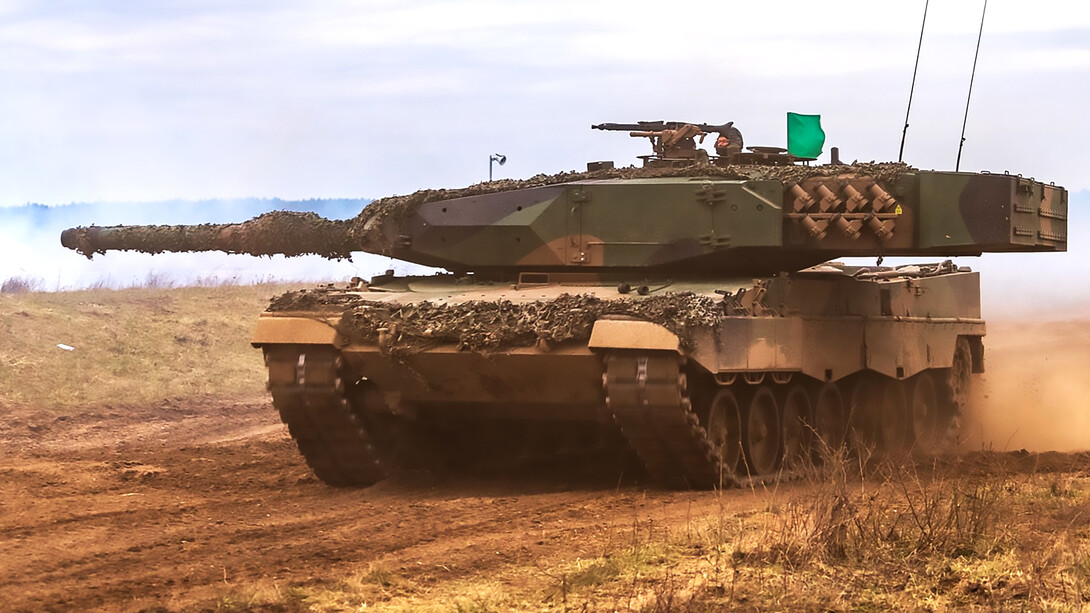
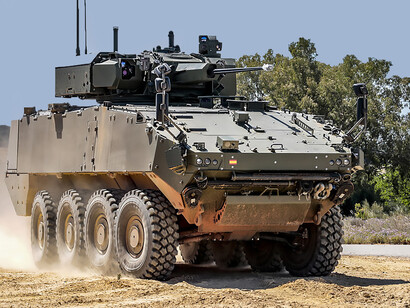
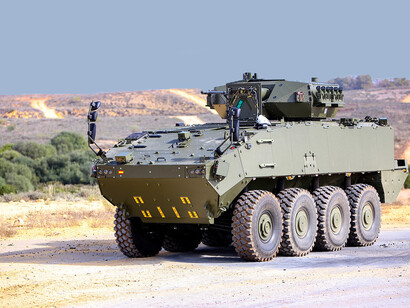
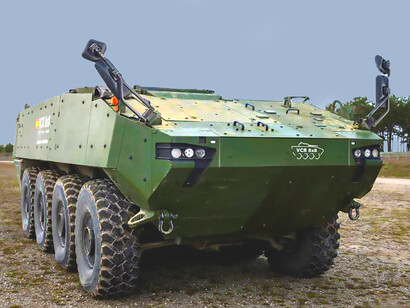
The Spanish Army has launched one of its most ambitious modernization projects: the Dragón 8x8 program. This next-generation wheeled armored vehicle is designed to replace the outdated BMRs (Medium Wheeled Armored Vehicles) that have been in service since the 1970s. Based on the Swiss Piranha 5 design by GDELS-Santa Bárbara Sistemas, the Dragón integrates advanced technology to offer greater mobility, protection, and firepower. Thanks to its eight-wheel drive system, the Dragón can maneuver effectively even over difficult terrain.
Design and capabilities
The Dragón 8x8 stands out for its powerful engine and improved mobility. It features a 600-horsepower engine, allowing it to exceed 100 km/h on roads and travel nearly 800 km on a single tank. Its 8x8 configuration provides full traction across all wheels, making it well-suited to rough terrain. In terms of protection, its armor is designed to withstand small arms fire, mines, and improvised explosive devices (IEDs). There are also plans to integrate an active protection system capable of detecting and neutralizing threats before impact, significantly improving battlefield survivability. One of the Dragón’s biggest advantages is its modular design, which allows it to be configured for various missions.
Depending on the version and the mission it needs to fulfill, the Dragón can serve as an infantry transport vehicle, reconnaissance vehicle, or infantry combat vehicle (IFV), with its Guardian 30 remote-controlled turret developed by Spanish firm Escribano M&E. This turret includes a 30 mm Bushmaster II automatic cannon, a coaxial 7.62 mm machine gun, and the capability to launch guided missiles.
This versatility allows the Army to use the same type of vehicle in different roles, simplifying logistics and crew training.
Development, production, and national security
The Dragón 8x8 is being developed by Tess Defence, a fully Spanish consortium made up of Santa Bárbara Sistemas (General Dynamics), Indra, SAPA Placencia, and Escribano M&E. This joint initiative ensures that most of the technology and manufacturing take place in Spain, boosting the national defense industry, creating jobs, and facilitating technology transfer. The initial contract with the Ministry of Defense includes the purchase of 348 vehicles, with an option to expand to 1,000 units in the future.
Production takes place at facilities in Trubia (Asturias) and Alcalá de Guadaíra (Seville). The first operational units were initially expected by 2022. In fact, seven vehicles (engineer variant) were delivered in December of that year for testing and evaluation, marking a significant milestone for the program and Spanish industry.
Despite its potential, the Dragón 8x8 program has faced several obstacles that have delayed its progress. Integrating national systems with imported components proved complex and required additional development and testing. For instance, Indra had to design custom communication systems from scratch, extending the initial timelines.
The Dragón 8×8 incorporates national innovations that consolidate Spain’s technological autonomy. Santa Bárbara Sistemas holds the full license for the Mowag Piranha V design (the Dragón’s base platform), allowing it to freely modify and market the vehicle abroad. Furthermore, the contract requires design authority to remain in Spain (with at least 70% local industrial participation), ensuring that essential knowledge stays within the country. Altogether, this strengthens strategic independence: Spain will not depend on foreign suppliers for its main wheeled armored vehicle capabilities.
Spanish companies involved in the program are developing advanced technologies. Indra, for instance, leads the development of the vehicle’s command and control system (the “Maestre” mission system) and has created an advanced laboratory that replicates the vehicle to keep these systems at the cutting edge throughout their life cycle. Other consortium members (SAPA, Escribano) are innovating in mobility, protection, and weaponry, feeding a high-level R&D ecosystem. In short, the program acts as a driver of innovation, with the advances achieved applicable to other military or civilian projects, accelerating modernization across the sector.
Export and internationalization opportunities
In addition to meeting domestic needs, the Dragón opens commercial opportunities abroad. The vehicle aims to compete with other leading 8×8 platforms worldwide, giving Spanish companies a chance to recoup part of the investment through exports. Countries in the Middle East, Africa, and Latin America have shown interest in acquiring European armored vehicles, which could include the Dragón.
The program’s success could also boost the Dragón’s international prospects. Its base model, the Piranha 5, is already in service with several allied armies, giving it a competitive edge in terms of interoperability and logistics. In the global 8x8 armored vehicle market, the Dragón could compete with the German Boxer, French VBCI, or American Stryker. Spain’s prior experience exporting systems like the Leopard 2E tank or the Pizarro infantry vehicle suggests that the Dragón may follow a similar path.
Government support and showcasing the Dragón in real missions will be key to securing exports. Deployments in NATO or peacekeeping operations could help demonstrate its capabilities under real conditions, building confidence among potential buyers. Likewise, industrial partnerships with other countries, through local production or foreign technology integration, would improve its market appeal. In this way, the Dragón 8x8 could gain global traction.
Conclusion
The Dragón 8x8 represents a major step forward in modernizing the Spanish Army. By combining superior mobility, protection, and firepower with a modular design, it enhances the operational capabilities of Spain’s land forces at home and abroad. While the program has faced technical and financial delays, its development strengthens the national industry and opens international opportunities.
Ultimately, the success of the Dragón will depend on effective collaboration between the government and industry to manage resources, overcome challenges, and stay competitive. If these goals are met, Spain will field a modern, versatile armored vehicle that not only revitalizes its military forces but also reinforces its position in the global defense market, consolidating its technological and strategic sovereignty.