English
 Español
 Français
 Deutsch
 Italiano
 Português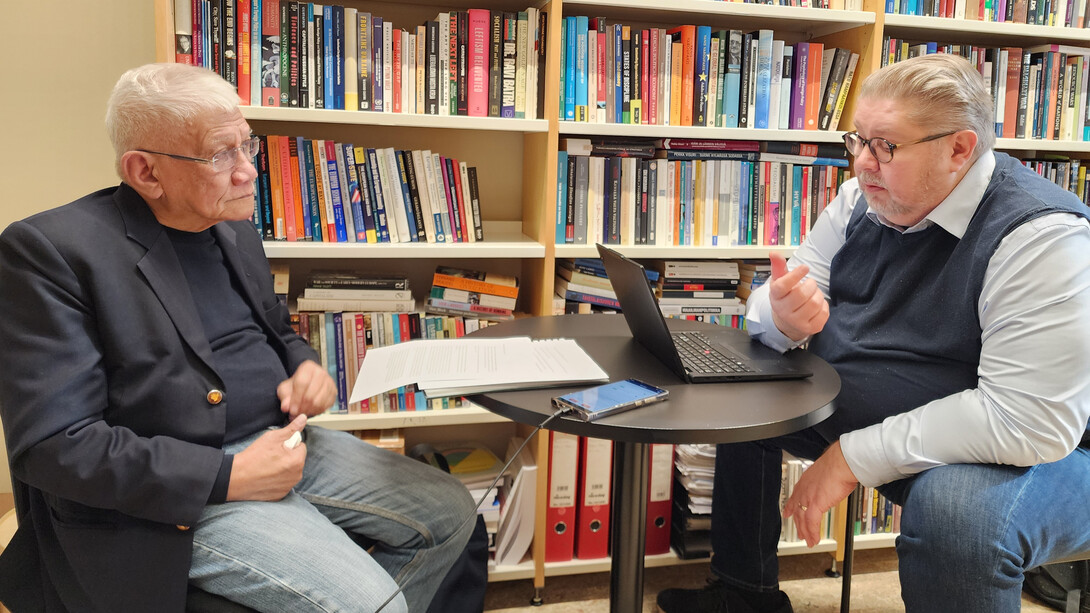
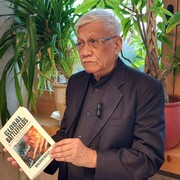
Heikki Patomäki, Professor of World Politics and Global Political Economy at the University of Helsinki, is one of the leading analysts of Finland and the European Union. A progressive, he is controversial, having been labeled a “Putinist” by some sectors for his criticism of the so-called consensus on Finland’s joining the North Atlantic Treaty Organization (NATO). He is also a leading advocate of a fundamental transformation of the European Union to address its counterproductive economic policies and to democratize its institutions. He was interviewed by the author with the assistance of Professor Bonn Juego of the University of Jyväskylä.
WB: On the first question, along with Sweden and Switzerland, Finland was long regarded as the paragon of neutrality in foreign relations. What was the rationale that led to the break with this long-established tradition in 2022 with the outbreak of the Ukraine-Russia war? In your view, was this rationale for joining NATO a valid and justifiable one?
HP: That’s a complex question because there’s a long history behind this change. It didn’t start in 2022, it didn’t start even in 2010 or 2000. It started much earlier.
During the Cold War, Finland was kind of a playground for different political projects or tendencies... And this was very Manichean. In this context, the idea of neutrality was closely connected to the Social Democratic Third Way. So the security policy, economic policy, and social policy – they are all connected.
Those who favored the West in the Cold War, I mean, the liberal right, they typically saw the Cold War in Manichean terms, and they were very critical of the building of the welfare state and socialist tendencies in Finland.
And then we also had the Communist Party, which had close ties to the Communist Party of the Soviet Union, and they got support from Moscow quite a lot.
Both of these forces sought to influence developments in Finland. While they had their own political visions for Finland to take sides in the Cold War, the Nordic idea was to develop something different.
Finnish neutrality came to be defined in terms of Nordic identity and social democracy. In Sweden, there was a social democratic hegemony, and Finland came to be modeled on Sweden in many ways.
However, in the 1980s, Sweden began to shift towards a neoliberal direction, while Finland continued this tradition until 1987 or so…
But then came the time, again following the lead of Sweden, when the Finnish political elite started to take part in global neoliberal reforms. The first step was the liberalization of financial markets in the late 1980s. It led to a boom and then a bust.
This was a typical post-Bretton Woods cycle. There was a major recession and crisis in Finland at the time when the Cold War ended. The end of the Cold War also meant the end of trade between Finland and the Soviet Union, as well as the end of Moscow's support for the communist faction of the Finnish People’s Democratic League.
So many things happened simultaneously. By this time, particularly the transnationally oriented corporations had started to push for EU membership. And then already in the early 1990s, around 1993-94, we heard the first cautiously expressed public remarks in favor of joining NATO.
So there has been a long-running debate about Finland’s possible membership in NATO.
When Finland joined the European Union in 1995, Finnish neutrality was redefined. It was no longer neutrality as such, because being part of the European Union meant being part of the West. Finland’s position in the world was redefined as military non-alignment, and that was different.
Together with Austria, Ireland, Sweden, and a couple of others, Finland was in the EU but outside NATO. But that was no longer neutrality in the classical sense. And then, gradually, momentum began to build in Finland for NATO membership.
The process involved a number of practical steps in that direction as well. For instance, Finland joined the Partnership for Peace program in 1994 and participated in the war in Afghanistan that started in 2002. At first, the latter was supposed to be a peacekeeping operation, but in the end Finland took part in the war itself, though the number of troops was very small.
And then there were several other things. In 2014, a host-country agreement, also known as the Memorandum of Understanding between NATO and Finland, was concluded. It gave NATO the option to use Finnish territory in the event of a conflict with Russia. In 2017, Finland and the other Nordic countries opted out of the Treaty on the Prohibition of Nuclear Weapons. In the case of Finland and Sweden, this was in view of their later membership in NATO.
So, by 2022, so many things had already happened in that direction. A clear majority of citizens supported non-alignment until 2020-21. But given that an increasingly large part of the media, political elite and expert community – I should mention the Finnish Institute for International Affairs in particular – had taken a strong position in favor of NATO membership, only a small trigger would have been enough to complete the process.
And then came the full-scale invasion of Ukraine. The invasion caused a panic in Finland, so it was much more than just a small trigger. Moreover, fear typically leads to nationalism and a very protective mentality. “We need to have bigger guns in case Russia invades Finland”, and so on. Such a mentality tolerates very little dissidence.
It was a rather total turn. But it wouldn’t have happened the way it did without the long process that built the momentum for NATO membership.
Does Finland have any reasonable fear or apprehension of being territorially invaded by Russia as in 1939?
The deterioration of Finnish relations with Russia began in the 2010s. In particular, the occupation of Crimea and the outbreak of fighting in the Donbas region in 2014 created tensions. Until 2021, relations between the two countries were nonetheless relatively normal. The borders were open, and there was a reasonable amount of trade. The political leadership still had ties with Russia. They were still having dialogue with Moscow, even if also becoming increasingly skeptical and attempting to reduce dependency.
In terms of trade, about 5% of the Finnish exports went to Russia. About 10% of the imports came from Russia, mostly oil and energy products. Also, there was a lot of transnational interaction, Finnish companies operating inside Russia and Russians coming to Finland to spend their holidays and do some shopping.
But in 2022, that stopped. And then after 2022, because all the ties were cut, there was no political dialogue, there was no trade, the border was closed and so on, and the Finnish politicians started using very hard language about Russia.
I must stress that Finland’s NATO accession was not a response to any immediate military threat. Rather, the military bases near Finland emptied when troops were transferred to Ukraine. Moreover, at first, when Finland joined NATO, it seemed that the Putin regime in Russia was relatively calm about this.
Although the point of Finland’s accession to NATO may have been to reduce vulnerability, it also contributed to further insecurity. I mean, each side’s attempt to increase its security is interpreted by the other as a potential threat, creating a self‑reinforcing pattern that is already happening. Russia is adjusting its military posture in response to Finland’s membership, while NATO is integrating Finland into its planning and infrastructure. This is, of course, part of a broader global dynamic and does not bode well for the future.
I did an interview with Wolfgang Streeck, the former head of the Planck Institute, where he mentioned something quite provocative. He said that the position of the European Union and Germany is being driven mainly by the interest of the three Baltic states. So, what is your opinion of his view?
It might be a simplification, but I'm in agreement with its basic thrust. It is true that the Baltic countries, together with Poland, have been very vocal in their criticism of Russia. They've been able to change EU policies as well as shape the general perception in Germany. They are totally negative about Russia and everything about Russia. This has reduced the space for any different thinking.
It is concerning that Finland has begun to follow the Baltic political line. For many decades it was the other way around. Finland was showing the way to do things reasonably. And the Baltic countries looked to Finland as a model and an aspiration. Now all of a sudden, it's the other way around. And this is problematic.
Isn't the Ukraine war more than just a case of Russian aggression? Russia and Ukraine have such an intertwined cultural, linguistic and political history. Some have made the argument that Putin's action in the Ukraine has been motivated by the desire to protect the interests of the Russian minority there and it was their push to draw Russia into their internal fray rather than Putin's own desire or calculations that accounted mainly for Russia's moves.
A problem can arise when a sizable minority of the population comes from a country where they are the dominant group; the latter may feel a duty or obligation to protect these people, particularly if they are perceived to be under repression.
And this is exactly what has been happening in Ukraine and also elsewhere around the former Soviet Union, not least in the Baltic countries. This becomes a vicious circle easily. The more the Russians say that these people are mistreated and we have to somehow protect them or look for their interests, the more easily they are seen as a potential threat in these places, as a kind of fifth column – which may lead to more repression.
The concept of the security dilemma is relevant here. The situation in eastern Ukraine was somewhat similar to what happened in Yugoslavia in the early 1990s. After the disintegration of a federal state or empire, people all of a sudden find themselves in different countries. I mean, the Serbs, Croats and Bosnians had been living in one place for decades. The poor economic situation and political-economic conflicts triggered a process of disintegration that separated people and generated local mistrust of others. Some people started to become more radical, and a few of them even resorted to violence. Of course, such violence leads easily to escalation.
In a way the situation in Yugoslavia was worse than in Ukraine. Yet already in the early 1990s many analysts said that something similar might happen in Ukraine as well.
So that's one thing: a security dilemma involving the Russians. During the Soviet era, many people from the Soviet Union moved to Ukraine. I mean, they didn't identify themselves as Ukrainians; they were Soviets… And Russian was the main language.
My daughter’s husband is a case in point. His mother moved from Murmansk to Kharkiv, Ukraine, because life was easier there. The weather was better, the city was nicer, more cultural things were happening and so on. So he moved there, found a family, and Sasha and others were born from that. Sasha was raised in Kharkiv, but never identified himself as exclusively Ukrainian or anything like that.
The Soviet Union collapsed less than a year after Sasha was born. Despite the separation of Russia and Ukraine, the ties remained strong. At the age of ten, Sasha was sent to Russia to study ballet because the schools there were better. He continued to live in Russia, and eventually, five years before the war started, he became a Russian citizen. With Anna, he left Russia in 2022, and they now live in Germany.
Many people in Ukraine don't necessarily identify exclusively with Ukraine, Ukrainian nationality, history, or anything like that. Ukraine is a very complex country in this regard.
Anyway, what’s particularly problematic is that this local security dilemma has been intertwined with another process – escalation of conflict between Russia and the West. This, in turn, has been linked to the expansion of both the EU and NATO.
To all this, we must add the changes within Russia that contributed to the securitization of many issues related to what the West did, starting with the color revolution. The Orange Revolution in 2004 was a key moment. It’s my understanding that in Russia, they started to securitize such developments and prepare for something similar to happen again later on. And if in their judgment, such a development could lead Ukraine to become part of NATO, they would be prepared to take Crimea – by military means, if necessary.
In 2014, after Yanukovych had to flee from Ukraine, the local security dilemma escalated into violence. There was violence on both sides, but I think in Eastern Ukraine it may have been the nationalist Ukrainians who initiated it. Be that as it may, the situation was flammable, and violence escalated quickly. And then Moscow decided to help…
So that’s how the low-intensity war started. A local security dilemma interacted with this much wider conflict between the West and Russia. In the context of political-economic changes that had occurred in Russia since the early 1990s, these dilemmas and conflicts strengthened securitization tendencies within Russia, leading to an increasing autocratization.
So we have to see the overall dynamics holistically and consider political economy as well. Ukraine was in a major economic crisis in November 2013, when the Euromaidan protests started. They started as a response to Ukrainian President Yanukovych’s decision to reconsider a negotiated EU association agreement, opting instead for closer ties with Russia. At this time there was a socio-economic crisis and a currency crisis. The central bank of Ukraine was empty of reserves, and Ukraine needed the IMF and the EU – or some other source of loans. The EU-Association Agreement would have imposed very similar conditions on Ukraine as the EU was imposing on Greece at the time. All these things came together in a highly explosive manner.
And that's how I see it. Of course, I mean, every actor is in any context responsible for resorting to violence. My analysis is not meant to justify such decisions. My main concern is that there would have been so many alternatives for many actors throughout this process. As an EU citizen, it is important to be reflexive and self-critical. The EU has been myopic throughout these developments. The EU leaders haven’t been able to see beyond their own ideological frameworks, seeing themselves as a force for good in the world. They didn't see what they were doing would cause. So it was short-sighted and ideological.
James Baker famously promised Gorbachev that NATO would not expand eastwards. And this promise has been consistently cited by the Russian government to criticize a process it sees as an aggressive drive to bring NATO right to the border of the former Soviet Union. Now, the US and NATO have long advocated bringing the Ukraine into NATO, beginning with President Bush's assertion in 2008 that he would not allow Moscow to veto Ukraine's membership.So, don't you think NATO's moves have played a big role in explaining Russia's actions in the Ukraine?
Well, indeed. As I already indicated, NATO expansion was part of the complex that produced the war. The problem is that when people are discussing the role of NATO, it very easily comes down to John Mearsheimer’s type of argument, that that's the only thing to blame, and that there's no other relevant process related to, say, local security dilemma or political economy developments. I mean, if it is seen as the sole explanation, it becomes reductionist. Many things are moving and changing at any given time, and together they produce the overall situation within which actors pursue aims and make decisions.
But NATO expansion was clearly part of that context and played an important role. I should stress, though, that NATO expansion was not solely a decision of the United States, even though the US has been pushing for it, especially since the late 1990s. In the early 1990s, they were somewhat ambiguous, but by the 2000s, they were strongly pushing for NATO expansion.
We also remember that there's a long history of continuity, as they had already done similar things in the early Cold War. In the early 1950s, West German conservatives and the Americans didn't even want to negotiate over Stalin’s 1952 Note, which proposed Germany’s reunification. They wanted to keep NATO strong and were fearful of the rise of the left in Germany. Considerations like that led later to the notion of Finlandization, which emerged in Germany as well.
Nonetheless, NATO expansion wouldn't have happened without very strong anti-Russian sentiment in Eastern Europe. These countries really wanted to join NATO. So it was push and pull, and both were happening. However, the Western European countries also had to approve the expansion. So even though the Americans were pushing for it, and the Eastern Europeans were very active and very keen, the Western Europeans could have said no, but they didn't.
So the responsibility lies on many shoulders. But for Americans, this was a major part of the big global strategic game they were playing. Particularly, the neoconservatives in the 2000s were keen on NATO expansion. They started the Iraqi war and the Afghanistan war, and they were also pushing for both Georgia and Ukraine to join NATO.
They were going to the heartland of the former Soviet Union, and that was a major mistake. In Bucharest in 2008, the Europeans were a bit more cautious, but they went along with the Americans and approved the idea.
Though they joined the General Assembly resolution condemning Russia's action in Ukraine, few countries in the Global South have shown little appetite to go beyond this action and in fact many have been apprehensive about the US use of its global financial instruments like SWIFT payments system to disrupt their international financial and trade relations with Russia. Do you think they are justified in their refusal to join NATO's economic blockade of Russia?
Yes, well, I think it is important that there are actors who are critical about both sides of the conflict. Only a relatively few countries from the Global South or Asia have explicitly taken the side of Russia, which, after all, invaded Ukraine against the principles of international law. But most of them are really skeptical about the Western line.
This is also because they remember the colonial history and are very much aware of the ongoing post-colonial practices. And of the way the West has dominated a number of systems of global governance and the Bretton Woods institutions. And they see NATO as a mechanism for reinforcing Western power worldwide.
Under those circumstances, I think it's totally natural that the global South is skeptical of the Western line in this conflict and that they try to think about alternatives. I think Lula in Brazil is a case in point. Early on, he questioned NATO's refusal to discuss Ukraine's neutrality or military non-alignment. He asked, why don't you just agree to have a neutral Ukraine? Simple as that.
And this was something that in the West was considered unthinkable. All countries must be free to join NATO – that is, all countries they want as members of the military alliance led by the US and formed against outsiders.
So yes, I think the Global South is right, these countries are justified in not joining the Western blockade.
Can you comment on the Trump administration's push to make the Zelensky government make territorial concessions and extend that this is the way to bring peace to the region?
This is a tricky issue. The Trump administration, for all its unsystematic and unprofessional way of doing things—its deal-making way of doing things—has nonetheless been different from the previous American government, the Biden one in particular, which was extremely monolithic and didn't want to negotiate or have any dialogue. And at least Trump has tried that, however erratically. I mean, that's a positive move, independently of all the other considerations.
But I still find the idea of making deals over territory highly problematic. In many ways, such deals are retrogressive. We are going back to the era of classical imperialism, when territorial concessions and conquests were the means of resolving issues. This is, of course, related to what Trump II is trying to do in Greenland, Panama, and so on, and to what they did in Venezuela as well, so I find this very problematic.
But I would turn my eyes to the European Union because we are part of the problem. For a critical thinker and public intellectual, it is of paramount importance to be critical of precisely those identities and processes in which one is primarily involved, although the same critical perspectives can – and often should – be applied to all identities and processes.
The Europeans have lost their chance to shape the peace process because they have refused to engage in any dialogue with Russia. And this is a problem. If we Europeans really are in favour of multilateralism, the principles of international law, and the United Nations, we should have been pushing that viewpoint in dialogue with the Russians and taken the initiative in the peace process, rather than just sitting back and criticising what Trump is doing.
My favorite proposal to deal with the issue of territories in Eastern Ukraine has to do with the idea of international temporary administration of those territories. The UN has experience with this. This is what the UN did in East Timor when it became independent, and later in Yugoslavia they did something similar as well.
Every case and context is different, but I think that idea would be applicable here as well.
So instead of simply giving these territories back to Ukraine, which the Russians are unlikely to accept except for some parts, or letting Russia annex them, which is unacceptable to many or most in Ukraine and the EU, there should be an international temporary administration. Such administration doesn't necessarily have to cover every bit of the occupied eastern Ukraine, but as much as possible.
And then over time, once the social, economic, and political situation has stabilized to a sufficient degree, there can be diplomatic negotiations and possibly a referendum about the fate of those regions. Whether they should be in the long run belong to Ukraine or Russia, and under what terms, under a federal system or something else?
Of course, this is something that the Russians were pushing before the major invasion in 2022. A federal arrangement for more autonomy and independence for the oblasts or the regions in the east was never realized. Both sides blamed the other for delaying certain aspects of the Minsk II agreement's implementation, and there were additional claims and various suspicions about the other side. For example, the West was suspicious about whether the Russians were really willing to have any sort of fair elections in the region.
And then the Russians were fearful that the West really just wanted to help in the military build-up of Ukraine, and was not really interested in the genuine peace of some sort.
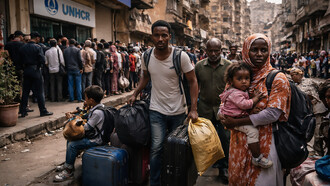
In its National Security Strategy 2025, the Trump administration says that Europe is threatened with quote, civilization erasure, unquote, owing to what it considers the EU's inability to control its borders. On the other hand, many civil society organizations, as well as countries in the global south, consider the EU's immigration policies, like its subcontracting immigration control to governments like Libya's, to be draconian and contradictory to respect for human rights. What would be the main points of an immigration and border policy that you would favor?
I start with the ultimate moral goal, which is the right of people to move, live and work anywhere freely. This, of course, implies a single labor market in the world, something similar or analogous to what we already have had in the Nordic countries since the 1950s and in the EU since the late 1960s and more formally since the 1990s.
Of course, we know that the social processes are complex and depend on a variety of socio-economic and cultural conditions, mechanisms and processes. To simplify and to state the obvious, people's responses to immigration vary a lot, so we have to be very wise and careful in devising strategies for moving in that direction.
But that is the direction we should take. Here, I'm very close to the position of DiEM25, the Democracy in Europe Movement 2025 movement. All migrants, regardless of origin or motive, should have equal rights and protections. Aims such as the right to seek refuge and dismantling racialised hierarchies in migration governance don’t imply that the ultimate goal is realized the right way. But addressing the underlying causes of migration, such as poverty and repression, and simultaneously treating all migrants in an equal and just way, are important steps toward a global freedom of movement and labor market.
The current anti-immigrant sentiment is more than a little bit paradoxical because many countries in Europe, including Finland, Germany and increasingly France and of course Italy, and others as well, are facing a situation where the native population is already declining and getting older. Neoliberals are arguing that this is a key reason why we can no longer afford the welfare state. Migration would be an easy solution because the world population is still growing, and things could be balanced by allowing more people to enter these countries. And the truth is that in countries like Germany and Finland, populations are still slightly growing, but only because of immigration.
Thus I think that there's both an economic reason and a moral reason to open up borders more, but of course, we have to be careful about the possible unintended consequences. As a critical realist, I presume we have to take real-world mechanisms and processes into account when devising emancipatory strategies. However, the reactions associated with the nationalist, authoritarian, and populist right also stem, of course, from adverse political economic developments, involving the peripherisation of regions and rising inequalities. So the consequences are context-bound, and contexts can be changed.
Social Democratic parties throughout Europe have been losing ground to the far right largely on the immigration issue. The Danish Social Democrats have capitulated to pressure from their working class base and adopted more restrictive policies that many say contradict the Social Democratic tradition but is necessary for their political survival. Is the Danish solution the way to go? Is there an alternative?
Well, the social democratic parties are social democratic very often only by their names. These parties started to “modernize” themselves in the 1980s and especially in the 1990s, and the result was a kind of left version of neoliberalism, to put it bluntly.
They wanted to preserve aspects of the welfare state, or, in some cases, even develop minor parts of it, while accepting the overall contours of the neoliberal world order and its requirements. Often this meant that, according to these and other “centrist” parties, competitiveness should be improved through tax cuts, marketization, privatization, commodification, etc., in order to generate more tax revenue to maintain the welfare state. This may sound paradoxical because it is.
And governments run by these parties joined willingly all these international agreements and global systems developed at the heyday of neoliberalism in the 1980s and 1990s. Such agreements constitutionalized aspects of neoliberalism. By doing so, the social democratic and other like-minded parties squeezed themselves into a corner where they find the space for any genuine politics really small.
And that's the reason why they have become increasingly a basically conservative force, though still willing to prevent the growth of inequality or maintain some form of egalitarianism. Given the circumstances, a shift toward a more anti-immigration stance is not only possible but also a way to become more popular – and populist. What this amounts to is welfare chauvinism, coming close to nativism.
The irony is that if you look at, for instance, the Finns Party in Finland, they started as a kind of welfare chauvinist party. They were concerned about the erosion of the welfare state, but they wanted to provide welfare benefits only to the native population. This changed in the course of the 2010s, and now they combine nativism with hardline neoliberal policy. This is what some people call the “winning recipe” for these right-wing parties. Is this also where some of the “social democratic” parties are heading?
My question is, what does it mean to be politically successful if you give up your ideas and aspirations? What's the point?
So, more broadly, it is said that the far right in Europe has momentum, and it's only a matter of time before the National Rally in France will win the presidency and the AFD in Germany will be in a position to enter government. What do you think about this prognosis and what advice could you give the progressive and liberal policymakers? And I was just wondering on those two points, do you think the national rally in France will win the next presidency?
Unfortunately, that is a possibility. The political situation in France is really tricky, and they have been quite close to that kind of situation once or twice before.
And now there's even more uncertainty than before. Unless somebody is able to articulate an alternative, some kind of vision with some hope, very easily, people will turn to this kind of protest voice. That is a real danger, I think.
And the AfD in Germany?
I'm a little bit more skeptical of that, I mean, they are still behind the popularity of the National Rally in France. AfD’s current 25% is significant, but because of the multiparty system, it does not translate into the same level of national dominance. There are certain parts of the former East Germany where they are very popular. I mean, there are municipalities and regions where they have more than 50% of the vote. But in most parts of Germany, including Berlin, they are much less popular.
I can see the possibility of the AfD entering a coalition government, but I don't see them actually ruling Germany alone. That's too far-fetched, still.
And how about for those people that say that, well, there’s the Meloni government in Italy?
That is something that I haven't actually systematically analyzed. But let me just put it this way: perhaps we can see that there is some merit to the EU in this regard as well. Given that Italy is such a part of the EU, and given also Italy’s economic situation, the Meloni government has had to negotiate and compromise with others. And now this government seems to be in trouble, also because of the havoc Donald Trump has caused.
Like the Law and Justice Party in Poland two years ago?
Well, the tendencies toward that direction haven't disappeared. They still exist everywhere. And even in Hungary, I think the situation remains tricky. I have some friends there, including scholars, and they see the future in rather pessimistic terms.
So even though Orban is now out, the alternative is another conservative and nationalist who is not so different from what Orban is. The political options are a bit like those in the US Rust Belt. The realistic alternatives look rather similar, although there are, of course, some differences.
I think something more fundamental has to change. By "more fundamental," I refer to the global processes that have generated the prevailing power relations and keep the situation as locked as it seems at the moment. And then the question becomes: how do we build scenarios and strategies to realise global transformations and thereby increase autonomy also in more local or immediate contexts…
It is said that the EU initially began as a way to peacefully bind Germany to Europe and prevent it from again disrupting Europe, a war of conquest as it did in the Second World War. It is said, however, that under the current German government under Friedrich Merz, Germany is using its economic power to bring about a more pronounced political and economic leadership role. What do you think of this analysis? Is a more assertive Germany a problem for Europe?
Yes, it is. Germany already assumed a dominant position during the Euro crisis.
There was a perception after the Lisbon Treaty that the EU would address the democratic deficit, and that steps would be taken, for example, to increase Parliament's role in decision-making. And then all of a sudden, by 2011 and 2012, it was again intergovernmentality that ruled, with Germany playing a dominant role. The Merkel government and all these people were pushing the hard line, austerity.
That was a step backwards for the European Union. I mean, this intergovernmental situation, particularly when there's one dominant country, is not compatible with increasing democracy in Europe. Now, following Russia’s 2022 invasion of Ukraine and consequent Zeitenwende (“turning point”) in Germany, neoliberal austerity politics have been combined with militarization. The latter could, in principle, amount to military Keynesianism, but overall, for various reasons, it does not lead to an increase in aggregate effective demand.
Even though I dislike direct analogies to the 1930s or 1940s—and contemporary Germany remains very different from that era—the question of whether a more assertive Germany poses a problem for Europe has a clear answer: yes.
Just as a corollary to that, do you think that the Russians are, in fact, worried about this?
I would think so. During the Cold War, it was poorly understood in the West that, well into the 1960s and even the 1970s, the Soviets were most fearful of Germany. They continuously talked about some kind of revanchism in Germany. And look at what Putin has been using in his rhetoric. It is the experience of the Second World War. The German invasion came from the west. The Russians suffered so much, and they were the ones who defeated Nazi Germany; all this is true. Now this historical memory is used as a possible precedent case for another Western invasion of Russia. This is propagandistic, but it also indicates that the Russians are still fearful of the experiences of the 1930s and 1940s and there, of course, Germany was the main cause of all the misery.
A more assertive Germany can trigger even further securitization in Russia. It is far better for Germany and the world to exercise its influence through a more institutionally developed and dialogical European Union than to become more assertive on its own, whether in Europe or toward Russia, which is also partly in Europe.
So, do you think that Germany will step into the vacuum that now seems to be happening, with the threat of an American pullout?
I'm a bit skeptical of the vacuum metaphor, which is used in geopolitics and some forms of political realism in International Relations. No vacuum has sucked or will suck Germany into expanding its influence. Rather complex processes have resulted in the current situation. Moreover, to paraphrase Marx, actors continue to make history in the prevailing circumstances, which most of the currently active actors have shaped only to a limited extent, if at all. And the future is not predetermined.
We have already discussed many of the developments that have led to the current European and world-historical context. I mentioned the Euro crisis, we have discussed the rise of nationalist authoritarian populism, and now there’s this trend of militarization. Mobilizing resources at EU level remains difficult, even as many things have now been securitized and interdependence weaponized. Most of the ongoing increase in military spending is realized through national budgets, and, at least for now, weapons are to a significant degree purchased from the United States, which benefits the American military-industrial complex and economy, not Europe.
If Americans pull out of Europe, many changes will take place here. Indeed, a scenario is that Germany will become increasingly dominant in Europe. If things continue to go in the intergovernmental direction and there's no development of the EU or there’s an erosion of the EU, then that is a real possibility. I hope that we are not going that far.
But let me place the issue in a broader context. To the extent that actors rely on past metaphors, concepts, and frames, they also tend to reproduce past problems. Nothing is then learned from history. The hope is that a critical juncture and a fluid moment will emerge, allowing new metaphors, concepts, and frames to come to the fore. It's not possible to go into detail here – I've developed such scenarios in many places – but I tend to think that by the next decade or so, there will be some kind of a turning point in global politics. This will enable not only the emergence of new kinds of actors but also prompt existing political movements and parties to reconsider their current orientation.
We've been talking about the Social Democrats in particular. In Brussels, among the Social Democrats, there is a discussion about how to reconsider the situation. It was ongoing already in the mid-2010s, when I was involved in “Progressive Economy”, an initiative of the S&D group in the European Parliament. “Progressive Economy” included many well-known leftist intellectuals and experts, which I took as an indication that they wanted to have this kind of a critical discussion. It continues today, which I find promising, although they are still too cautious and don't want to go far enough in terms of global institutional imagination. What is needed is a vision that would give hope about the future of humanity and the planet, a vision people could start to follow and debate.
Nonetheless, I think there's already some reconsideration underway, and it is not only possible but also likely that this will become stronger in the 2030s and, at the latest, in the 2040s. Rapidly accelerating climate change is a likely trigger, but there are others.
Many people think that 10 years is a long time, but when we reach the age of 60 or 70 or something like that, we also start to see that in terms of our own lives, 20 years is nothing. If we look at things from a planetary perspective, we should consider at least centuries.
So, the EU, it is often said, is suffering from a democratic deficit as evidenced by the relatively weak development of the European Parliament relative to its executive institutions, erosion of control over national governments in areas such as trade, currency and the budget. So you've answered this partly, but what policies would you propose to address this problem?
Yes, this has many dimensions, and some changes are possible within the current EU basic treaty, while others require changing the treaty itself and creating new systems. You mention the European Parliament. The classical representative aspect of democracy concerns the parliament. For now, only the Commission can initiate legislation, and the Commission also prepares the budget. That has to change
Legislation and budgeting must be much more democratic than they are today. Politics, political parties and parliament must play a central role. I don't think that the European Union has to be modeled on the existing states, but the members of parliament should be more vocal in direction-setting and have more powers.
There are several other aspects as well. Consider applying the principles of deliberative democracy in certain contexts to think about alternative futures for the European Union. It is equally important to think about democracy in political economy terms. Who owns the media, and how should it be organized?
More generally, how should relations of production be organized? Indeed, a possible way to overcome the paralysis of the current left in Europe is to re-raise the idea of participatory democracy in everyday practices at the level of the relations of production. A global but largely EU-based large-scale academic consortium was created in 2020 to democratize firms, decommodify work, and remediate the environment, called “Democratizing Work”.
Such transformations can be realized in various ways. It has to do with redefining private property rights, relations of production, and other things. It doesn't have to be done in a particular way. We don't have to repeat the models of the past. But we must tackle the relevant power relations, especially on a global scale.
Regarding the role of media in Europe, I'm strongly in favor of creating some kind of a public media with sufficient resources to engage in investigative journalism and citizen dialogue and stuff like that. I mean, at the moment, we are totally at the mercy of national and especially commercial media. A public sphere is needed to have proper democracy anywhere. And so that's an important aspect of it as well.
But that’s not enough. One of the key issues is that the current temporal horizon is way too short. I mean, to consider not only climate change or the extinction crisis, but the governance of the world economy as a whole, we need to have a much broader temporal horizon.
There are many ways to incorporate future citizens into decision-making across various systems. There’s a lot of discussion about that in political science and philosophy at the moment. We can have future committees in parliaments, like in the Finnish parliament, or representatives of the future in the parliament itself.
We're still under the mercy of capitalist profit-making, which has its own way of thinking about the future in terms of interest rates, discount rates, and such. All this tends to be relatively short-term, but the whole point of moving towards a more cooperative way of thinking about the future is also to incorporate future people into discussions and decision-making. I call such an orientation temporal socialism.
So, the last two questions. It is said that the rise and fall of Finland's Nokia has a broader relevance for Europe and that it is a region that has fallen dangerously behind in the race for advanced technology, especially AI, and that it has become dangerously dependent on American corporations for its IT needs. Is this true? And to avoid being squeezed out in a world dominated technologically by China and the US, what must Europe do?
Not a small question. I tend to find some merit in Manuel Castells & Pekka Himanen’s interpretation of Nokia's rise. Those who developed its 1990s success were like hackers; people with very innovative minds. They were enabled not only by the welfare state and institutions of public education, but also by Finland's peculiar Cold War identity as a neutral country. Finland was too close to the Soviet Union for the Americans to trust the Finns. So, some high-tech products were not allowed to be exported to Finland. We had to invent our own systems here, and this turned out to be a recipe for success.
Nokia's fall was really stupid, a sign of the short-sightedness of those who quickly started managing and controlling the new Nokia. Nokia was turned into a big US-style multinational corporation. They financialized everything and started to follow the governance model of US corporations. And that was the beginning of the end of it.
When corruption takes hold, the balance between the private and the public is broken, and actors increasingly focus only on their own private good, immediate benefits, and pleasures. This is where the decline of an organization begins. This is what happened to Nokia, whose success quickly collapsed when authoritarianism and management selfishness eroded the foundations of its experimentalism and hackerism. Most of Nokia's creative and innovative elements were destroyed. They couldn't keep up with the development of these IT technologies anymore.
And that has also been a very important part of Europe's story. The EU and European countries have also made a major mistake by becoming so dependent not only on American business models but also on US big tech companies. Currently, all public services and many corporations, including the military, depend on cloud services from Amazon, Microsoft, and others.
This of course reflects deeper forces and mechanisms in the capitalist world economy. Mechanisms like the network effect, for instance, tend to lead to a situation where both production and wealth are concentrated in a few hands. And they've contributed to making many systems around the world dependent on American big techs.
Due to Trump, there's a lot of reconsideration in Europe at the moment, but it will take time for alternatives to emerge. Europeans are starting to build their own systems, but I have to say I’m not particularly keen on the idea of developing the European Union into another great power in this world of competing great powers, military alliances, and all the rest. We need to consider how to govern these issues on a global scale. What kinds of regulations do we have for the internet or AI, given the current developments, which some see even as an existential issue for humanity?
China, of course, has developed its own technologies surprisingly well. I mean, Chinese companies are now leading in many fields. This has reconfigured relations of dependency, though China is still speaking on behalf of the Global South. Anyway, I do not see the core of the problem as Europe being squeezed between China and the US, but rather how we can best promote the global common good and minimize existential risks. From this perspective, I would rather see potential in the future EU-China cooperation.
Okay, thank you. So the last question is, what are the specific contributions that you think Finland can make to addressing regional as well as global problems?
I'm optimistic about the long-term possibilities on a wider global scale, but about Finland, I'm rather pessimistic in the current conjuncture. Finland used to have a good reputation, and at times things were done in the right way. But for the last 30 years, this country has been increasingly becoming just a conservative part of the mainstream of the neoliberal and increasingly militaristic West.
At the moment, I don't see any political forces in Finland capable of changing the current course within a five- to ten-year time frame. Of course, major changes are possible, but I see the initiative must come from elsewhere. Finland would then accommodate itself to the new situation, and the movements and parties would redefine their purposes. But for the time being, I don't see any possibility of any major Finnish politician articulating anything even remotely progressive.
The best we can hope for is that the foreign policy leadership reconsider whether we actually should have some sort of dialogue with Russia. When it comes to the economy and economic policy, Finland seems to be on the road to a partly self-inflicted bankruptcy. One might, of course, think that, given Finland's attitude towards Greece during the euro crisis, a repeat of the same fate here is what the country deserves. I find that quite sad, nonetheless, and continue to do whatever I can, but that’s not much.
And do you think the Social Democrats are going to come back to power?
Yes, that's very likely. But remember that it was Sanna Marin’s government which decided to apply for NATO membership. Marin was hardline about Russia. At one point, the media asked her how we can end the war in Ukraine, and she said, “It's very simple, Russia out.”
In terms of economic policy, Marin's government may have looked a little more Keynesian than usual, but it did little that deviated from the EU's adjustment to the Covid crisis. The current leadership of the Social Democratic Party is committed to a so-called debt break, which by all accounts means an additional 10% cut to the public budget. Given the rapid increase in military expenditure, this largely means dismantling the remaining social and health-related elements of the welfare state.
Do you have plans to run for parliament?
No. I stood as a candidate three times: twice for the national parliament, once for the European parliament. At the moment, I'm active on other fronts. I'm a member of the DiEM25. I'm an associate fellow of the Tellus Institute, connected to the global Great Transition Initiative. I've also just, together with a couple of colleagues, Werner Raza and Magnus Ryner, found a new Vienna forum on the cooperative world system. At the next conference in Vienna in July 2026, we will discuss the contemporary relevance of the 1970s New International Economic Order proposal.
I put my time and activism into these kinds of initiatives at the moment; I think they're more fruitful than national politics in Finland.
I hope we didn't take up too much of your time.
No. This has been a pleasure.