English
 Español
 Français
 Deutsch
 Italiano
 Português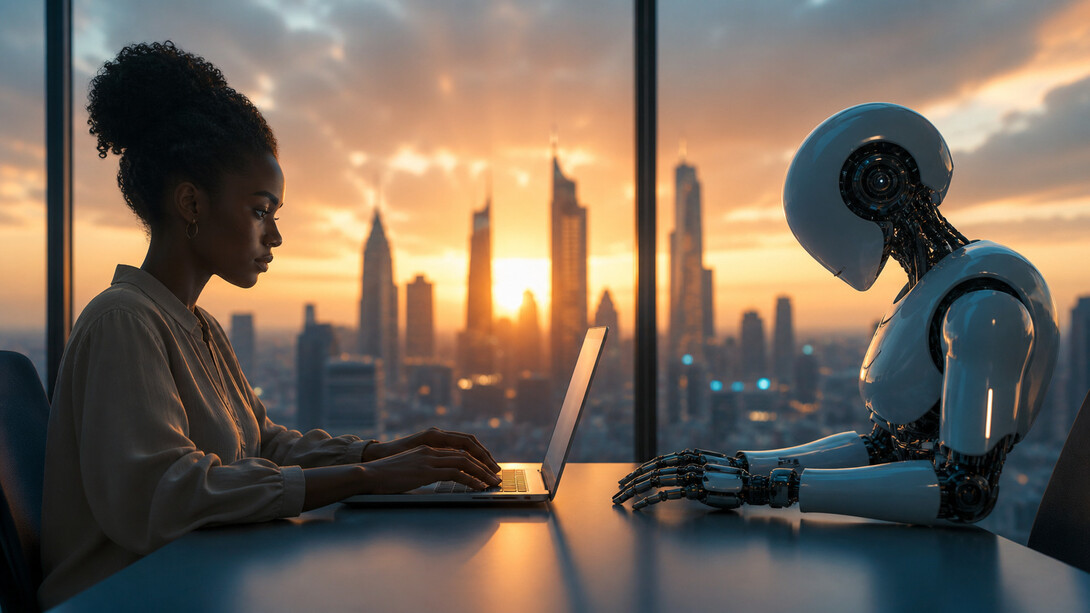
Once upon a time, job security meant clocking out and retiring with a gold watch after 30 years of service. That era is fading fast. The world of work is changing – not politely, but with the force of a tidal wave. Artificial intelligence, automation, and global economic shifts are redefining not just how we work, but why we work.
From the bustling streets of Nairobi’s digital start-ups to Silicon Valley’s robotics labs, a silent revolution is underway and it’s not waiting for anyone to catch up.
The machines aren’t coming, they’re already here
For decades, the idea of robots replacing human workers sounded like science fiction. Then came ChatGPT, driverless cars, drone deliveries, and AI-powered accountants. Suddenly, the future wasn’t in the distance—it was sitting across the office, probably running a spreadsheet faster than you.
The World Economic Forum’s Future of Jobs Report (2023) estimates that 83 million jobs could be displaced globally by automation before 2030. Yet, there’s hope: 69 million new roles are expected to emerge in fields like AI training, digital ethics, climate tech, and data analysis.
The key shift? We are not moving toward a world without humans. We’re moving toward a world where humans and machines must collaborate completely. The winners of this new era will be those who learn how to "speak machine" while staying deeply human.
From labour to leverage: redefining value
In the industrial age, labour was physical. In the information age, it became mental. In the digital age, it’s now emotional and strategic. The most valuable skill today isn’t about how much you can do but how well you can think, adapt, and connect.
Consider this: An AI tool can write an email, but it can’t yet replicate empathy. It can generate a strategy, but it doesn’t know how to inspire a team on a Monday morning when morale is low. That’s where human value still reigns supreme.
The future economy rewards creativity, adaptability, and emotional intelligence as much as technical know-how. In fact, soft skills—often dismissed as "nice-to-haves"—are quickly becoming the "must-haves".
The freelance and remote revolution
COVID-19 accelerated what was already the great unshackling of work from place. Today, millions of professionals operate from coffee shops, home offices, or beaches with Wi-Fi (though, let’s be honest, "working from the beach" is mostly a myth because sand and laptops don’t mix well).
Platforms like Upwork, Fiverr, and Toptal turned freelancing from a side hustle into a global labour movement. In Africa alone, the freelancing economy is projected to surpass $100 billion by 2030, with Kenya, Nigeria, and South Africa leading the pack.
Why? Because young Africans are redefining work-blending entrepreneurship, technology, and creativity to serve a borderless market. Many are no longer chasing jobs; they’re creating them.
Still, this new freedom comes with a paradox. Remote work offers flexibility but can blur the line between "home" and "office" until both feel like work. And freelancers often trade stability for autonomy, a thrilling but exhausting bargain.
AI in the office: the new co-worker
AI isn’t just a tool anymore; it's a colleague. In many offices, algorithms decide who gets interviewed, which ad gets shown, and even when a delivery truck leaves the warehouse. But when AI increases efficiency. It also raises profound ethical and emotional questions.
Who’s accountable when an AI system makes a biased decision? What happens when performance reviews are powered by algorithms instead of humans? And how do we maintain humanity in an increasingly digital workplace?
Forward-thinking companies are starting to create “AI ethics boards” to tackle these dilemmas, but the truth is regulation lags behind innovation. That means it’s up to human employees, leaders, and policymakers to build the moral guardrails before machines race ahead.
The education catch-up game
The traditional education model is under siege. A four-year degree that costs a fortune may no longer guarantee employability. Instead, the future belongs to the lifelong learner—the one who sees learning not as a phase, but as a lifestyle.
Micro-learning platforms, online certifications, and skill-based training are now reshaping how people prepare for the job market. Google’s Career Certificates, Courses, and LinkedIn Learning have become the new-age universities—affordable, flexible, and globally recognised.
In Kenya, organisations like Ajira Digital and Andela are equipping young professionals with digital skills for global opportunities. Yet, the challenge remains: how do we ensure this upskilling reaches everyone, not just the urban elite?
Because if education is the new currency, inequality in access could create a new class divide between those fluent in digital literacy and those left behind.
Women and the future of work
Women are at the heart of this transformation and, unfortunately, often on the frontlines of its challenges. Globally, automation threatens more female-dominated sectors (like administration and customer service) than male-dominated ones. But that’s not the end of the story.
Digital workspaces are also unlocking unprecedented opportunities. Remote work, flexible schedules, and global connectivity have opened doors for millions of women—especially in Africa and Asia—to participate in the economy while balancing family roles that traditional systems overlooked.
Kenyan women-led initiatives like HerHustle and Akili Dada are championing this shift, proving that when you invest in women’s digital education and entrepreneurship, you don’t just empower individuals; you strengthen economies.
The rise of the purpose economy
Something fascinating is happening among younger workers. They’re not just chasing pay cheques—they're chasing purpose. A 2022 Deloitte Global Survey found that 49% of Gen Z workers would quit a job that conflicts with their personal values.
This shift is forcing corporations to do something many have avoided for decades: grow a conscience.
From climate responsibility to ethical supply chains, businesses are realising that "profit at all costs” is no longer sustainable. Employees and customers alike are demanding transparency, fairness, and authenticity.
And ironically, this moral awakening could be capitalism’s saving grace.
The developing world’s advantage
While advanced economies worry about AI displacing white-collar workers, developing countries may have an advantage—youth and adaptability. Africa, for example, has the youngest population in the world, with 70% under 30. This demographic edge could turn into an innovation engine if harnessed correctly.
Kenya’s gig economy, for instance, is thriving not despite challenges, but because of them. With limited formal employment, young people have embraced digital entrepreneurship with vigour, building YouTube channels, virtual assistant businesses, and online consultations that reach clients worldwide.
The lesson here? Necessity breeds innovation. While other regions debate "how to adapt", Africa is already doing it.
Policy, power, and the politics of labour
Behind every economic transformation lies a web of policy decisions. Governments now face a dilemma: how to protect workers without stifling innovation?
Universal Basic Income (UBI)—once a fringe idea—is gaining traction as automation threatens livelihoods. Finland, Canada, and even Kenya (through localised pilots) have explored giving citizens a guaranteed income floor. Critics argue it’s unsustainable; proponents say it’s the only humane response to a jobless future.
Meanwhile, labour laws, taxation, and data rights are being rewritten to accommodate the digital workforce. The gig worker delivering your food or managing your business’s social media deserves protection too, but how do we regulate a worker who’s both local and global?
This tension between flexibility and fairness will define the next decade of economic policy.
The human element: what machines can't replace
No matter how sophisticated AI becomes, it still can’t replicate the complexity of human experience—love, intuition, laughter, or the quiet courage to try again after failure.
In the end, the future of work isn’t just about technology—it’s about human evolution. It’s about redefining success beyond metrics and learning to coexist with tools that amplify our abilities instead of erasing them.
The question isn’t, "Will robots take our jobs?" It’s "Will we use technology to make life richer—or just faster?"
So, what now? Preparing for tomorrow, today
Here’s the roadmap for individuals, companies, and governments navigating this seismic shift:
Individuals: Stay curious. Learn continuously. Build a personal brand rooted in authenticity and adaptability.
Companies: Invest in your people as much as your tech. An ethical, emotionally intelligent workforce will be your real competitive edge.
Government: Design safety nets that empower, not entrap. The future belongs to agile systems that evolve with society.
Because in truth, the “future of work” isn’t coming someday—it's already here. And those who refuse to resist it will find themselves staring at the past while the rest of the world builds forward.
Humanity at the centre
Maybe the greatest irony of this new age is that, just when technology is becoming more human, humans must become more intentional. The challenge isn’t to outpace machines—it's to outgrow the system that made us feel like them.
The future of work will not belong to the most automated or the most efficient. It will belong to the most authentic—those who combine skill with soul, speed with empathy, and innovation with wisdom.
And we can do that—if we can humanise the future even as we digitise it, then perhaps this revolution won’t be about replacing people after all. It’ll be about finally redefining what it means to be one.