English
 Español
 Français
 Deutsch
 Italiano
 Português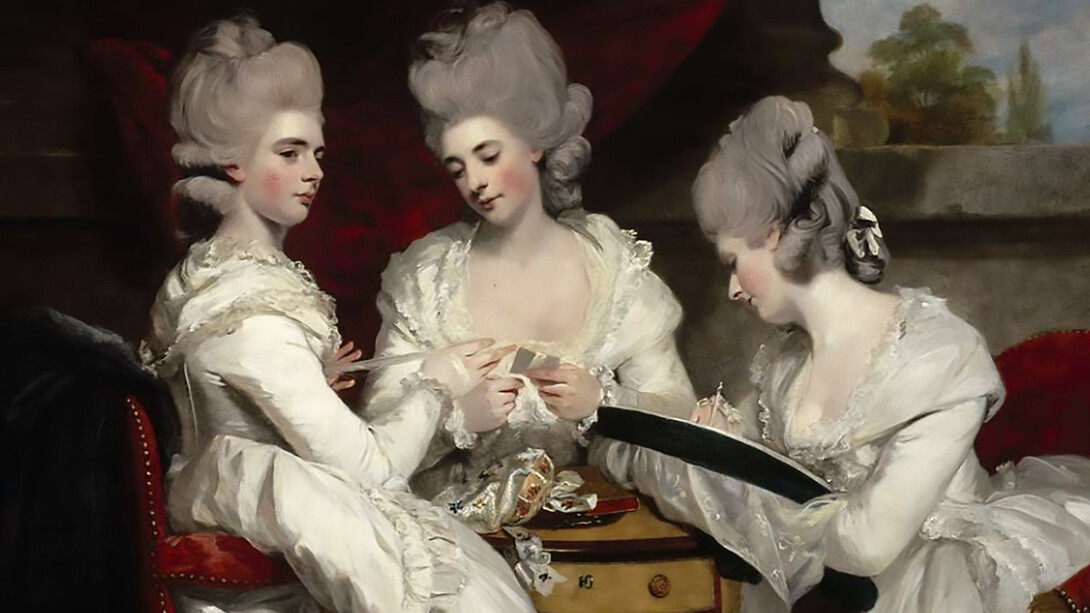
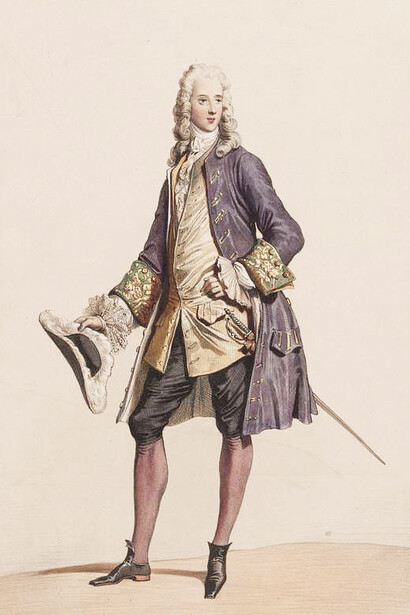
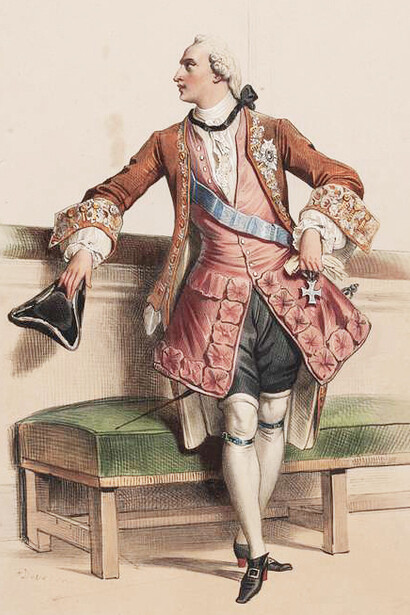
The Rococo period of the early to mid-18th century represents one of the most visually extravagant moments in Western fashion history. Emerging in France during the reign of Louis XV, Rococo aesthetics celebrated lightness, sensuality, artifice, and ornamental excess. Pastel silks, cascading ribbons, lace flounces, and architectural silhouettes transformed women into living embodiments of refinement and spectacle. Yet beneath this softness lay a complex system of power, performance, and social hierarchy. Rococo fashion was not merely about beauty—it was about visibility.
Following the grandeur and rigidity of Louis XIV’s Baroque court, Rococo introduced a shift toward intimacy and playfulness. Interiors became lighter, filled with curved lines, floral motifs, mirrors, and delicate color palettes. Fashion mirrored this environment. Women’s gowns were constructed from luminous silks in shades of blush pink, powder blue, pale lilac, cream, and pistachio green. These hues conveyed cultivated delicacy and aristocratic leisure.
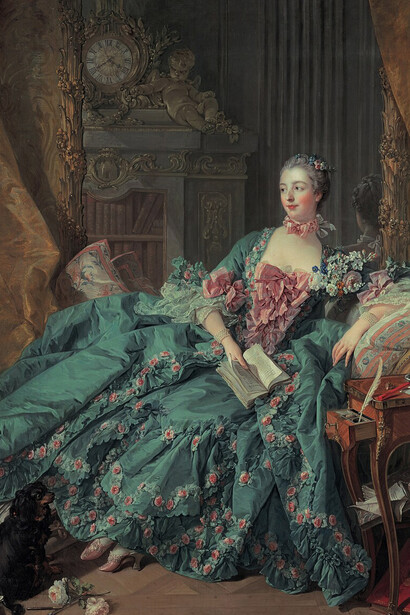
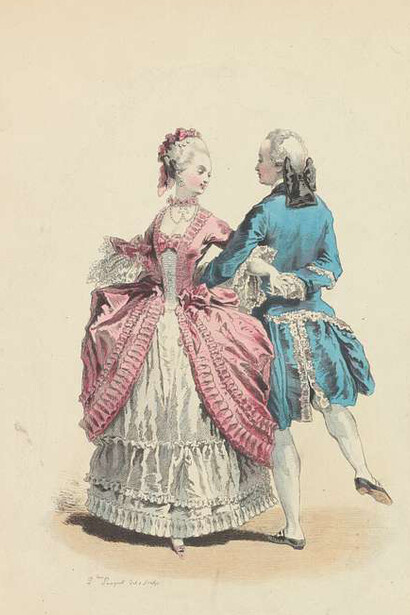
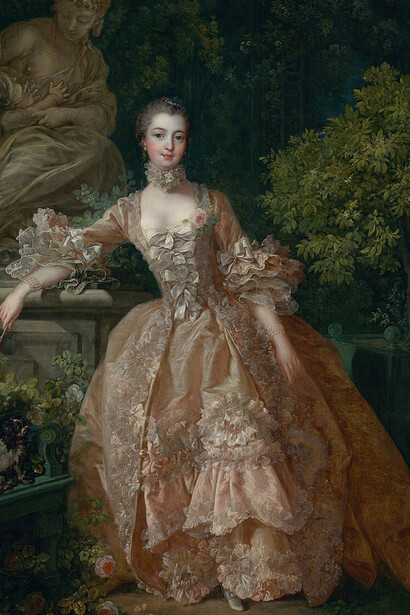
The silhouette defined the era. Wide panniers extended skirts horizontally at the hips, sometimes reaching extraordinary widths. Bodices were tightly fitted, often low-cut and framed with lace, while sleeves ended at the elbow, finished with layers of cascading lace ruffles. Every surface invited decoration: bows were strategically placed along bodices, sleeves, and skirts; floral embroidery climbed across silk like a painted garden. The body became an aesthetic object—structured, widened, softened, and staged.
Alongside the cascading lace ruffles at the elbows—known as engageantes—the ribbon choker emerged as a defining accessory. Often made from velvet or silk and tied snugly around the throat, it framed the face, accentuated the décolletage, and emphasized the delicacy central to Rococo femininity.
The choker added a subtle note of intimacy and sensuality to the ensemble, reinforcing the carefully staged performance of softness, grace, and ornamentation. Yet its meaning was not entirely innocent: after the French Revolution, the same delicate ribbons could evoke a darker resonance, recalling the guillotine and the fragility of aristocratic life. In this way, the choker encapsulated Rococo’s duality—an object of beauty and flirtation, but also a reminder of social and political tension.
At Versailles, clothing functioned as political language. Proximity to the king meant influence, and influence required visibility. Women of the aristocracy navigated power through appearance, social rituals, and courtly etiquette. Fashion was therefore both armor and currency.
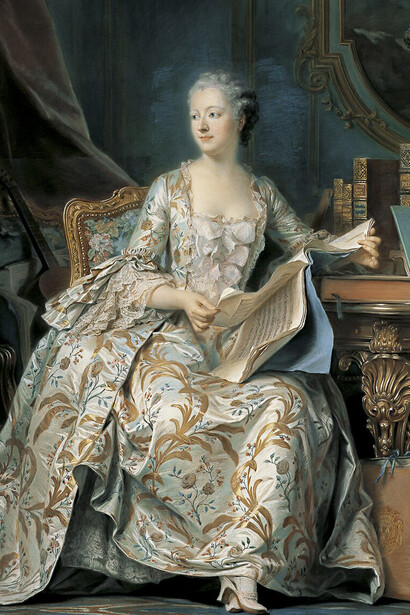
Madame de Pompadour, the influential mistress of Louis XV, exemplified Rococo femininity. Frequently portrayed in pastel gowns surrounded by books, flowers, and luxurious textiles, she embodied cultivated beauty combined with intellectual presence, showing that femininity could be decorative yet strategic.
Later, Marie Antoinette elevated Rococo fashion into near-mythic territory. While her early wardrobe embraced elaborate silks and court gowns, she popularized the chemise à la reine—a simpler white muslin dress that scandalized critics for appearing too informal. Even in simplicity, the performance remained carefully curated. Nothing in Rococo femininity was accidental.
The elaborate process of dressing required assistance from servants, reinforcing class distinctions. The impracticality of garments—heavy silks, wide panniers, delicate fabrics—visibly signaled exemption from labor. To appear fragile was to display privilege. Rococo ornamentation was never random; it followed a specific aesthetic philosophy. The style favored asymmetry, curves, shells (rocaille motifs), florals, and playful natural forms.
Pastels carried symbolic weight, suggesting youth, tenderness, and cultivated sensitivity, while powdered skin emphasized refinement and distance from outdoor work. The aesthetic created a fantasy of effortless elegance—though achieving it required immense labor behind the scenes.
Hyper-femininity in this context was aspirational. It exaggerated traits culturally coded as feminine—softness, delicacy, ornamentation, and sensuality. Yet the exaggeration was so extreme it bordered on theatricality. The Rococo woman was both subject and spectacle.
While fashion celebrated pleasure and beauty, it attracted criticism. Enlightenment philosophers increasingly valued rationality and simplicity, and the extravagant clothing of the aristocracy became a symbol of social inequality. By the late 18th century, Rococo excess came to represent moral decadence in the eyes of revolutionaries, and the French Revolution ushered in a shift toward simplicity, classical inspiration, and republican modesty.
Although Rococo as a court style disappeared, its visual codes never fully vanished. Instead, they re-emerge cyclically, particularly when fashion seeks escapism or romantic fantasy. Today’s hyper-feminine trends—bows, corsetry, lace trims, voluminous skirts, and pastel palettes—echo Rococo sensibilities. Ribbon hair ties, exaggerated puff sleeves, and structured bodices are modern reinterpretations of Rococo ornament.
Yet context changes meaning. In the 18th century, hyper-femininity was intertwined with social hierarchy; today, it is often adopted consciously as aesthetic expression. A pastel corset in 2026 may signal nostalgia, irony, empowerment, or simply visual pleasure.
Rococo’s most enduring legacy is the idea that softness can function strategically. Madame de Pompadour demonstrated that aesthetic refinement could coexist with political influence; modern hyper-femininity often plays with this paradox. Soft silhouettes coexist with strong voices, pastels accompany entrepreneurial independence, and exaggerated bows become symbols of deliberate self-styling rather than imposed fragility.
Rococo reminds us that femininity has long been constructed, exaggerated, and staged. When amplified to theatrical extremes, it becomes visible as performance rather than “nature.”
This enduring influence is visible in contemporary fashion. Simone Rocha evokes Rococo through tiered tulle dresses, puff sleeves, and intricate bows that recall the playfulness of 18th-century court gowns. Molly Goddard channels Rococo opulence with voluminous skirts, ruffles, and pastel-hued ensembles that transform historical silhouettes into wearable art.
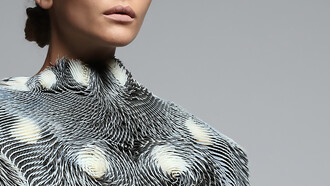
Rodarte layers lace, embroidery, and delicate textures to create highly detailed pieces reminiscent of aristocratic refinement. Gucci under Alessandro Michele references Rococo through embroidered silks, ornate collars, and lavish gowns, blending historical romanticism with modern eclecticism, while designers like Viktor & Rolf push theatricality further, exaggerating volume and embellishment to recall the performative spectacle of court life.
Rococo fashion stands as one of history’s most vivid explorations of ornamental femininity. Its pastel silks, widened silhouettes, and intricate embellishments transformed women into living works of art while reinforcing systems of privilege and spectacle. Yet Rococo’s influence endures because it understood something fundamental: clothing is never neutral. It communicates status, desire, ideology, and identity.
In revisiting Rococo today, designers and wearers are not simply copying the past—they are engaging in dialogue with it. Bows, pastels, structure, and softness are repurposed, and what was once imposed can now be curated. In that transformation lies the true evolution of Rococo’s pastel power.