English
 Español
 Français
 Deutsch
 Italiano
 Português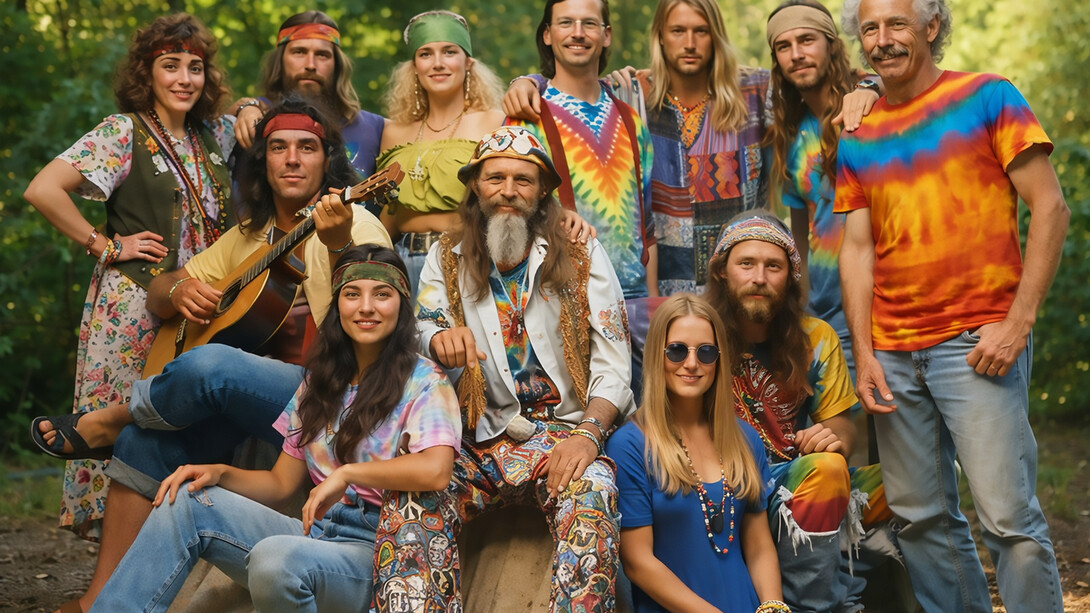
The hippie movement of the 1960s and early 1970s marked a profound shift in the relationship between fashion, identity, and society. More than an aesthetic, hippie style was a visual philosophy—an outward expression of anti-conformism, spiritual exploration, political dissent, and communal belonging. Through specific garments, materials, and styling choices, hippies transformed fashion into a language that communicated values rather than status, laying the foundation for many of the principles that still shape contemporary fashion today.
Hippie fashion emerged as a direct reaction against the rigidity and materialism of post-war Western society. The structured tailoring, synthetic fabrics, and polished silhouettes of the 1950s symbolized conformity and social control—everything the hippie generation sought to escape. In contrast, hippies embraced softness, imperfection, and natural forms.
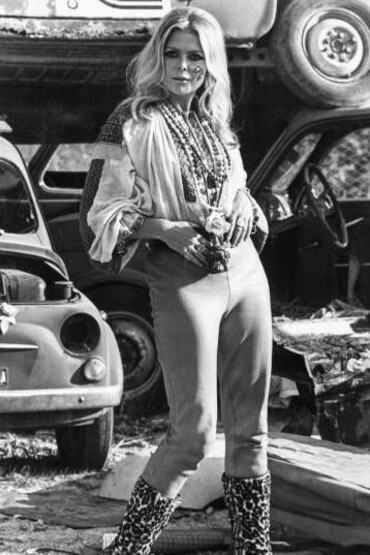
Garments were intentionally loose and unrestrictive, allowing freedom of movement and symbolizing liberation from societal constraints. Long, flowing dresses, kaftans, peasant blouses, and wide-legged trousers replaced tailored suits and cinched waists. This shift was not purely aesthetic; it reflected a desire to live differently, to slow down, and to reconnect with the body and with nature.
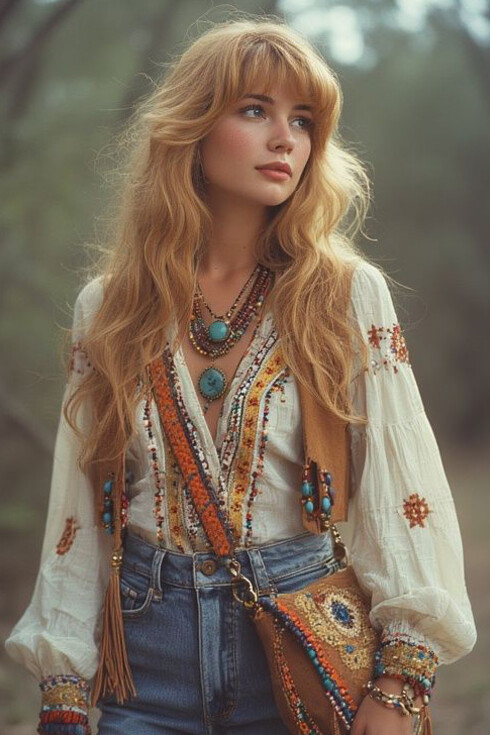
Natural fibers such as cotton, linen, wool, and hemp were favored over synthetics, aligning with ecological awareness and a rejection of industrial excess. The popularity of handmade and artisanal pieces—crochet tops, macramé vests, embroidered tunics—emphasized craftsmanship and individuality over mass production.
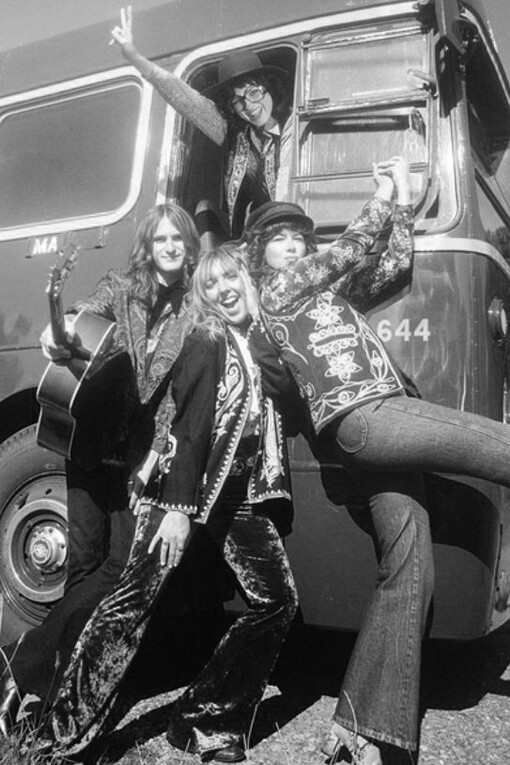
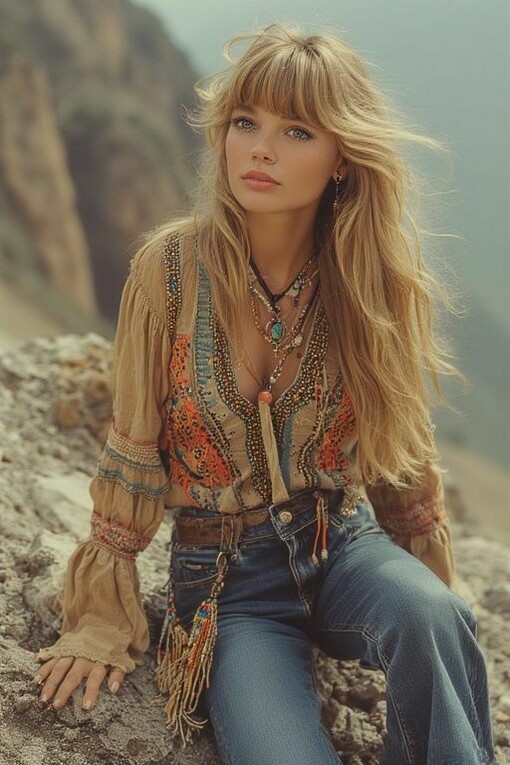
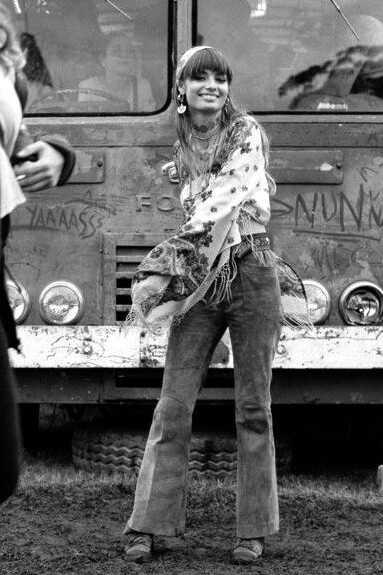
Certain items became visual symbols of the hippie movement, instantly recognizable and deeply charged with meaning. Bell-bottom jeans, often worn low-rise and decorated with patches, embroidery, or paint, represented both practicality and rebellion. Denim, originally workwear, was reclaimed as a symbol of egalitarianism—accessible, durable, and classless.
Tie-dye garments, with their swirling psychedelic patterns, reflected altered states of consciousness and spiritual exploration. Each piece was unique, reinforcing the idea that clothing should express individuality rather than uniformity.
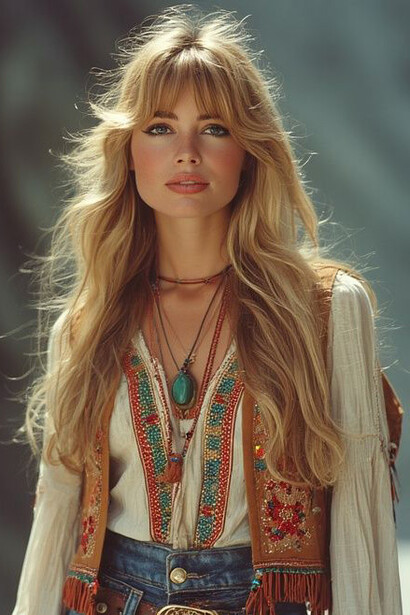
Fringe jackets and vests, often inspired by Native American clothing, conveyed a romanticized connection to nature and nomadic life. Though later criticized for cultural appropriation, at the time they symbolized a desire to reject Western dominance and seek alternative cultural references.
Maxi dresses and skirts, frequently floral or paisley, became staples for women, offering an alternative to restrictive, sexualized silhouettes. These garments expressed femininity without rigidity and comfort without compromise.
Accessories played an equally important role. Beaded necklaces, peace symbols, headbands, round sunglasses, and handmade jewelry turned the body into a canvas for personal and political expression. Footwear was often minimal—leather sandals, boots, or even bare feet—further emphasizing freedom and natural living.
One of the most defining aspects of hippie fashion was its openness to global influences. Garments and motifs from India, North Africa, Latin America, and the Middle East entered everyday dress. Indian kurtas, Afghan coats, Moroccan kaftans, and Mexican embroidered blouses were worn not as costumes but as everyday clothing. These choices reflected a rejection of Eurocentric fashion norms and an admiration for cultures perceived as more spiritual, communal, and connected to nature. Fashion became a way to visually express curiosity, openness, and resistance to Western cultural dominance.
This global eclecticism profoundly influenced designers of the era, encouraging them to look beyond Paris and Milan for inspiration and to rethink what luxury and beauty could look like.
By the late 1960s and early 1970s, the fashion industry could no longer ignore the visual power of the hippie movement. Designers began translating street-born aesthetics into high fashion, legitimizing elements once considered anti-fashion.
Designers such as Yves Saint Laurent were among the first to recognize the creative potential of hippie fashion. His iconic “Liberation” and “Ballets Russes” collections incorporated peasant blouses, embroidered details, ethnic references, and flowing silhouettes that echoed the free-spirited ethos of the movement. Saint Laurent translated countercultural ideas into refined luxury, proving that inspiration drawn from the street and from non-Western cultures could coexist with couture craftsmanship.
In London, Ossie Clark became one of the defining designers of the era, dressing the creative elite in garments that moved with the body rather than restricting it. His use of soft, lightweight fabrics and sensual, unstructured silhouettes reflected the hippie pursuit of freedom and naturalness. Alongside him, Thea Porter introduced Middle Eastern influences into high fashion, popularizing kaftans, rich textiles, and opulent yet relaxed garments that embodied bohemian glamour. Her designs blurred the line between everyday dress and evening wear, mirroring the hippie rejection of traditional dress codes.
In the United States, Halston redefined modern elegance through simplicity and ease. Though more minimalist than overtly bohemian, his bias-cut dresses and fluid jersey garments echoed hippie values of comfort, sensuality, and freedom of movement. His designs reflected a new kind of luxury—effortless, body-conscious, and liberated from structure.
At the same time, Zandra Rhodes embraced the expressive and psychedelic aspects of hippie culture, incorporating hand-painted textiles, vivid colors, and flowing silhouettes. Her work celebrated individuality and emotional expression, aligning closely with the movement’s artistic and spiritual dimensions.
This period marked a turning point: fashion no longer flowed exclusively from couture houses to the street. Instead, designers began observing youth culture, subcultures, and everyday dress as legitimate sources of inspiration. Hippie fashion proved that clothing could be emotional, political, and personal—and still be desirable.
Hippie style functioned as a powerful marker of belonging. While celebrating individuality, it also created a shared visual identity that fostered community. Recognizable silhouettes, materials, and symbols allowed individuals to identify one another instantly, forming connections through dress.
Fashion became a form of silent communication: wearing certain garments signaled shared values—peace, freedom, anti-consumerism, and spirituality. This duality of individuality within collectivity remains one of the most important contributions of hippie fashion to modern style culture.
Today, the influence of hippie fashion is deeply embedded in contemporary design, visible in the resurgence of bohemian aesthetics, festival fashion, and vintage-inspired silhouettes. Modern designers frequently revisit flowing dresses, fringe details, embroidery, and artisanal techniques, translating hippie ideals into current luxury and ready-to-wear.
Brands focused on sustainability echo hippie values through natural materials, ethical production, and slow fashion practices. Upcycling, second-hand fashion, and handmade details—all central to hippie style—are now at the forefront of contemporary fashion conversations.
Designers consistently returning to hippie codes include Chloé, which has long embodied modern bohemian femininity through flowing dresses, soft tailoring, natural fabrics, and effortless authenticity. Isabel Marant blends folk embroidery, relaxed silhouettes, suede fringe, and nonchalance, translating freedom and individuality into everyday luxury.
Italian fashion houses such as Etro, with its paisley prints and rich textile experimentation, channel the psychedelic and nomadic spirit of hippie fashion through refined craftsmanship and global references. Alessandro Michele’s Gucci similarly embraces eclecticism, vintage references, layering, embroidery, and gender fluidity—values rooted in the hippie ethos.
Independent and sustainability-focused designers also reflect hippie ideals today, emphasizing artisanal techniques, ethical sourcing, and emotional connection to garments. Crochet, hand embroidery, patchwork, and vintage revival are no longer marginal but central to contemporary fashion narratives. Gender-fluid silhouettes, oversized garments, and comfort-driven design continue the hippie legacy of rejecting rigidity and valuing personal expression.
The hippie movement permanently transformed fashion by redefining what clothing could represent. Through specific garments, materials, and styling choices, hippies turned fashion into a tool for communication, belonging, and resistance. Their influence reshaped designers’ approaches, challenged traditional hierarchies, and introduced the idea that fashion could be deeply personal, political, and emotionally resonant.
In today’s landscape—where sustainability, individuality, and values-driven design are central—the legacy of hippie fashion feels remarkably current. Once again, fashion reveals itself as a language—capable of expressing not only who we are, but also what we believe in.