English
 Español
 Français
 Deutsch
 Italiano
 Português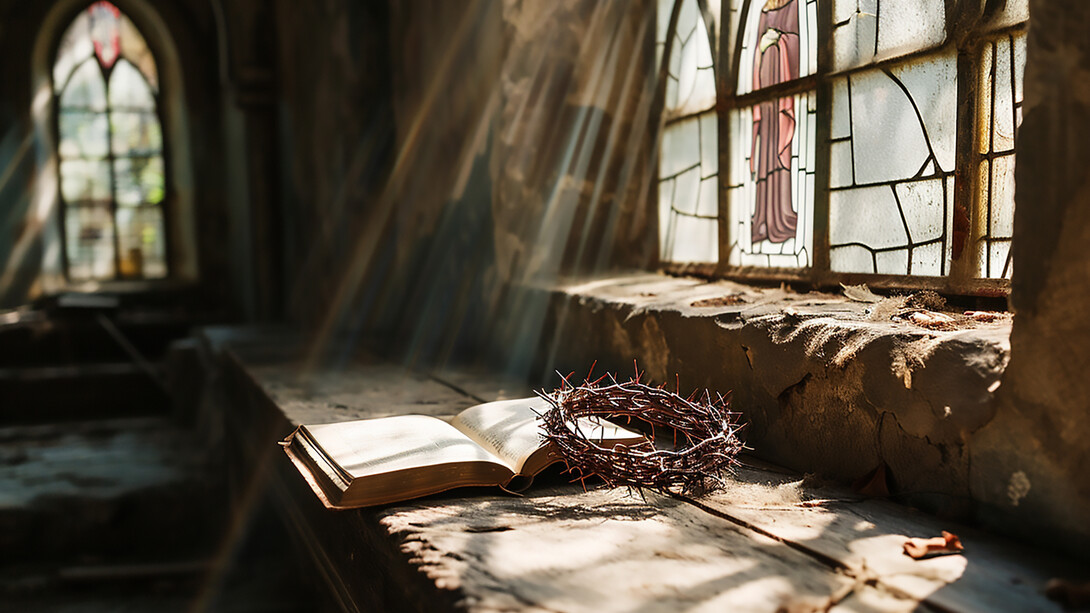
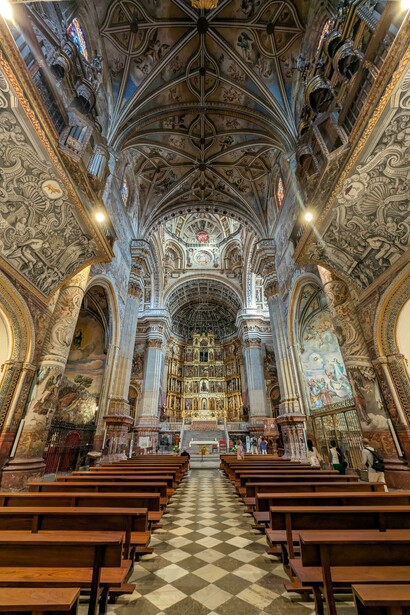
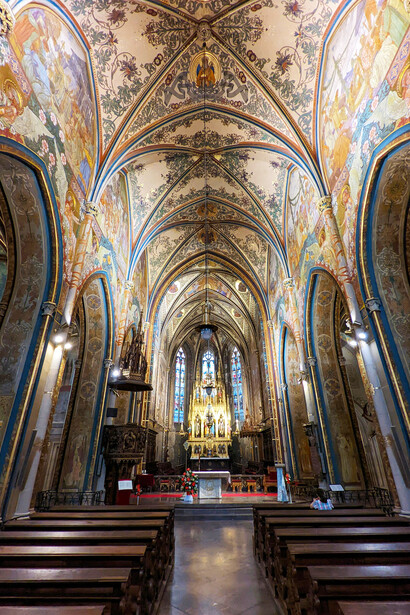
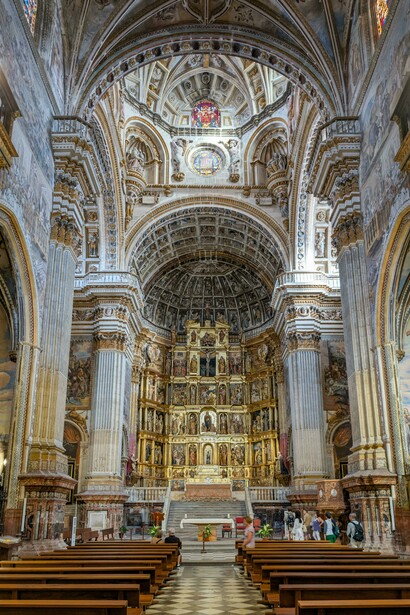
I enter the church on this second week of Lent, an occasional visit. It’s not my routine, nor is it a religious obligation. I come because of how I feel when I’m here. An inspirational calm envelops me. The choir’s smooth hymns, the handcrafted cedar altar solidly central, and the aromatic censer's jingling bells serenade me. The priest’s engaging wisdom completes the welcome. Everything is as expected.
Except, I prefer a little of the unexpected.
Sitting in a pew, I contemplate the everlasting stone walls elevated by history.
Although this ambiance comforts me, too much comfort melts into a numbing stance. It’s not the repetitive chants or rituals memorized like a classroom from my childhood that will stimulate my faith. It’s the challenge to push my thoughts further into greater understanding. An understanding that is chosen and free.
Peace restores where purpose enlivens. I seek the freedom to let my mind wander, as minds do in sacred spaces. For me, that is their role. To provide a safe space to ask and paths to discover.
Many people observe Lent by fasting. No meat, no sweets, no alcohol. Each one chooses their indulgence of abstinence. My instinct differs. I choose a quiet reflection within. Honest. Real. Grounded. Am I a good person? How can I do better? Do I deserve the grace of the afterlife?
I am not a particularly pious person. I have distanced myself from common religious practice not from a lack of faith, but from preferring willfulness over obedience. Even though, honestly, the two interplay.
I remember sitting through a different mass once, monotonous and mechanical, and thinking to myself, this is not what Jesus wants. Jesus gathered people to dare them to push their thinking. He sat with outcasts, challenged authority, and spoke through parables for people to understand. Yes, he gave us a prayer that completes his message. Yes, we need certain words and acts to give Christianity a human structure. But Jesus opened the conscience for the greater good. Freeing the suffering, eliminating discrimination, healing through care. He repeated that it is not wealth and power that make a healthy life, but the body and spirit that form it.
Still, I am troubled.
Would God discriminate against someone born in another place, in another time, raised to adore another deity? Would their god disregard me in return?
How could the location of my birth determine my eternity? I’m skeptical.
God created an extraordinary and infinite universe. I would find it hard to believe that God wants it limited to my tiny sphere.
I was raised in one community. Languages, traditions, beliefs. They were my home and my family. Same as each one of us. Other realms I only glimpsed through a book, a movie, or an exotic vacation once in a while.
When we look out, we learn that religions reflect their environments. The food, the seasons, and the animals surrounding a people drew their stories of suffering and hope. The Aztecs revered the sun in a land where the sun determined everything. The Vikings imagined Valhalla, a paradise dreamt by the values of a warrior life in a harsh northern landscape. Hindu belief was colored by the vibrant natural world surrounding it.
And across cultures separated by geography and centuries, some stories overlap, and not just by chance. Flood narratives, for example, appear worldwide, from ancient Mesopotamian texts to Noah’s ark in the Abrahamic traditions and even stories on distant continents. They share a symbolic storytelling of moral cleansing and renewal. Why? Because this is a common quest for humanity.
It’s easy to imagine fabulous tales with incredible events, mythological creatures, and miraculous moments. It’s harder to accept them as literal truths when we don’t witness experiences of that caliber. Even so, I appreciate their spoken virtuous and intellectual messages. This is where the vivacity of humanity endures. Points of reference and stability for the confusion of today, and guidance for tomorrow.
And when we look deeply, around each religious story, fantastical or not, we find a common principle at the center of nearly every faith.
Treat others as you wish to be treated.
Such a simple thought. One that will always make us pause. It is universal, independent of culture or environment. That coincidence is not a coincidence.
For me, it points toward core values. Dignity, justice, goodness. Whatever the religion, we aspire toward a common benefit here on earth.
Any hateful rhetoric dressed in religious purpose sounds suspicious to me. To eliminate the majority of the world’s people and confine oneself to a narrow space—that agitates my soul. There’s no freedom there. Why would I close myself off and forbid myself access to a universe of wisdom, knowledge, and experience?
After all, God created it all, right?
I understand this may trouble fervent believers. But where is the real controversy, pushing people away or accepting all of God’s creations?
It’s simple conscience. It’s the plain mindset of decency. I don’t need extraordinary emotional persuasion to fuel my energy. I want the responsible steadiness of an independent perspective. A doctrine attempts to empower a status. But we thrive when we strengthen the soul.
Institutions set rules of conduct. And I find it difficult to believe God cares how I sit, stand, drink, or eat. My instinct tells me it’s my behavior that will be judged. Not my daily habits.
I criticize religion for controlling the faith. Because faith is about freeing the soul, not constraining it.
In this Lenten period, which coincides with other similar religious traditions, the noise of division that surrounds us attempts to quiet the spirit. I want to be loud and clear.
A spirit that soars does not fly in one direction. Its wings glide not rigidly but gracefully. If we share the same sky, at least let us ascend without being blind. Borders on earth shouldn’t draw our beliefs, but we should be free to search beyond them.
If faith is meant to elevate humanity and seek its healthy well-being, my belief is we shouldn’t be excluding most of it.
As our friend, John Lennon, beautifully sang, And the world will be as one.