English
 Español
 Français
 Deutsch
 Italiano
 Português
The modern democratic landscape is defined by a striking paradox: while citizens possess unprecedented access to information and consumer choice, they report a profound and growing sense of political impotence. This 'void' in the public sphere is not merely a failure of representation but a structural hollowing out of the institutions that once anchored society. By examining the current crisis through the lens of Roberto Mangabeira Unger’s social theory, we can see that our perceived powerlessness is not an inevitability but the result of specific institutional rigidities that prioritize technocratic management over genuine human agency.
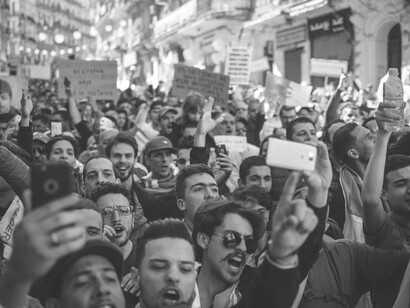
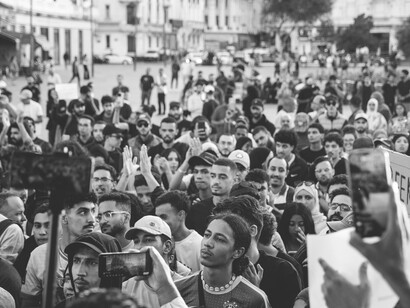
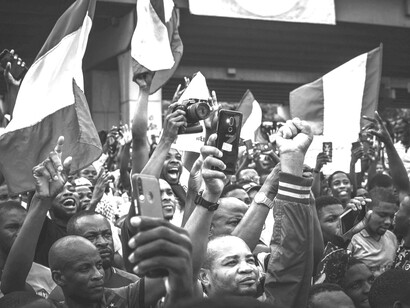
With dissatisfaction in the world’s wealthiest nations reaching 64%, this "crisis of democracy" is no longer a peripheral concern but a structural reality. This "void" is the result of a profound disconnection—modern political parties have become agencies of management rather than instruments of popular will. For the better part of the 20th century, politics was rooted in the "soil" of civil society. Unions, churches, and community clubs acted as the connective tissue between the individual and the state. As these institutions evaporated, they left behind a vacuum. In this void, political engagement has transformed into what can be described as digital "swarms"—rapid, horizontal, and often violent bursts of energy that lack the longevity to build lasting structures.
However, blaming the internet for this instability is a mistake of "shallow analysis." The foundations of this collapse were laid in the late 1970s, when trust in institutions began to plummet. The digital age did not create the rot; it merely provided the battering ram to break through doors that were already decaying.
Institutional fetishism and the "caged choice"
To understand why the modern democratic void feels so permanent, we must address what Roberto Mangabeira Unger calls "institutional fetishism." This is the collective illusion that our current social and economic arrangements—the specific ways we organize markets, labor, and the state—are natural, immutable laws rather than contingent human artifacts. By treating these structures as if they were as fixed as gravity, we fall into a "Dictatorship of No Alternatives."
In this state of affairs, the citizen is offered choice but denied agency. We are granted the power to pick between pre-selected products or political candidates, yet we are refused the power to reshape the underlying "grammar" of our social lives. This creates a "caged" existence where the citizen has been demoted to a customer; we can choose our leader as we choose a brand of detergent, but we cannot govern the conditions under which we work or live.
This demotion is the result of a historical shift in the management of discontent. As economic growth stalled in the 1970s, the modern state moved away from a project of collective self-governance toward one of technocratic stewardship. When the Left failed to provide a structural alternative during this crisis, Neoliberalism seized the helm, offering the "freedom of the market" while systematically withholding the "freedom of sovereignty."
This history clarifies the rift between two competing visions of liberty:
Shallow Freedom is the ability to navigate within this existing cage. It accepts the neoliberal framework as a given and focuses its energy on "compensatory redistribution"—the act of transferring money after the fact to patch the inequalities the system inevitably creates. It is a reactive, technocratic freedom that manages symptoms rather than causes, relegating the citizen to a "passive beneficiary" of state or market management.
Deep Freedom, by contrast, is the empowerment of the ordinary person to move on a higher plane of intensity and scope. It is realized not through a one-time revolution but through ongoing institutional change. In this model, the individual ceases to be a passive recipient of management and becomes the "author" of their own livelihood, possessing the structural tools to rewrite the rules of their own economic and social existence.
Moving toward democratic experimentalism
Analysis suggests that "ruling the void" requires moving away from the belief that change only happens in times of extreme crisis since current democratic structures are designed to be "innovation-resistant," remaining static until a catastrophe forces a shift. Within this context, Unger’s concept of Democratic Experimentalism serves as a structural response to institutional stasis. Rather than viewing social and economic institutions as finished products designed for permanence, this framework treats them as provisional arrangements subject to continuous revision.
The analysis rests on two specific mechanisms:
High-energy plasticity: Unger argues that the modern "democratic vacuum" is a result of low-energy politics, where institutions are designed to resist change until a crisis occurs. Experimentalism proposes a "high-energy" alternative where the barrier to institutional change is lowered. By making the structure more "plastic"—or malleable—the system can evolve through deliberate experimentation rather than catastrophic failure.
Individual endowments vs. rigid roles: this model shifts the focus from protecting specific jobs or social roles to protecting the individual. The analytical goal is to provide citizens with "securities and capabilities"—such as portable benefits and lifelong education—that remain stable even as the economic structure around them changes.
In this view, the "extraordinary"—the ability to innovate and reshape one's environment—is no longer a rare event or the privilege of a technocratic elite. Instead, it becomes a normalized feature of the social order. The objective is a system where the "naturalness" of the current hierarchy is constantly tested by new ways of organizing labor and production, effectively closing the gap between the people and the institutions that govern them.
The sense of powerlessness pervasive in modern discourse is often framed as a terminal failure of the democratic project. However, using Roberto Mangabeira Unger’s analytical lens, this "void" can be reinterpreted not as an end-point but as a consequence of false necessity. This concept identifies the psychological and institutional habit of mistaking contingent, accidental history for inescapable natural law. We have come to believe that the current "grammar" of our markets and states is the only viable one, leading to a state of mental and political paralysis.
By identifying this "False Necessity," the analysis shifts. The vacuum left by the retreat of traditional political parties is no longer seen as an empty grave but as an open workshop. If the structures that govern our lives are not natural laws—like gravity or the weather—then they are simply human artifacts that have become "frozen."
The task of modern analysis, therefore, is to move beyond the technocratic question of which manager is best suited to oversee the status quo. Instead, the focus turns toward identifying the specific tools of social plasticity: the institutional arrangements that shorten the distance between having an idea for social change and being able to experiment with it. In this light, a "plastic social order" is one that remains permanently open to its own revision. By recognizing that our powerlessness is a product of "false necessity," we can stop asking which manager will run the vacuum and instead begin to act as designers of a new, more malleable social order.
References
Unger, Roberto. Mangabeira. (2013). "The Religion of the Future." Juncture, 20(2).