English
 Español
 Français
 Deutsch
 Italiano
 Português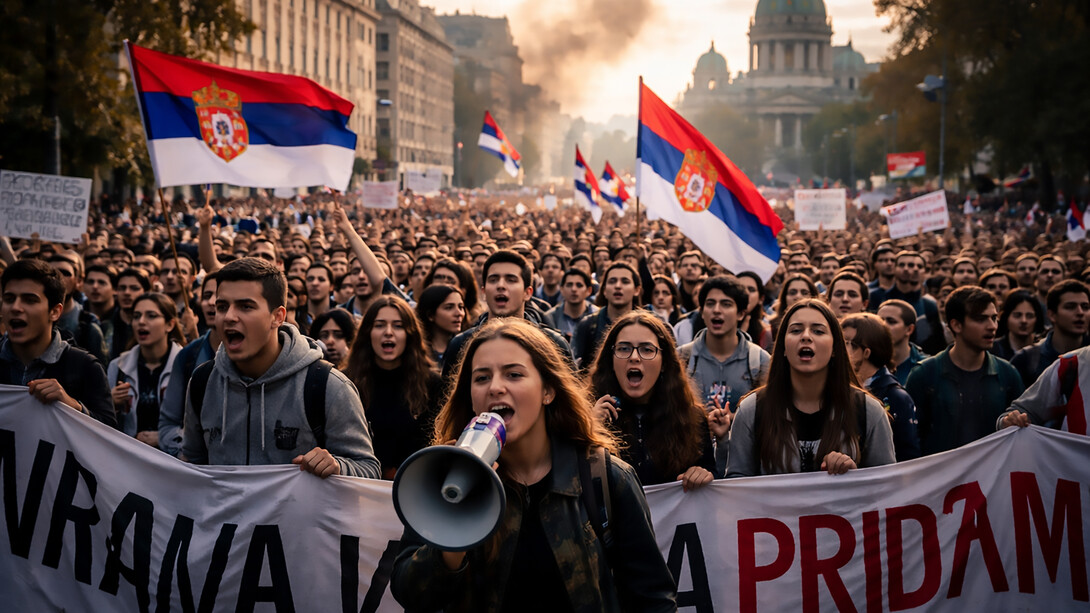
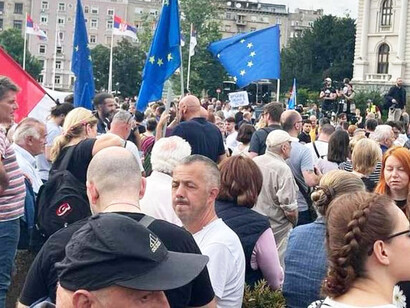
In Serbia, the people are speaking, but it seems neither our government nor the West is listening. The students finished the 1,400 km cycle ride1 from the Serbian city of Novi Sad to the European Parliament in Strasbourg. Then 16 students ran to Brussels. By achieving these marathon feats, the students aim to draw attention to endemic corruption, democratic backsliding, and human rights abuses in Serbia. So far, Brussels has largely ignored the situation in Serbia, seeing President Aleksandar Vucic as a stabilizing influence2 in the West Balkans.
But the EU should take this opportunity to change course. The protesters are working to pressure the government to address a rot that has been developing in Serbia for decades, a rot that has infected every level of our institutions.
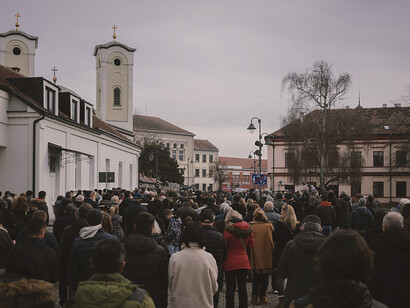
On the first of November 2024, a horrific event occurred in Novi Sad, Serbia’s second-largest city. The recently twice-renovated railway station collapsed3, leaving 15 people dead and two seriously injured. On the 21st of March 2025, a 19-year-old passed away after a long battle for survival, becoming the 16th victim of the Novi Sad railway station collapse.
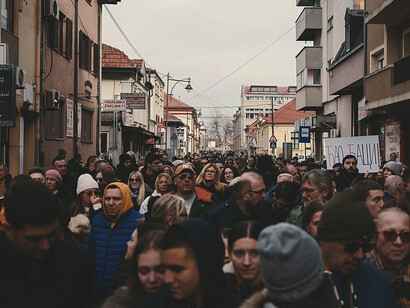
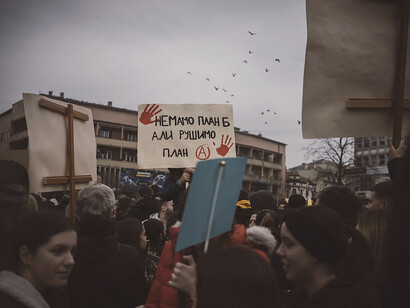
The station collapse has unleashed the frustration of the Serbian people. Student-led protests have called for transparency, democratic reforms, and respect for civil liberties. Since the collapse, protests have been held in 163 municipalities and towns in Serbia4, out of 168 in total.
Still, the Serbian state has not seriously engaged with Serbia’s popular and peaceful uprising. That is not because protesters are asking for the insane or impossible but because Serbia’s recent wave of student-led anti-government protests threatens to cure the institutional rot within Serbia's government. Revealingly, the Serbian government has resorted to violence, half-measures, and deceit to bury these protests.
These protests are student-led, meaning that the main organisers are students who have detached themselves from any NGOs, parties, or official groups. At first the protests started happening every day for 15 minutes, mourning the victims of the railway station, every day from 11:52.
To begin with, the protests became a catalyst for kidnappings, bribes, detention, beatings, and even attempts at murder from opponents of the protesters. While the protestors have generally remained peaceful, in the last two months, you could see horrific scenes online of people hitting protestors with cars5 in an attempt to sabotage and ruin Serbia’s fight for freedom.
But the demonstrations have continued. President Aleksandar Vucic has variously claimed6 the students have been paid by the West, are organizing a color revolution, are trying to illegitimately depose him, and are trying to damage Serbia’s economy and prosperity. Most recently, he suggested opposition parties and students are working together in order to separate Vojvodina, an autonomous province that comprises northern Serbia.
Government officials and the ruling Progressive Party’s supporters have agreed with Vucic’s claims. This kind of sycophantic, anti-protester response is not new. The government has responded to past calls for reform with suppression, targeted government spending to appease politically important groups, and nationalistic rhetoric to distract the population from their failures. It usually works, but past successes have made the government complacent. Today’s protesters will not be deterred by thuggery, bribes dressed up as housing and tuition support, or accusations of foreign influence. Behind the conspiracies, the motivations for these protests are genuine and reasonable.
Students made four initial requests to the government, with the promise that fulfilling those requests would end the protests.
First is the publication of all documentation related to the reconstruction of the Novi Sad Railway station. In December, the authorities, including President Vucic, pledged to publish everything within days. What the government eventually released was incomplete7. Increased public pressure on the government to publish another set of documents at the end of December. On 25th January, the Faculty of Civil Engineering reviewed8 them and determined they were not complete. The day after, Prime Minister Milos Vucevic again pledged to publish9 all the documentation. Two days later, he resigned. They are still yet to publish10 the full documentation.
Secondly, students want those who were involved in assaults against them and professors to face consequences. This includes criminal proceedings as well as dismissal if it is shown public officeholders were involved. Although proceedings have begun in some major cases, it is not clear that the government will investigate all cases of assault against protestors.
The third request includes the withdrawal of criminal charges against arrested and detained students during the protests, as well as the suspension of already initiated criminal proceedings. The government has refused to do this in most cases.
The fourth is a request to increase the country’s budget for higher education by 20%.
Since the removal of Slobodan Milosevic from power in 2000, Serbia has seen several protest movements that fizzled out before they could truly challenge the establishment. But this time it is different. Students began blockading universities and protesting 137 days ago, and with every attempt by the authorities to close the movement down, it only seems to grow in numbers and conviction.
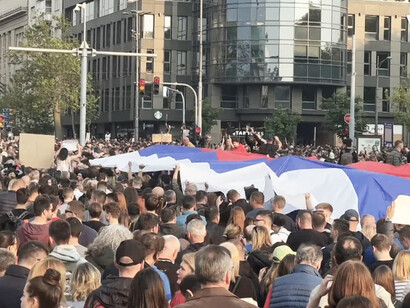
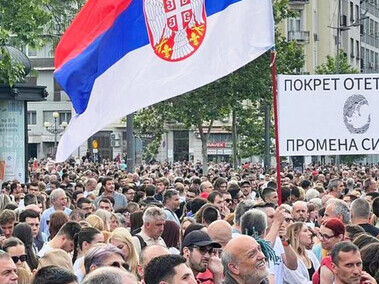
On 15th February, tens of thousands of Serbs from across the country flooded into the old Serbian capital city of Kragujevac to restate their calls for change, jamming 10 kilometers of road leading into the city. It gathered students who walked for 4 days to get to Kragujevac, some crossing more than 150 kilometers, runners, cyclists, and many other people who need a corruption-free, safe country to live in. On 15th March, my mother, I, and at least 325,000 of our compatriots took to the streets of Belgrade to support the students’ demands. Protesters were targeted with a ‘sound cannon’ at the gathering, causing mass panic and several injuries. But still, the Serbian people are not backing down, with more than half a million signing a petition for an open, transparent investigation into the security services’ role in using the cannon on protesters.
This has prompted the protesters to issue a fifth demand to determine responsibility for use of the cannon. They also announced a sixth demand related to President Vucic’s recent photo op in an intensive care unit with a victim of March’s fatal nightclub fire in North Macedonia.
Large protest movements are certainly not unprecedented in Serbia. But this latest cry for reform has already achieved so much by uniting Serbs across generational, geographical, and political divides. Recent protests have been rollercoasters of emotion. One moment you are smiling, looking at the joy of young people trying to do what is best for their country; the next moment you are crying, seeing parents and grandparents talking about why they came to support their children. The protests are beautiful and ugly at the same time. Ugly because of their origin, and why they must continue.
The Novi Sad-Strasbourg cycle and the Belgrade-Novi Sad-Brussels marathon are other clear signals that the protests will not disappear until the government engages with protesters' demands. But it is also a reminder that liberal democratic governments in the West need to stop ignoring the protesters and support their pleas for a freer, fairer, more prosperous Serbia.
This article was written by Aleksandra Jelesijevic. Aleksandra is a writer based in Belgrade, Serbia.
References
1 Serbian protesters cycle 1,400 kilometres to seek EU support against Vucic regime.
2 Why the EU Must Change Course on Serbia?
3 Why did the Novi Sad railway station accident trigger such large protests in Serbia?
4 Arhiv javnih skupova objavio u koliko lokalnih samouprava je bilo protesta: Od 168 samo u pet nije.
5 Određen pritvor vozačici koja je udarila studentkinju na protestu.
6 Vučić blames student protests on the West while simultaneously receiving Western support.
7 Published documents on the collapse of the canopy are incomplete.
8 Experts point out missing documentation: faculty of civil engineering releases list of missing documents related to the canopy!
9 Premijer Srbije najavio objavljivanje nove dokumentacije o Železničkoj stanici u Novom Sadu.
10 "Građevinske knjige nekompletne, ono glavno i dalje nemamo": Šta pokazuje objavljena dokumentacija o padu nadstrešnice.