English
 Español
 Français
 Deutsch
 Italiano
 Português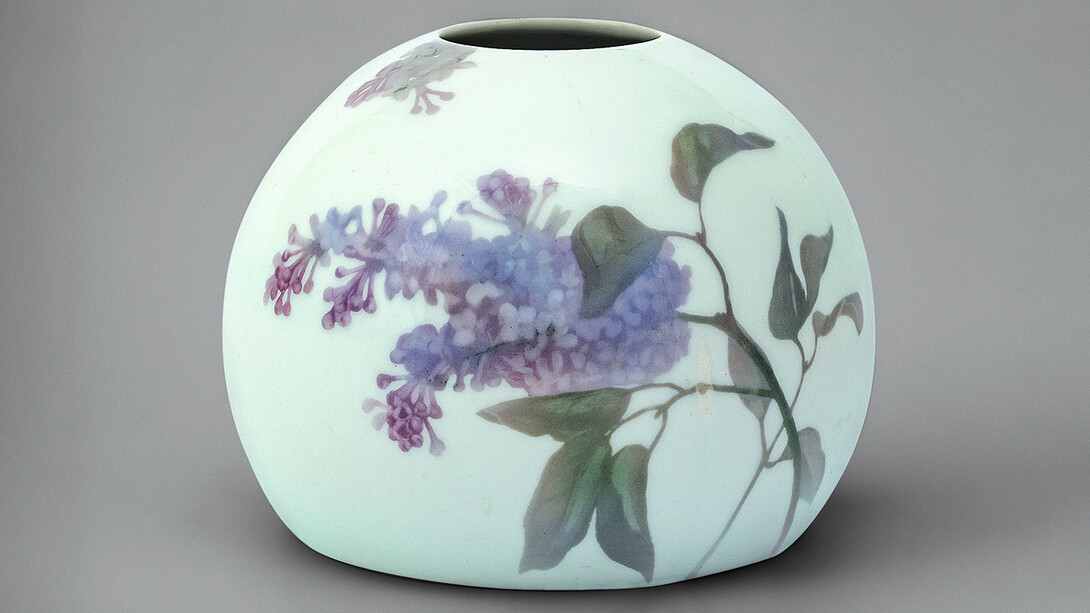
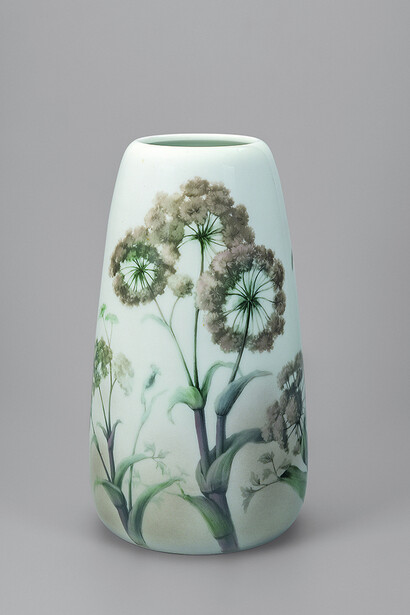
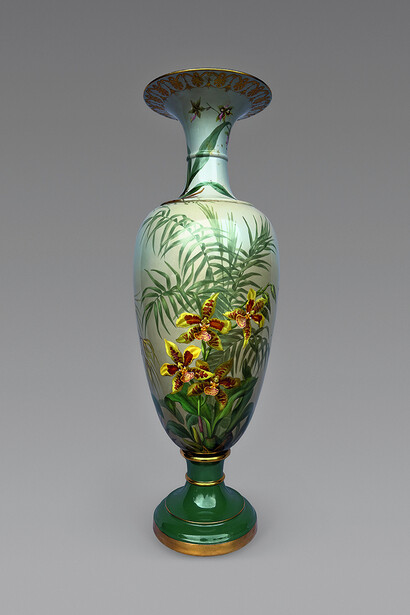
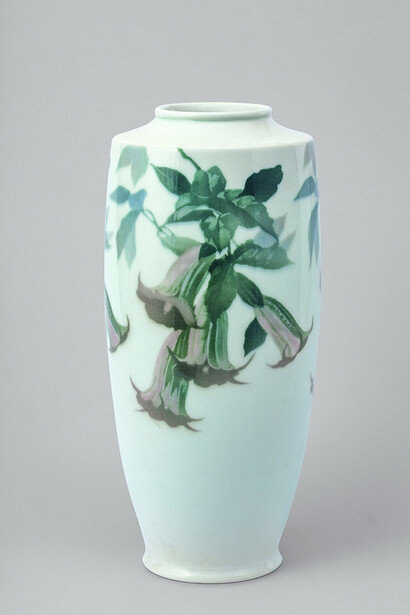
The display reveals a unique phenomenon in the history of Russian decorative and applied art. At the heart of the exhibition project are grand vases decorated not merely with floral designs but with botanically accurate, scientifically verified images of plants.
Since the earliest days, plant motifs have played a highly significant role in the formation of the style, shapes and decoration of porcelain wares. From the moment Europeans discovered the secret of porcelain-making in the 18th century up until the decline of revival trends in the second half of the 19th, illustrations from botanical atlases held an effectively dominant position among the painted depictions of flowers on the “white gold of the tsars”.
“Botanical atlases are a special sort of scholarly work, ones that have always aroused aesthetic delight in viewers. Their influence gave birth to the architectural ornaments of the Renaissance, the stone inlays of the Taj Mahal, edifying Flemish still lifes. Porcelain-makers did not overlook them. Today, in the traditional palace gift from the Factory to the Hermitage, we see astonishing vases in which plants depicted with academic precision are transformed into lush thickets of a paradisiacal garden, a garden of the Art Nouveau era, about which a new permanent display is opening at this same time in the halls of the Eastern Wing of the General Staff building” said Mikhail Piotrovsky, General Director of the State Hermitage.
The uniqueness of the Imperial Porcelain Factory’s vases from the late 19th and early 20th century lies in the fact that in the majority of cases they are embellished with original realist painting, based on the artists’ own sketches of plants made from life (up until that time the factory’s artists had acted solely as expert copy-painters). Those depictions were created by the artists with the participation of scholarly horticulturalists and were based on an extremely precise rendering of each individual flower from a botanical point of view. Particular interest is lent to this phenomenon by the context in which it developed – the era of Art Nouveau, with its distinctive stylization of form and line.
The alliance between the porcelain producer and leading scholars in various fields of learning was encouraged by the factory’s regal owners, who understood the importance of a scientific contribution to the development of porcelain projects unprecedented in the country’s history and unparalleled outside Russia.
The exhibition comprises more than 60 porcelain pieces, many of which are being displayed and published for the first time. The project shows the originality of each individual artist’s output, behind which lies a whole journey into the world of botany, while the group of works singled out and displayed for the first time makes it possible to view the result of the union of art and science in a new light. In the hall, visitors can see items bearing depictions of flowers and plants executed by the factory’s porcelain artists: Konstantin Krasovsky, Ye. Bogdanova, Nikolai Daladugin, Martha Raphael, Grigory Gorkov and others.
Particularly eye catching are photographs of Imperial Porcelain Factory vases from the State Hermitage collection. Old black-and-white pictures make it possible to see the full extent of the work done by the artists.
As in past years, a separate section of the display is devoted to works by present-day staff of the Imperial Porcelain Factory joint-stock company. It presents pieces of porcelain painted by the factory’s current artists: Nelli Petrova, Tatyana Chapurgina and their colleagues.
Art and botany: vases from the imperial porcelain manufactory is an exhibition in the Christmas gift series, which is devoted to the history and art of porcelain. The series is the Hermitage’s revival of a long-running tradition when, from the late 18th century onwards, as the Christmas holidays approached, the best pieces produced at the Imperial Porcelain Factory in Saint Petersburg were put on show in the Winter Palace.
The exhibition was organized by the State Hermitage with the participation of the Imperial Porcelain Factory joint-stock company and private collections. The display also includes items from the collection of the Gorky House of Scientists in Saint Petersburg, and the Vadim Yuryevich Orlov Museum (Orlov Yaroslavl Technical Carbon joint-stock company) in Yaroslavl.
The exhibition has been prepared by the State Hermitage’s Department of the History of Russian Culture (headed by Viacheslav Feodorov).
Author of the concept and exhibition curator: Yekaterina Sergeyevna Khmeinitskaya, Doctor of Art History, Senior Researcher in the Department of the History of Russian Culture, Curator of the Collection of Russian Porcelain and Ceramics of the 19th–21st Centuries.
To coincide with the exhibition, the State Hermitage Publishing House has brought out a scholarly illustrated catalogue: Iskusstvo i botanika: vazy Imperatorskogo farforovogo zavoda kontsa XIX -- nachala XX veka (2025).
The catalogue is prefaced by introductory texts from Galina Tsvetkova, Chairperson of the Board of Directors of the Imperial Porcelain Factory joint-stock company, and Tatiana Tylevich, its General Director.
The authors of the catalogue texts are: Yekaterina Khmeinitskaya – “Botany for Pleasure: The Imperial Porcelain Factory and Floral Painting”, and Alexander Kabanov, head of the Laboratory of Decorative Plants, Senior Researcher at the N.V. Tsitsin Main Botanical Garden of the Russian Academy of Sciences in Moscow – “The Road to a Beautiful Garden: The Image of Plants in Porcelain and Botanical Illustration”.
(The exhibition can be visited by all holders of tickets to the Main Museum Complex)