English
 Español
 Français
 Deutsch
 Italiano
 Português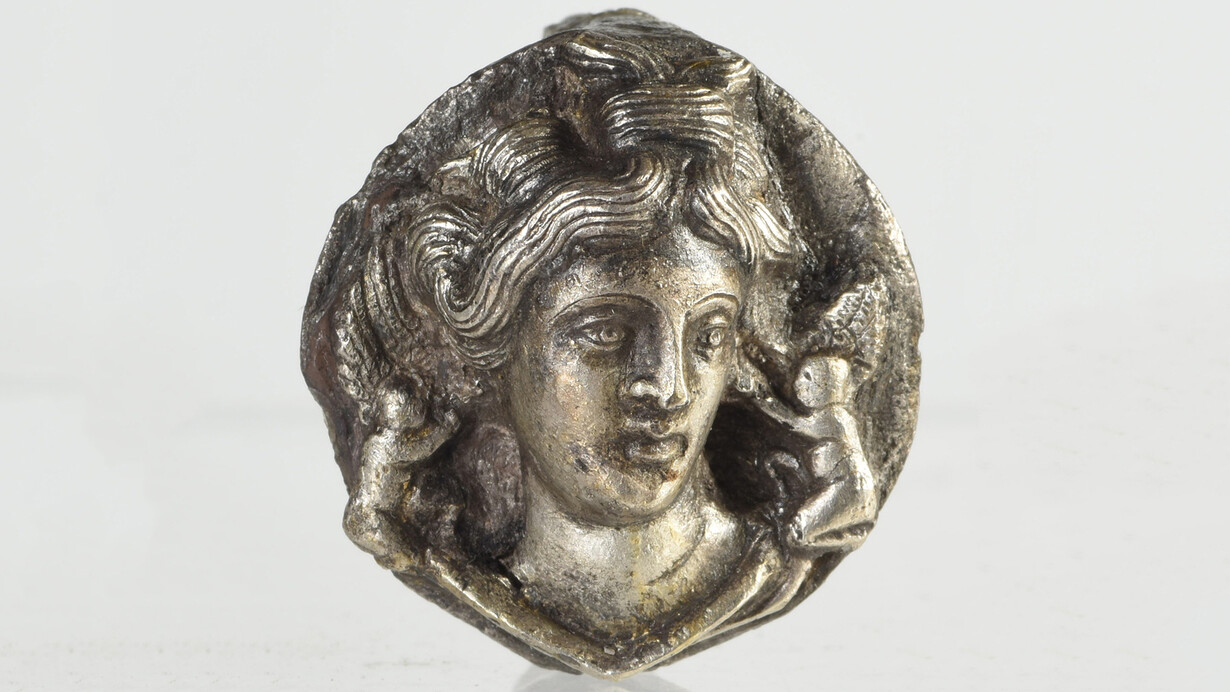
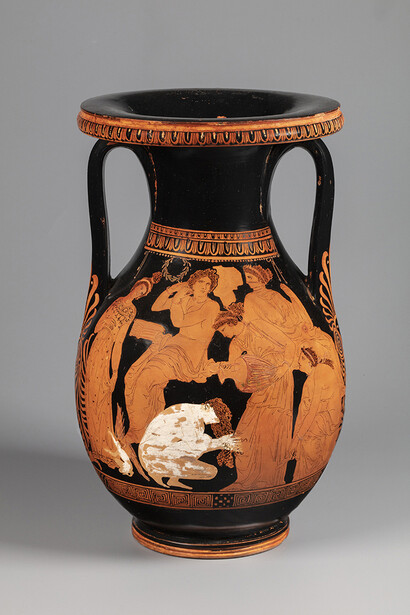
The marriage ritual in Classical Antiquity consisted of several stages: the preparation of the bride, the formal procession to the groom's house, and the exchange of gifts. The exhibition brings together outstanding items from the Hermitage's classical collection, revealing one of the period’s most poetic and sacred themes – the ritual of the bride's prenuptial bath, symbolizing purification and the beginning of a new life. Depictions of this rite are well known from ancient Greek vase painting of the 5th–4th centuries BC, where the girl is accompanied by the invisible presence of Aphrodite – the goddess of love and beauty – herself and her golden-winged companions, the Erotes. Marriage under her patronage is presented as a union based on love and mutual desire.
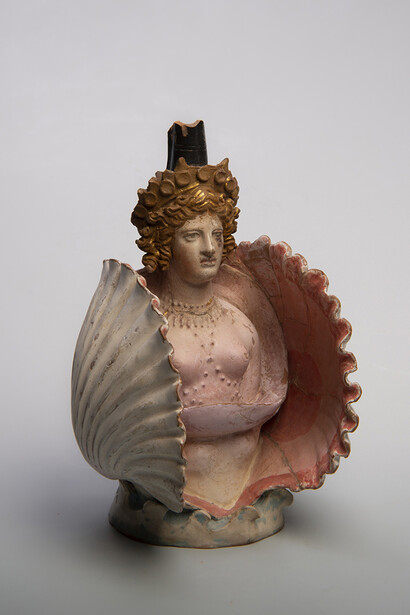
The exhibition features marble sculptures of the goddess of love and beauty Aphrodite (the Roman Venus), ceramic articles connected with wedding rituals, and exquisite jewellery – rings, earrings, necklaces and twisted bracelets. These gold adornments evoke the radiant and alluring world of Aphrodite as described by ancient authors. It can be assumed that such decorative attributes of the love goddess – "brooches, buckles, twisted bracelets for the arms, necklaces" (Homeric Hymn to Aphrodite, 160) – might well have also enhanced the image of the bride in Antiquity, embodying wishes for happiness, love and the birth of children.
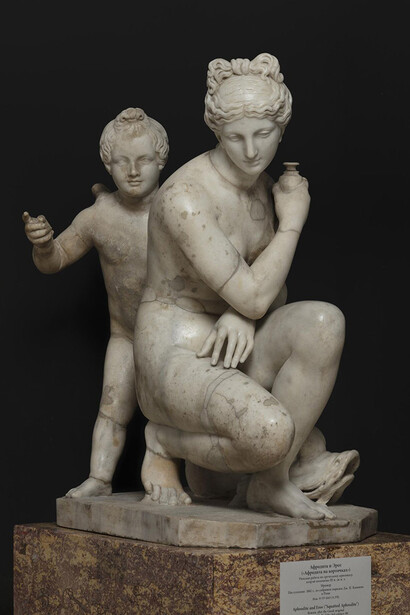
The central exhibit is the sculptural group Aphrodite and Eros (or Venus and Cupid) from the famous Campana collection. This masterpiece demonstrates the continuity of artistic traditions and embodies the idea of love as a divine gift. The image of the goddess is revealed here in an intimate yet symbolic context, connected with marital union and the idea of blessing.