English
 Español
 Français
 Deutsch
 Italiano
 Português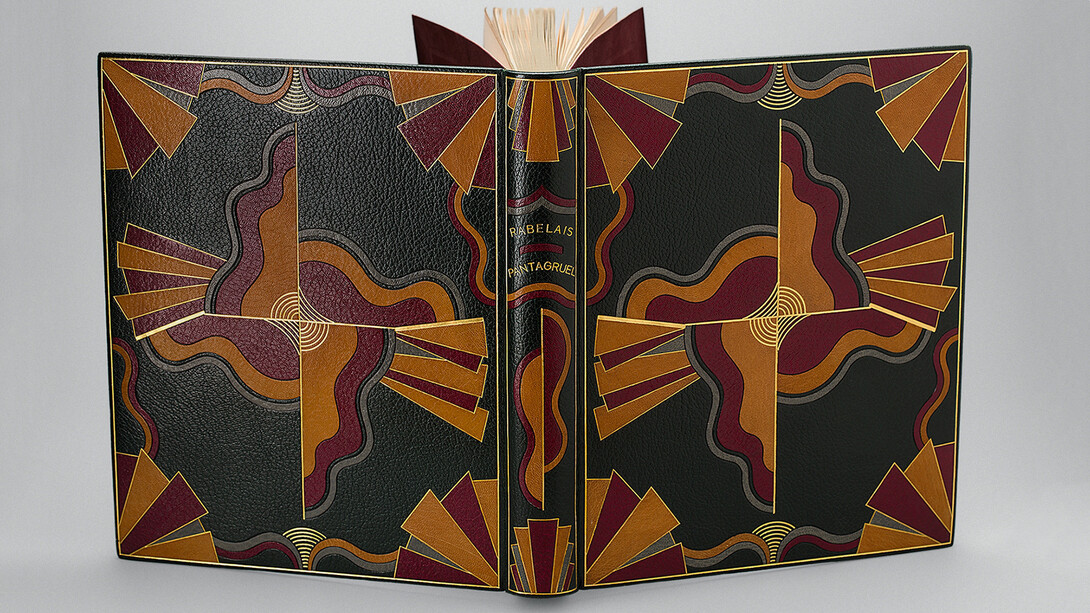
A special place within the museum's exhibition activities is taken by presentations of unique examples of the artist's book that come into the museum's collection thanks to donations from patrons and publishers.
From 4 March 2026, a new project by the State Hermitage Museum and the Vita Nova Publishing House will begin its run in the Winter Palace – "The Architecture of the Book". The exhibition features a view of the creation of a book that draws an analogy to constructing a building and consists of four main sections – "façade", "interior", "windows" and the "house" itself. An important place is given over to telling about that part of the work on a book which remains in the shadows: the techniques and working methods of specialists in various fields exercised under the guidance of the "chief architects" – the publisher, editor and designer.
The display will feature over 200 exhibits from the collection of the Vita Nova Publishing House and the stocks of the State Hermitage. It is timed to coincide with the 25th anniversary of the publishing house, which has successfully collaborated with the museum since 2004.
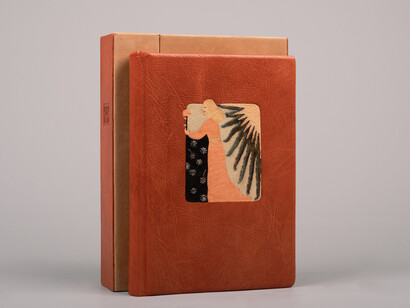
The exhibition opens with a hall dedicated to the "façade" of the book – its binding. Here, not only unique original works are presented, but also bookbinders' tools and devices. Visitors can acquaint themselves with various techniques used for decorating bindings: hand painting, appliqué, inlay; blind, gold and relief stamping, foil stamping; edge marbling and gilding; embroidery, and many others. They will also see edge-painting clamps, a press, a book-sewing frame, book corners, clasps and bosses.
The second hall moves on to the "interior" of the book – printing techniques traditionally used for reproducing texts and illustrations: woodcut, lithography, various etching processes. This section presents the artist's and printer's tools and shows methods and stages of printing – for example, a prepared lithographic stone, printing plates etched by artists, and the stages involved in creating a woodcut.
The third part of the exhibition is dedicated not to mass-produced, but to unique graphic works – pieces created in a single copy. Continuing the metaphor of the book as a building, these can be likened to "windows" through which the reader looks into the text, or their festive illumination. The word "illustration" comes from the Latin for "lighting up", and mediaeval manuscripts with miniatures and ornamentation were termed "illuminated". Here, works by contemporary creators in a wide variety of artistic techniques are presented, from those more traditional for book graphics, such as ink or gouache, to overglaze painting on porcelain or embroidery on fabric. Accompanying texts include artists' explanations of their choice of a particular technique for producing illustrations.
The final section of the exhibition – the "House" – presents the line within the art of the book that the printing industry came up with at the end of the 19th century and which continues into our time: the artist's book or livre d’artiste. The fourth hall showcases handcrafted publications created by contemporary authors and master bookbinders in a single copy or limited run. These are books in which the principles visually embodied in the previous sections are concentrated. Works from the 21st century are supplemented by several exhibits from the stocks of the State Hermitage. These are short print-run (up to 300 copies) examples of livres d'artiste brought out by Parisian publishing houses, featuring illustrations by outstanding 20th-century artists: Maurice Denis (Dante Alighieri’s Vita Nuova, 1907), Marc Chagall (The Bible, volume 2, 1956) and André Derain (François Rabelais’s Pantagruel, 1943).
The continuity of tradition is reflected in the contemporary works from the Vita Nova Publishing House displayed nearby. Among these is an edition of Dante’s Vita Nuova. The binding, made of natural hand-dressed morocco leather, is richly decorated with jewellery-like insets of gilded silver and zircons, while the edges have been hand-painted with ink and gouache.
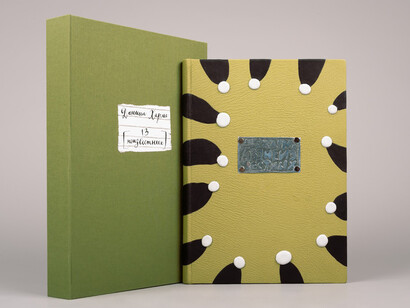
One of the central exhibits of the exhibition is an original project by the artist Yuri Shtapakov. In 2012, the Vita Nova Publishing House acquired eight sheets bearing previously unknown hand-written texts by Daniil Kharms. Among them were the manuscripts of thirteen unpublished works. In the book 13 Unknown Works, these texts and illustrations for them were presented for the first time. Yuri Shtapakov created a cycle of thirteen graphic works executed in the dry-point technique. The artist also transcribed Kharms's texts by hand. The print run was just 16 numbered copies. The morocco-leather binding is embellished with three-dimensional leather inlay and metal mounts.
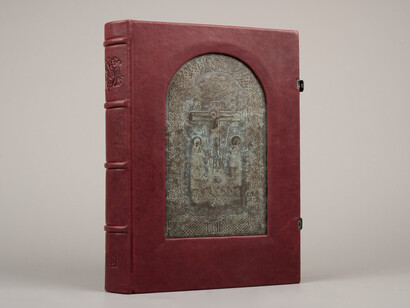
Another unique edition presented at the exhibition – The New Testament. The Gospel According to Mark – was created by the artist Apollinaria Mishina. The texts are handwritten in Church Slavonic and pre-reform Russian. The book contains engravings made using the colour etching technique with hand tinting and gilding. The book's finishing recreates the appearance of an ancient cover – an all-leather binding is supplemented with brass elements: the front cover is decorated with a metal centrepiece, the back cover features bosses. The look is completed by two clasps that securely hold the massive book block. The print run was 11 numbered copies.
The new exhibition demonstrates the approach to designing and "constructing" a book as an objet d’art and will undoubtedly interest both publishing professionals and a wide circle of bibliophiles. Visitors will be able to look at the book in a new way, grasping the complex intellectual and creative work behind every turned page.