English
 Español
 Français
 Deutsch
 Italiano
 Português
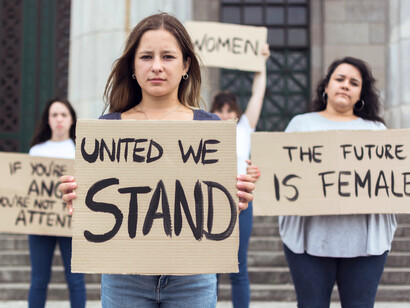
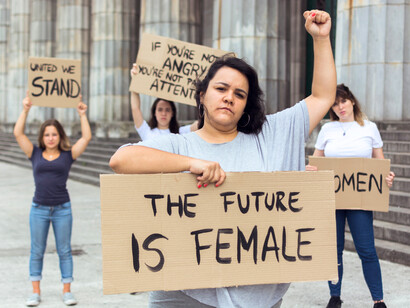
Somewhere today, a girl is standing up in class to share her opinion for the first time. She might not know it yet, but that small act of courage could be the beginning of a lifelong journey toward leadership. Around the world, countless girls are learning to use their voices in schools, youth programs, and community projects, shaping the kind of confidence that one day might lead to diplomacy.
Empowering girls isn’t just about equality; it’s about preparing a generation of women who will negotiate peace, defend human rights, and represent their nations with strength and empathy. When we invest in girls, we invest in the future of global peace.
Leadership doesn’t begin at the negotiation table. It begins in classrooms, youth movements, and local initiatives where girls are encouraged to speak, learn, and lead. Programs that focus on girls’ education, leadership training, and civic engagement lay the foundation for future diplomats and decision-makers. When girls are given access to mentorship and guidance, they gain not only knowledge but also the belief that their voices matter. These early experiences are the training grounds for tomorrow’s ambassadors, negotiators, and global leaders.
Across the globe, organizations are already planting these seeds of change. UNESCO’s Her Education, Our Future initiative works to close the gender gap in education, ensuring that every girl can learn and lead. UN Women’s African Girls Can Code program equips young women with digital skills and the confidence to shape public life and global conversations. In sub-Saharan Africa, CAMFED (Campaign for Female Education) supports thousands of girls to complete school and return as community leaders, transforming governance from within.
Meanwhile, youth-led movements like Girl Up and Plan International’s Girls Get Equal campaign empower adolescent girls to advocate, make decisions, and take their place in international forums. Through Plan International’s She Leads program, girls and young women across Africa and the Middle East are stepping into civic spaces, demanding their rights, and driving change. And in Morocco and beyond, Project Soar equips adolescent girls with leadership skills, rights-based education, and a platform to advocate for themselves and their communities, proving that empowered girls can become powerful changemakers.
These initiatives are more than programs; they are pipelines to diplomacy. They nurture not only skills but also the vision and resilience needed to navigate complex global challenges. When girls are supported to lead locally, they are better prepared to lead globally.
Many of today’s women leaders in diplomacy began as activists driven by a desire to change their communities. Their journeys show that the path from local action to global diplomacy often starts with empowerment.
Aya Chebbi, who began as a youth activist during Tunisia’s revolution, went on to become the first African Union Youth Envoy, representing the voices of millions of young people. Malala Yousafzai, who began her advocacy for girls’ education at just eleven years old, now sits at global policy tables influencing international education reform. Amina Mohammed, Nigeria’s Deputy Secretary-General of the United Nations, started her career as a development advocate focused on women’s rights and sustainability.
From the Middle East to Asia, young women are taking similar paths, like Nahla Haidar, a Lebanese human rights activist who became a member of the UN Committee on the Elimination of Discrimination against Women, and Hibaaq Osman, founder of the Karama movement, who has worked to bring Arab women into peace-building dialogues across the region.
These women prove that diplomacy isn’t born in government halls; it’s built on the courage to speak, to act, and to stand up, often long before official titles are given. Their stories show that when girls are empowered early on, their impact doesn’t stop at their community; it resonates across borders.
Yet, the road from empowerment to representation remains steep. Across many regions, girls and women still face unequal access to education, limited mentorship opportunities, and cultural expectations that discourage political participation. In many societies, diplomacy remains a male-dominated sphere, where women are often confined to supportive or administrative roles rather than decision-making positions. Structural barriers, such as unequal pay, lack of childcare support, and exclusion from informal political networks, further restrict their advancement. These realities create a “leaky pipeline,” where capable and qualified women drop out long before reaching the negotiation table.
Even with these harsh realities, the impact of women’s participation in diplomacy remains undeniable. When women sit at the negotiation table, peace agreements are more inclusive, durable, and reflective of real community needs. According to UN Women, peace accords are 35% more likely to last for at least fifteen years when women are involved in the process.
This isn’t a coincidence; women negotiators often prioritize reconciliation, education, and long-term recovery, bringing a perspective that looks beyond ceasefires toward lasting peace. In countries such as Liberia, figures like Leymah Gbowee led the Women of Liberia Mass Action for Peace, a nonviolent movement that united Christian and Muslim women to demand an end to the Second Liberian Civil War. Their efforts were instrumental in pressuring warring factions to negotiate, ultimately contributing to the 2003 peace agreement and the election of Ellen Johnson Sirleaf, Africa’s first female president. In Colombia, women peace-builders helped ensure that gender equality and victims’ rights were included in the historic 2016 peace agreement.
Still, women make up less than a third of diplomats worldwide and only a small fraction of high-level peace negotiators. The barriers are systemic lack of representation, cultural bias, and limited access to political networks. Yet progress is visible: countries such as Rwanda, Sweden, Mexico, and Canada have adopted foreign policies that explicitly commit to gender equality in diplomatic missions and peace processes.
Including women in diplomacy is not a symbolic gesture; it's a strategic decision. Lasting peace can only be achieved when all perspectives, especially those shaped by women’s experiences, are heard and valued.
If we want a more peaceful world tomorrow, we must start by empowering girls today. The seeds of global leadership are planted in childhood in every girl who learns her worth, discovers her voice, and dares to dream beyond limitations.
When a girl is educated, she changes her life. When a girl is empowered, she changes her community. But when that girl becomes a diplomat, she helps change the world.
Imagine a generation of diplomats who grew up believing in equality, collaboration, and empathy—values they learned not in negotiation rooms, but in classrooms and youth programs that told them their voices mattered. That’s the kind of diplomacy the world needs now more than ever.
Empowering girls to join diplomacy is not just a moral cause; it is an act of peace-building. Because when women lead, nations listen, and when they negotiate, the world finally gives peace a fair chance.