English
 Español
 Français
 Deutsch
 Italiano
 Português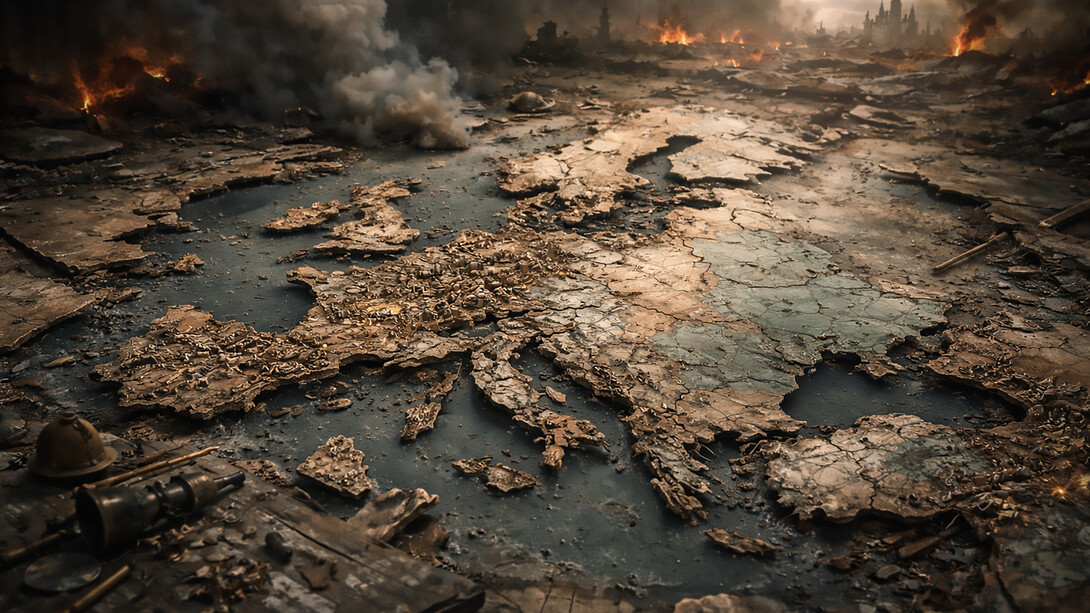
It all happened so quickly that few people noticed. In fifteen years, Europe went from being a large continent to a small subcontinent. In 2010, the European Higher Education Area (EHEA) was approved, the construction of which began with the Bologna Process (1999). It aimed to create a common system of easily readable and comparable university degrees and to create mechanisms to guarantee the quality of degrees. In this text, I do not discuss the neocolonial relations within this space, nor the neoliberal shift in Western universities that motivated this expansion. I only want to contrast two geopolitical times and spaces.
The member states participating in the European Higher Education Area (EHEA) are (were): Albania, Andorra, Armenia, Austria, Azerbaijan, Belarus, Belgium, Bosnia and Herzegovina, Bulgaria, Kazakhstan, Vatican City, Cyprus, Czech Republic, Croatia, Denmark, Slovakia, Slovenia, Spain, Estonia, Finland, France, Georgia, Greece, Hungary, Ireland, Iceland, Italy, Latvia, Liechtenstein, Lithuania, Luxembourg, Malta, Moldova, Montenegro, Netherlands, North Macedonia, Norway, Poland, Portugal, United Kingdom, Romania, Russia, San Marino, Serbia, Sweden, Switzerland, Turkey, Ukraine, and 49 states. Graphically, it was even more impressive.

Fifteen years later, Europe has mutilated itself or been mutilated: today it is less than a third of that space, a mini-Europe. Within that space that it is today, it wants to convince Europeans that it is a matter of life and death to safeguard the small space in eastern Ukraine, which is culturally Russian (and therefore, only now, non-European). It was one of the countries in this large European space (Turkey) that, two months after the war in Ukraine began, brokered an agreement between Russia and Ukraine to end the war. The Turks' argument that convinced the belligerents was as follows: that dispute was not worth the carnage it would cause because, in any case, Donbass, Lugansk, or Crimea, whether Ukrainian or Russian, would remain European. This argument did not convince Europeans and Americans from the Cold War because they had long since abandoned the “common European home” proposed by Gorbachev, which was still present in European higher education.
In general, mutilations are a factor of weakness rather than strength. In this particular case, the break between mini-Europe and Russia was a decisive factor in accelerating Europe's decline.
Insult
Mini-Europe became a source of ridicule for the US, which, long before the 2014 Maidan coup, had wanted Europe's vassalage to neutralize China's global advance. European leaders were ridiculed in Washington, as was Zelensky, the illegitimate president of Ukraine. Illegitimate in the eyes of the White House, because if Nicolás Maduro is an illegitimate president for having rigged elections, Zelensky is doubly illegitimate for having refused to hold elections and for refusing to hold a referendum on ending the war.
Ridiculing political leaders means humiliating the people they represent, for better or worse. The humiliation of the European peoples has taken place on many stages (the UN, Davos, the White House Oval Office Tele-diário), but the most important are the Munich Security Conferences. This occurred in 2025 with the speech by Vice President JD Vance and in 2026 with the speech by Secretary of State Marco Rubio. The vassal commentators of Europe's vassal media saw great differences between the two speeches and are so mired in humiliation that they even saw the second speech as praise and applauded it. Of course, there were rhetorical differences in the two speeches, but contrary to what the vassal commentators thought, the differences were not aimed at the European audience, an irrelevant target for either of them.
They were aimed at the American public and the billionaires who will finance the election campaign, whether Vance's or Rubio's. They are the two main candidates in the Republican Party primaries for the upcoming presidential elections, and the fight between them is fierce. As a Latino, Marco Rubio has to be even more extreme in his defense of Western Christian values in order to appeal above all to the powerful Zionist lobby that will decide the upcoming elections.
In essence, they said exactly the same thing: Europe has no future as a relevant international player, and far-right political forces are the most reliable to administer mini-Europe because they are the most effective at suppressing citizens' revolt against the priority given to defense spending against threats that citizens do not see. Vance was brutal in his humiliation. Rubio showered Europe with praise for its glorious past: "For five centuries, before the end of World War II, the West was expanding—its missionaries, pilgrims, soldiers, and explorers left its shores to cross oceans, colonize new continents, build vast empires, and expand throughout the world,“ Rubio continued, insisting that European partners should be ”proud" of this history if they wanted to protect their position in the world.
This is the most shameless apology for colonialism I have ever read. All the human suffering that colonialism caused to colonized peoples, from the extermination of populations to slavery and the plundering of resources, has been turned into credit for Europeans. But the subtlety (or crudeness) of the argument does not lie there. It lies in what is left unsaid: "We, the Americans, are the legitimate heirs of this history, and therefore, only we have the legitimacy to carry out colonialism, whether in Venezuela, Palestine, Cuba, or Greenland.” And the Europeans applauded, just as they once applauded the Inquisition’s autos-da-fé in European squares.
War
Mini-Europe is involved in a war it did not cause, but which it wants to take advantage of to see itself magnified in the mirror of Humpty Dumpty. This war seems regional, but it may be the first phase of a global war (Iran is the prime candidate for the new phase). Wars always begin as a great surprise to the less attentive populations, that is, the vast majority of citizens. In a film I can't remember, the radio announcer said to the stunned Norwegian peasants, "We have the tragic duty to announce something we never imagined: the war has begun." So it will be one day, perhaps not too far in the future. If we don't know how wars begin, we know how they end: through negotiation or the surrender of one of the contenders. When it was already clear that the Germans were going to lose the war, the Allies proposed negotiations. Hitler refused. The result was devastating, and the surrender was signed. If the negotiations between Russia and Ukraine are unsuccessful, there will be surrender, and most likely it will be the surrender of Ukraine or what remains of it.
It is a European tragedy that Germany emerges in every century as the greatest danger to peace in Europe. At the moment, there are two Germans who are the great heralds of war. European Commissioner Ursula von der Leyen, who argued in Munich for the need to break down “the rigid wall between the civilian and defense sectors.” And German Chancellor Friedrich Merz, who is trying to convince Europeans that the most powerful army is the Bundeswehr, the legitimate heir to the Reicheswehr. Why does he want this power? To make possible a new final solution, this time the end of Russia? They will certainly be as successful as they were in the previous final solution against the Jewish people.