English
 Español
 Français
 Deutsch
 Italiano
 Português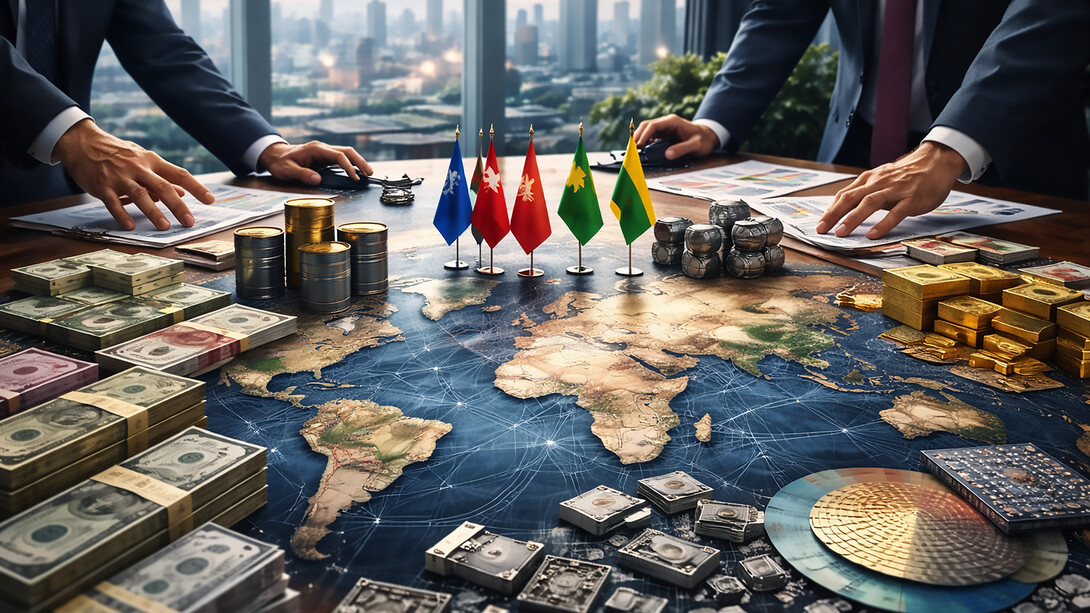
The BRICS++ originated as Moscow and Beijing's response to NATO and EU "double enlargement" into Russian spheres of influence, the 1999 NATO air war over Kosovo against their ally Serbia, and the US "multilateralization of containment" that targets Russian and Chinese interests globally. The formation of BRICS++ represents an effort by Russia and China to reduce US military predominance and challenge American, IMF, and G-7 hegemony through establishing a so-called "multipolar" global order.
Despite profound geostrategic, political-economic, and sociocultural differences, BRICS++ states share a common goal: asserting their interests against perceived US and G-7 hegemony. The crucial question is whether BRICS++ will be dominated by China—resulting in greater global US versus China polarization—or whether BRICS++ will fragment.
Alternatively, can Washington and Beijing find a modus vivendi enabling a more balanced global system?
Much depends on India's role as a pivotal power that could shift closer to either Russia-China axis or toward the US-G7-Japan alliance.
The Biden miscalculation: 1997
After signing the NATO-Russia Founding Act in May 1997, which opened NATO enlargement into former Soviet spheres (later regretted by Boris Yeltsin), Senator Joe Biden addressed the Atlantic Council on June 18, 1997. Biden myopically dismissed the possibility of a Sino-Russian strategic partnership, arguing that political-economic cooperation with the US and Europe represented Moscow's only viable option.
Ironically, Biden's comments came just weeks after Russian President Boris Yeltsin and Chinese President Jiang Zemin signed their "multipolar world" declaration on May 20, 1997. Biden's remarks also coincided with the emerging "Primakov doctrine" calling for strategic partnership between the Russia, India, and China (RIC) troika—the roots of BRICS.
Contrary to Biden's expectations, Russia and China expanded their collaboration through the Shanghai Cooperation Organization (SCO), the Collective Security Treaty Organization (CSTO), the Eurasian Economic Union (EAEU), the BRICS, and the Belt and Road Initiative (BRI).
Building the Sino-Russian strategic partnership
The Shanghai Five group (China, Kazakhstan, Kyrgyzstan, Russia, and Tajikistan), formed in April 1996, evolved into the Shanghai Cooperation Organization, with Uzbekistan joining in 2001, followed by the membership of Pakistan and India in 2017 and of Belarus in 2024.
On July 16, 2001, after NATO's Kosovo intervention demonstrated NATO’s superior military capabilities against their mutual ally Serbia, China and Russia signed a 20-year strategic partnership—the Treaty of Good-Neighborliness and Friendly Cooperation. India was similarly alienated by NATO's Kosovo intervention, viewing it as a violation of state sovereignty that could set a precedent for Kashmir independence.
In 2002, Moscow forged the Collective Security Treaty Organization (CSTO), linking it with the SCO in 2007. Beijing subsequently pushed for the Regional Comprehensive Economic Partnership (RCEP) from 2011 to 2020, initiated the Belt and Road Initiative in 2013 (eventually expanding to 149 countries with 60% of the world population and 40% of the global GDP), and launched the New Development Bank in 2014 and the Asian Infrastructure Investment Bank in 2016.
Following Russia's 2014 Crimea annexation, Sino-Russian relations strengthened as Beijing's economic role in Russia grew and Moscow's tensions with the West escalated. Russia joined the Belt and Road Initiative in 2015, linking it with the Eurasian Economic Union (EAEU). Most significantly, in February 2022, Beijing and Moscow forged a "no limits" partnership just before Russia's so-called “special military operation” against Ukraine.
BRICS++ expansion
The Sino-Russian "no limits" partnership and RIC gained broader backing through the BRICS formation (Brazil, Russia, India, China, and South Africa) in 2009-10, forged partly in reaction to the 2008 financial crisis that questioned the ability of the G-7, World Bank, and IMF to provide adequate financial safety nets.
During the 2022 BRICS summit, Russian President Putin announced plans to create an "international reserve currency" to challenge the US "petrodollar." The 2023 BRICS Summit invited Argentina, Egypt, Ethiopia, Iran, Saudi Arabia, and the UAE, though Argentina's Milei refused to join "communists." Saudi Arabia hesitated. At the 2023 summit, Xi Jinping proclaimed, "BRICS countries invariably advocate and practice independent foreign policies... We do not barter away principles, succumb to external pressure, or act as vassals of others."
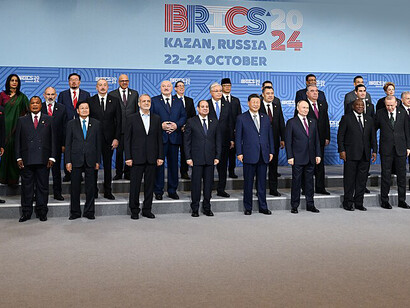
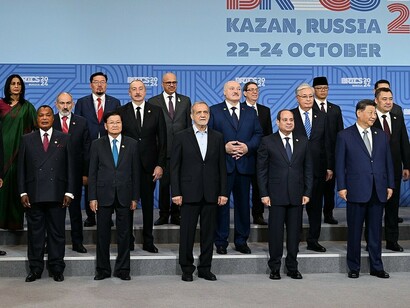
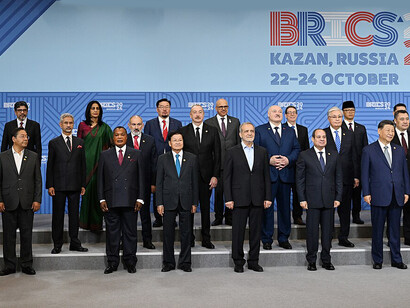
By January 2025, BRICS had 10 full members (adding Egypt, Ethiopia, Indonesia, Iran, and the UAE to the original five) and 10 partner countries (Belarus, Bolivia, Cuba, Kazakhstan, Malaysia, Nigeria, Thailand, Uganda, Uzbekistan, and Vietnam). These 20 members and partners represent 43.93% of world GDP (PPP) and 55.61% of the global population. BRICS
Trump's response: "BRICS is dead"
In November 2024, President-elect Trump demanded that BRICS countries pledge not to create new currencies or support dollar alternatives, threatening 100% tariffs. By February 2025, Trump declared, "BRICS is dead," warning of punitive measures against "anti-American policies."
China faces potential 145% tariffs, while Brazil and India received 50% tariff hikes (half of India's penalty for buying discounted Russian oil). South Africa received a 30% tariff increase. Trump's strategy aims to exploit business risks and internal BRICS disputes—between Egypt and Ethiopia, Iran and Saudi Arabia, and China and India—playing "divide and rule."
De-dollarization: the real threat
BRICS++ does not require a full new currency to challenge dollar primacy. By increasing use of national currencies—especially China's renminbi (RMB)—for trade, BRICS members can gradually erode the dollar's dominance. While the dollar holds 66% of the international currency share compared to the RMB's 2.5%, US Federal Reserve analysis has suggested RMB usage could grow significantly due to Western sanctions on Russia accelerating RMB adoption, RMB usage remaining disproportionately low compared to China's GDP and trade share, and Chinese authorities actively promoting RMB internationalization.
Despite US threats, some 40 countries—including Mexico (the US's top trading partner) and NATO member Turkey—are considering BRICS+ membership. At least 23 countries have submitted formal applications. BRICS++ members have increased trade in local currencies and explored digital alternatives, as well as gold-backed currencies, as the value of gold has skyrocketed. All of these efforts potentially erode the dollar’s reserve status, especially in energy and commodity markets.
Key member dynamics
Brazil: Even Trump ally and former Brazilian president Jair Bolsonaro recognized the value of China's New Development Bank connection, although current President Lula da Silva more strongly supports BRICS and de-dollarization.
South Africa: Trump's false "white genocide" claims and G20 summit boycott aim to break up BRICS but risk handing African markets to China. South African businesses recognize that de-dollarization offers opportunities to reduce dollar dependency despite transitional and geoeconomic challenges.
Russia: Trump added Rosneft and Lukoil to sanctions lists in October 2025, impacting BRICS++ energy buyers, including China and India. Sanctions havevnot halted Russian military advances in Ukraine, yet they have been impacting Russia's economy—the Russian Finance Ministry sold 57% of its gold reserves (232.6 tons) to cover shortfalls. Moscow may not recognize the geoeconomic reality, but Russia is unlikely to shift away from its burgeoning dependence on China―unless the US and Europe reduce sanctions after a Ukraine settlement.
India: The key pivotal player, India, has thus far sought to exploit its strategic position. Trump designated India a "Major Defense Partner," granting access to advanced US defense technology; Washington and Delhi signed a 10-year Defense Partnership Framework in October 2025. India participates in the US-led Quad to counterbalance China. Yet in December 2025, Putin met Indian Prime Minister Modi, signing agreements on shipbuilding, nuclear energy, and critical minerals.
India is simultaneously playing the US against Russia, the Europeans against America, and reconsidering China relations. To counter Trump tariffs, India signed free trade agreements with the UK and EFTA while negotiating deals with both the EU and the Russia-led EAEU. After their 2020 border clash, China and India have begun rapprochement—the October 2024 BRICS+ summit helped deconflict their Himalayan border dispute. Both Beijing and Delhi seek underpriced Russian oil to circumvent US sanctions. Yet India is also engaging in trade talks with the US.
Most significantly, India is reconsidering membership in China-led RCEP, the world's largest free trade agreement (30-32% of global GDP, 2.4 billion people). If India joins RCEP and deepens defense relations with Russia, this could mark a shift away from the US-led Quad of the US, Japan, and Australia, as well as India—which seeks to “contain” China.
China's strategic leverage
Beijing hopes links between BRICS, SCO, EAEU, RCEP, and BRI will enable China to challenge US global predominance. The original four BRIC members control 72.5% of global rare earth mineral reserves, providing leverage over resources essential for IT and military-technological revolutions. China alone supplied 60% of the world's rare earth minerals and produced 85% of strategic rare earth materials in 2020—essential for high-tech weaponry, electric vehicles, semiconductors, and mobile phones. In response to US export controls, China has restricted exports of gallium and germanium, key materials for computer chipmaking.
Beijing aims to both separate the Chinese and the BRICS economies from excessive US dependence while penetrating US markets through Mexico and EU markets through Greece, Hungary, and Balkan states—Europe's Achilles heel.
Conclusion: the future of BRICS and US hegemony
Much as Biden and the Clinton administration had failed to foresee NATO enlargement's full impact in 1997, there is a risk that the Trump administration may not foresee the long-term consequences of "America First" tariffs and sanctions on BRICS++, Europe, and other countries.
While Trump seeks to break up BRICS++, the irony is that his tariff and sanctions policies may be further isolating the US―as Brazil, South Africa, and particularly India seek trade, financial, and geopolitical alternatives without completely abandoning Russia and China.
US tariffs and sanctions have thus far deepened mistrust, accelerating BRICS efforts to build alternative trade and financial systems and to possibly forge a counter-alliance under a new so-called "multipolar" ideology that promises equity among states that are not equal―in what is better characterized as a highly uneven or asymmetrical polycentric global system―as I argued in my book, IR Theory, Historical Analogy, and Major Power War (Springer, 2019).
Nevertheless, to counter China and the BRICS, Trump may possibly be engaging in a two-sided and apparently contradictory strategy. One side is a strategy of co-optation. The other side seeks to “divide and rule” through high-tech innovation.
On the one hand, Trump is rumored to be considering the formation of a radical new grouping of major powers, called the Core Five (C5), that would, in effect, seek to co-opt Russia, India, and China into greater cooperation with the US and Japan. Consisting of the United States, China, Russia, India, and Japan (C5), the C5 would seek to bring the original BIC troika of Russia, India, and China of the BRICS (minus Brazil and South Africa) into greater global cooperation with the US and Japan.
Yet for the C5 approach to work, the US and Russia would need to help resolve the major geopolitical, technological, and economic interests that divide the US, China, and Japan and that divide India and China. Such an approach could help channel the rise of China in a positive direction. Yet, as the C5 does not include the UK, France, and Germany, such a group risks further splintering Europe (which would be left to deal with a collapsed Ukraine) while leaving major developing world countries unrepresented.
On the other hand, the US has just launched in December 2025 a more exclusive high-tech alliance, called Pax Silica, within the larger US-NATO-Japan alliance. Pax Silica seeks to counter the influence of China and the BRICS by building secure innovation-driven silicon supply chains and by protecting critical and rare earth minerals, energy inputs, and capabilities that are essential to advanced manufacturing, semiconductors, AI infrastructure, and logistics. All this is in the effort to develop and deploy transformative technologies at scale, according to the US State Department.
Aimed at dividing China and the BRICS through high-tech innovation, this exclusive high-tech Pax Silica alliance within an alliance seeks “deep cooperation” among Japan, South Korea, Singapore, the Netherlands, Israel, the UAE, the UK, and Australia, with other countries expected to join. Participating countries are home to major companies including Sony, Hitachi, Samsung, SK Hynix, Temasek, DeepMind, MGX, Rio Tinto, and ASML.
So far neither France nor Germany is included in Pax Silica, nor are Russia and China. So far, India has been excluded due to disputes over H1B visas, US-India trade and technology, and close Indian defense ties to Russia―as well as the US rapprochement with Pakistan. From a technical perspective, India has not yet joined the Pax Silica ostensibly because it lacks1 advanced chip manufacturing, it is still dependent on imported refined minerals, its semiconductor fabrication is only at an early phase, and it has a smaller role in AI hardware production than the other members.
Yet how much of the reason for India’s exclusion from Pax Silica is technical? And how much is geopolitical, as France and Germany were also excluded?
Whether Trump will create a “Core 5” grouping of the US, Japan, Russia, India, and China that will seek geopolitical, technological, and economic compromises with Russia over Ukraine and with China over Taiwan—that could effectively splinter the Sino-Russian "no limits" partnership and divide BRICS—remains to be seen.
Yet given the difficulties in achieving G5 cooperation that can first engage India and then Russia and China in a new geopolitical, technological, and economic rapprochement in the formation of a new and more concerted global system, the danger is that present US protectionist policies and sanctions on both friends and rivals alike—divisive actions that could be strengthened by the formation of Pax Silica—risk pressing BRICS++ members together in a dangerous US versus China polarization of the global system, thereby increasing the real possibility of war between the major powers.
References
1 Pax Silica Explained: Why India Was Left Out of the US Critical Minerals and AI Alliance.