English
 Español
 Français
 Deutsch
 Italiano
 Português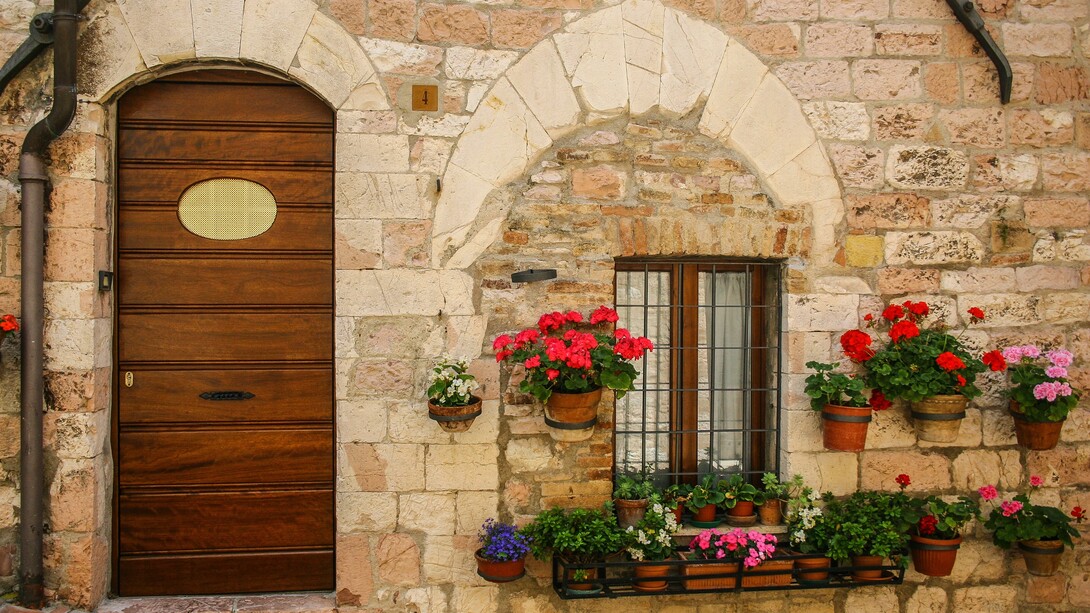
As my most devoted readers know, I certainly can't call myself a sedentary type; on the contrary, I've been wandering around the world for many years, including our own country. And precisely because I travel abroad extensively, I can confidently say that, in many ways, our Italy is one of the most beautiful countries in the world. I say this without any nationalistic sentiment, but as a pure statement, or rather, as a matter of fact.
I don't want to list the reasons for this assertion of mine; I'll take it as a starting point to highlight a phenomenon that I've recently noticed taking hold throughout the peninsula.
To paraphrase a famous Genesis song from the 70s, Selling England by the Pound, it would seem that we are selling Italy brick by brick.
I do not want to mention here the various high-value companies that have been acquired by foreign capital in recent decades, even though there are many, the sales of which, in most cases, have not been sufficiently disclosed to the general public.
I am speaking, much more banally, of individual private buildings, our homes.
For various reasons, I have had the opportunity to travel far and wide across our wonderful territory, which is such due to its fortunate geological and landscape conformation, even if, as I wrote in a recent article1, the various administrations that have succeeded one another in recent decades are crumbling it due to their proverbial inefficiency. But its beauty is also thanks to its extraordinary architectural heritage, a legacy of our ancestors who constructed exemplary buildings that have lasted hundreds, if not thousands, of years.
Not only are buildings universally recognized as masterpieces of the genius and mastery of the men who preceded us, but also simple civilian homes.
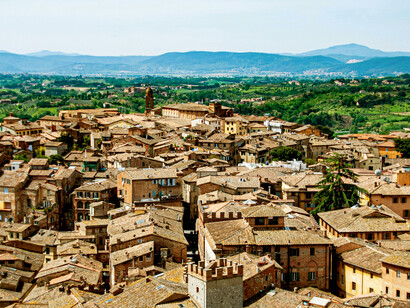
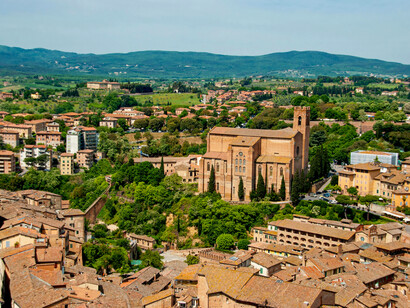
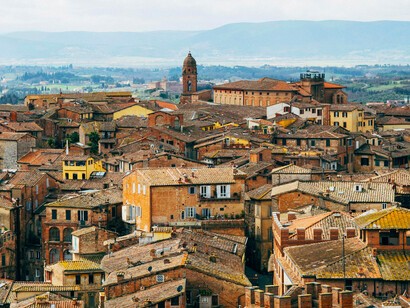
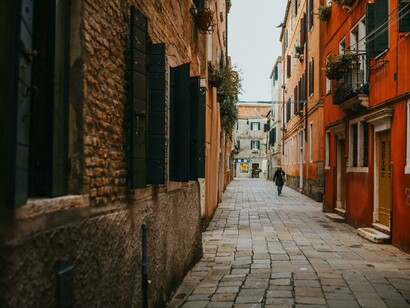
With very few exceptions, our entire region is dotted with medieval villages and towns that have survived the centuries and display a rich, detailed workmanship, attention to detail, construction methods, and use of materials—peculiarities that are envied around the world.
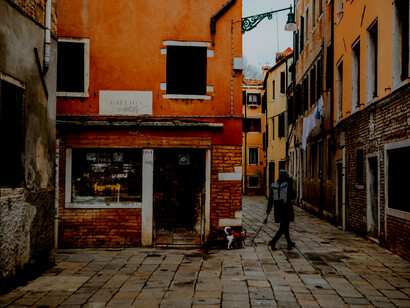
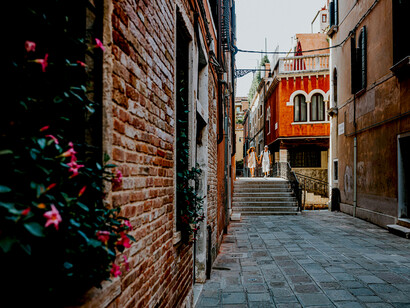
Who among you hasn't had the experience of strolling through the streets of such wonders? And if you haven't, take the time to do so, at least virtually, and you'll appreciate the uniqueness of our architectural heritage.
I repeat, I'm not talking about monuments of ancient Rome or the palaces of the extraordinary Renaissance period, but the simple homes where many of us still live today, perhaps without even realizing how fortunate we are.
But if we don't realize this, the tourists who flock to these wonderful villages almost year-round know it too well. And they realize it so well that they're buying these houses.
Nothing wrong with that, you might say, and in principle, I could agree. I myself live in an area on the border between Piedmont and Liguria, where recently all my Italian neighbors, who had lived in the area for generations, sold their properties to foreigners, mostly Dutch, but also Belgian, French, and English. And today my wife and I are the only Italians living there.
And they're all lovely people, with whom we get along perfectly, even better than with Italians we've known for over thirty years.
But the problem, if it is a problem, must be viewed from a broader perspective; to understand the extent of what is happening, we must not focus on a single well-known example but take a bird's-eye view. Otherwise, we will make the same mistake as our politicians, who cannot see beyond their own noses, or rather, their seats.
We will then realize that many of our heritage homes are no longer owned by Italians but by people of other nationalities, and that very few of them bought these homes to live in but primarily to spend their holidays. Even fewer of them bought these homes because they fell in love with our way of life or because they share our culture and customs. Indeed, most don't much appreciate being Italian and have no intention of integrating with us or speaking our language. Instead, they want to keep to themselves and, at most, interact with their fellow countrymen—something that's no longer difficult, given the ever-increasing number of them.
You'll say I'm generalizing and that not everyone is like this, and I've said this beforehand. The fact is, traveling around Italy, I've found that this phenomenon and the attitude of foreign buyers I've described are well-known everywhere. I've spoken to dozens of people—from Emilia to Marche, from Puglia to Calabria, from Sicily to Trentino, from Val d'Aosta to Liguria, not to mention Tuscany, which for decades has hosted foreign residents, especially British and American—and they all expressed the same concern: we're selling Italy house by house to people who exploit the positive aspects of our beautiful country for almost exclusively economic gain, and most of them have no intention of integrating with us.
Okay, I know, you like to see firsthand, you want me to reel off data, and you don't take my word for it. So here are some numbers from more or less reliable sources.
According to Gate-away2 the Italian portal dedicated exclusively to foreign buyers, our country remains one of the favorite destinations for those looking for a new home abroad, with Americans in first place (29.92%), followed by the English (9.78%), followed by the French, Dutch, Belgians, Swedes, Swiss, and Canadians.
In 2025 the number of British citizens looking for a property in our country increased by 28.01% compared to the same period last year, again according to Gate-away.com.
According to the IDOS Study and Research Centre, in 2025, transactions in the province's smaller municipalities rose to 57.2% compared to 38.6% in 2006.
Milano Finanza reports that the number of foreigners buying homes in Italy is growing rapidly, with a boom recorded in 2024 and 2025, exceeding pre-pandemic levels. This is thanks to the appeal of villages, cities of art, and the coast. Among the most active are Germans, Americans, and Britons, often looking for second homes or places to retire.
Vendocasaprivato informs us that 2025 saw record growth, up 74% compared to the previous year.
FIAIP and Nomisma provide the same data: in 2024/2025, the Italian real estate market saw a sharp increase in purchases by foreigners, with a 74% increase in 2025 compared to the previous year.
And now enough with the numbers because after a while they get to my head.
This data shows that more and more foreigners are buying homes in Italy, but they don't tell us how they live in these homes and what their relationships are with their neighbors, if any, because, again according to Gateway, most of them prefer detached homes.
But as a resident of one of these areas favored by foreigners, and having interviewed several people across the country on this very subject, I can assure you that the picture that emerges is the one I described earlier: many of them, that is, don't want to interact with us. I have several examples, which for obvious reasons I can't name, of tourism businesses started by foreigners newly arrived in Italy who not only don't speak our language but who don't even welcome Italians! B&Bs, campsites, and holiday homes are for foreigners only: we can't enter them.
This is what's happening; I'll leave you to your own reflections. I just want to conclude this first article on the topic by reiterating that I have nothing against foreigners buying homes in Italy—it would be paradoxical for someone like me, who has been traveling everywhere for decades, to hold such a prejudice—and that many of them, at least those I know personally, are wonderful people. I wanted to touch on a situation that perhaps many of you aren't aware of and stimulate reflection on it. This reflection should be addressed first and foremost by our politicians, who should ask themselves what the causes of this phenomenon might be and, above all, what the consequences are, especially for our young people.
In this regard, since I mentioned "the first article on the topic," I'll let you know that the next one will focus on an interview I gave to Mayor Mirco Rinaldi of Montone, a splendid village in Umbria between Città di Castello and Perugia.
References
1 Italy: the country of contradictions.
2 Find your home in Italy.