English
 Español
 Français
 Deutsch
 Italiano
 Português
More than a century after the original Scramble for Africa, a quieter but equally consequential contest for the continent’s land is unfolding. This time, the driving force is not overt imperial conquest but global climate action regarding carbon markets, renewable energy investments, conservation schemes, and sustainability pledges. Critics describe this phenomenon as green colonialism: the transfer of land control and environmental burdens to Africa under the banner of saving the planet.
As climate change accelerates, Africa has emerged as a focal point of global mitigation strategies. The continent is increasingly framed as a carbon sink, a conservation frontier, and a supplier of minerals essential for the green energy transition. Yet Africa contributes less than four percent of global greenhouse gas emissions, raising difficult questions about equity, responsibility, and who truly benefits from today’s climate solutions.
Climate action meets historical inequality
Green colonialism reflects a long-standing imbalance in global political and economic power. Industrialized nations built wealth through centuries of fossil fuel use and environmental degradation. According to the Intergovernmental Panel on Climate Change (IPCC), Africa accounts for roughly 3–4 percent of current global greenhouse gas emissions, despite being among the regions most exposed to climate impacts. Yet as countries pursue net-zero targets, many land-based climate solutions such as tree planting, carbon sequestration, biodiversity offsets, are being implemented in the Global South, particularly Africa. Data from the World Bank and UN agencies show a growing share of global carbon offset and nature-based solution projects concentrated on African land.
Large tracts of land are earmarked for carbon offset projects, conservation areas, biofuel plantations, and renewable energy installations. These projects are often presented as win-win solutions for the planet. However, on the ground, they frequently restrict traditional land use, displace communities, or convert communal land into long-term assets controlled by foreign investors. The result is a paradox: Africa is asked to shoulder a disproportionate share of the land and social costs of climate mitigation for a crisis it did little to create.
Green grabbing and carbon markets
A central mechanism driving this trend is green grabbing which is about the acquisition of land for environmental purposes, often without meaningful consultation or fair compensation. Voluntary carbon markets, estimated by industry analysts and multilateral institutions to be worth several billion dollars annually, rely heavily on land-based projects in Africa, Latin America, and Southeast Asia. Carbon markets allow governments and corporations in high-emitting countries to offset continued pollution by financing projects elsewhere, commonly in African forests, savannahs, and rangelands. While such schemes are promoted as cost-effective climate tools, research by development economists and civil society groups has questioned their actual impact on long-term emission reductions.
In practice, many offset schemes allow polluters to delay real emission cuts while shifting responsibility to communities that depend on the land for farming, grazing, and cultural survival. Carbon credits become financial instruments traded internationally, while local populations face new restrictions on land they have used for generations. Concerns have also been raised about transparency and accountability. Reports by UN bodies and independent auditors have highlighted gaps in community consultation, benefit sharing, and monitoring of social impacts.
Renewable energy and the new resource rush
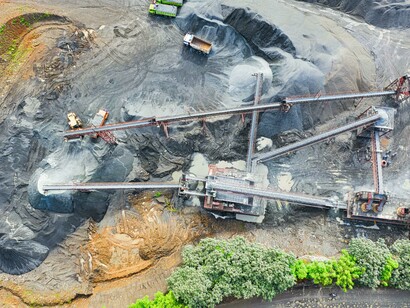
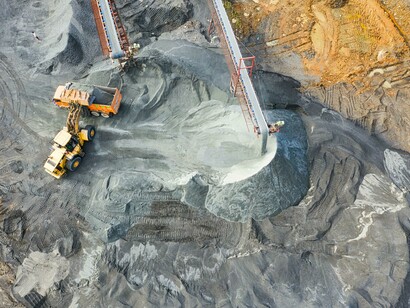
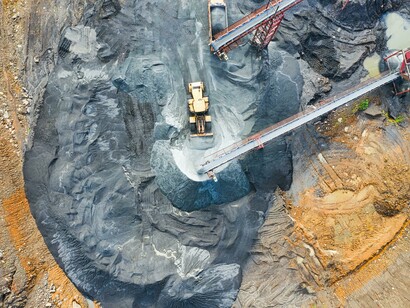
Africa’s role in the global energy transition extends beyond carbon offsets. The continent holds significant reserves of minerals such as lithium, cobalt, nickel, copper, and rare earth elements, materials critical for electric vehicles, batteries, solar panels, and wind turbines. The International Energy Agency estimates that demand for key transition minerals could increase several-fold by 2040 under global net-zero scenarios. Countries including the Democratic Republic of Congo (home to the majority of the world’s cobalt reserves) Namibia, Zimbabwe, and Mali have become strategic suppliers for green technologies. While this presents economic opportunities, it also risks reproducing old extractive patterns. Raw materials are often exported with minimal local processing, environmental safeguards are unevenly enforced, and communities bear the ecological costs. The green economy, critics argue, risks becoming a rebranded version of resource extraction unless African countries gain greater control over value chains, pricing, and industrial policy.
Land Rights, livelihoods, and consent
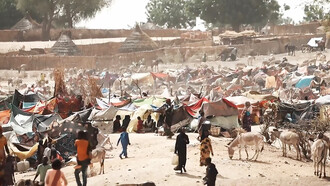
One of the most contentious aspects of green colonialism is its impact on land rights. Across Africa, land is not merely an economic asset but it is central to identity, culture, and survival. Large-scale climate projects that ignore Free, Prior, and Informed Consent undermine both local governance and international human rights standards. Pastoralists, smallholder farmers, and indigenous communities are particularly vulnerable. Restrictions on grazing, farming, or forest access can destabilize livelihoods and increase poverty, even when projects are framed as environmentally beneficial.
A global credibility test
Green colonialism poses a broader risk to global climate action. When environmental solutions deepen inequality, they generate resistance and erode trust. Climate policies perceived as unjust are unlikely to succeed, especially in regions already grappling with poverty, conflict, and underdevelopment. For Africa, the challenge is to balance environmental protection with development priorities, including energy access, food security, industrialization, and employment. For the global community, the challenge is to pursue climate goals without reproducing colonial-era patterns of domination.
Towards a just transition
A credible path forward requires shifting emphasis from offsets to real emission reductions at the source, alongside fair climate finance, technology transfer, and inclusive decision-making. African countries must be partners—not merely sites—for global climate solutions. Without justice, the green transition risks becoming another unequal exchange: land and resources from Africa, environmental benefits and profits elsewhere. The fight against climate change will only succeed if it confronts not just carbon emissions, but the power structures that shape who pays the price for fixing them.