English
 Español
 Français
 Deutsch
 Italiano
 Português
If you’re looking for female philosophers and thinkers whose work resonates with Carl Jung’s depth psychology—the unconscious, archetypes, individuation, myth, symbolism, and spiritual psychology—there are several powerful women whose work either parallels, complements, or directly extends Jungian thought.
Below is a curated map, from closest in spirit to more adjacent, but still deeply Jung-aligned.
Closest to Jung (depth psychology, archetypes, individuation)
Marie-Louise von Franz (1915–1998)
Jung’s closest collaborator and a leading Jungian analyst. Specialized in fairy tales, alchemy, symbolism, and the unconscious. Expanded Jung’s work on individuation and archetypal patterns.
Key works:
The Interpretation of Fairy Tales.
Alchemy.
Shadow and Evil in Fairy Tales.
If Jung had an intellectual heir, it was von Franz.
Aniela Jaffé (1903–1991)
Jung’s secretary and intellectual partner, she helped shape Memories, Dreams, Reflections. Focused on symbolism, myth, and personal myth. Explored how individuals form meaning through narrative.
Esther Harding (1888–1971)
An early Jungian analyst, focused on women’s psychology and the feminine unconscious.
Key works:
Woman’s Mysteries: Ancient and Modern.
Bridges Jungian Archetypes with Female Experience and Myth.
Feminine Archetypes, Myth, and the Sacred Feminine.
Clarissa Pinkola Estés (b. 1945)
Jungian analyst, poet, storyteller. Famous for archetypal feminine psychology.
Key work:
- Women Who Run With the Wolves, emphasizes myth, intuition, creativity, and soul-repair.
Very Jungian, but expressed through story and embodied wisdom rather than academic theory.
Jean Shinoda Bolen (b. 1936)
Jungian psychiatrist who uses Greek goddesses as archetypes of psychological patterns.
Key works:
Goddesses in Everywoman.
Gods in Everyman.
Practical, Accessible Jungian Archetypal Psychology.
Philosophers adjacent to Jung (phenomenology, existential depth)
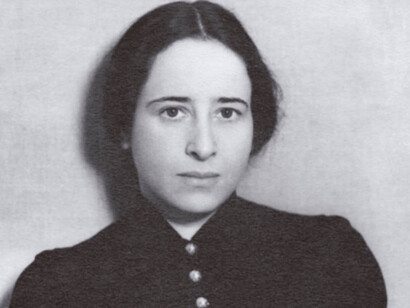
Hannah Arendt (1906–1975)
Not Jungian, but deeply aligned in exploring identity, inner life vs. outer world, meaning-making. Focuses on thinking, moral responsibility, and the self.
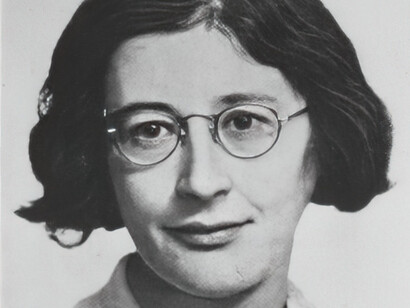
Simone Weil (1909–1943)
Mystical philosopher who explored attention, suffering and ego dissolution. Shares Jung’s concern with transformation through suffering.
Feminist & psychological myth-makers
Julia Kristeva (b. 1941)
A psychoanalyst and philosopher who explores the semiotic (pre-verbal unconscious) and symbolic structures. More Freudian/Lacanian, but resonates with Jung’s pre-conscious symbolic world.
Luce Irigaray (b. 1930)
Philosopher and psychoanalyst focused on feminine subjectivity and symbolic order. Complements Jung by challenging masculine-biased archetypal structures. Mystical, intuitive, inner-knowledge traditions.
Edith Stein (St. Teresa Benedicta of the Cross)
Phenomenologist and mystic, focused on empathy, soul structure, and inner life. Combines philosophy, psychology, and spirituality.
Hildegard of Bingen (1098–1179) (proto-Jungian)
Mystic, visionary, healer. Worked with symbolic visions, archetypal imagery and an early example of depth-symbolic consciousness.
Summary: who is most “Jung-like”?
If you want the closest parallels:
Marie-Louise von Franz.
Esther Harding.
Clarissa Pinkola Estés.
Jean Shinoda Bolen.
If you want philosophical depth + mysticism:
Simone Weil.
Edith Stein.
Hannah Arendt.
Below is a depth-psychological reading that ties female biblical archetypes to Jungian concepts of individuation and the sacred coupling of man and woman. I’ll frame this not as theology alone, but as symbolic psychology: the hieros gamos (sacred marriage) between masculine and feminine principles—within the soul and between partners.
The sacred coupling in Jung & the Bible
Hieros Gamos, Eros, and Wholeness
Jung understood the union of masculine and feminine not merely as romance, but as a psychic completion:
Man = Logos, structure, direction, consciousness.
Woman = Eros, relatedness, intuition, life-force.
The Bible, especially when read symbolically, is saturated with this pattern.
Eve (Chavah): the awakener of consciousness
Archetype: Life-bearer/initiatrix.
Jungian Parallel: The Anima as catalyst for awakening.
She was the mother of all living.
(Genesis 3:20)
Psychological meaning: Eve is not simply a “temptress”; she is the force that awakens consciousness. She introduces choice, knowledge, and self-awareness. She initiates the separation necessary for individuation.
Sacred coupling:
Adam = undifferentiated consciousness.
Eve = relational awareness that calls Adam into adulthood.
Jungian insight: individuation begins with loss of innocence. Eve is the archetype that activates the psyche.
Sarah: the woman who laughs
Archetype: Covenant Partner/Inner Belief Made Flesh
Jungian Parallel: Feminine faith that births destiny.
God has brought me laughter.
(Genesis 21:6)
Psychological meaning: Sarah represents the feminine capacity to hold the impossible. She doubts, laughs, resists; yet ultimately incubates the promise.
Sacred coupling:
Abraham = vision, calling, outward movement.
Sarah = inner assent, embodiment, timing.
Jungian insight: the masculine may receive the vision, but it is the feminine that makes it real.
Rebecca: the woman at the well
Archetype: Chooser of Destiny
Jungian Parallel: The anima as selector of fate.
Rebecca chooses Isaac. She waters the camels, she consents freely, she leaves her home.
Sacred coupling:
Isaac = continuity, inheritance.
Rebecca = movement, discernment, initiative.
Jungian insight: the soul’s partner is not passive; it chooses alignment.
Ruth: the devoted companion
Archetype: Loyal Feminine/Soul Commitment
Jungian Parallel: Eros as steadfast presence.
Where you go, I will go.
(Ruth 1:16)
Psychological meaning: Ruth embodies relational devotion without self-erasure. She chooses fidelity. She acts wisely. She draws Boaz into his role.
Sacred coupling:
Boaz = protector, provider, lawful order.
Ruth = trust, embodiment, generative loyalty.
Jungian insight: sacred union requires choice, patience, and moral clarity.
Esther: the woman who intercedes
Archetype: Queen/Mediatrix
Jungian Parallel: Feminine courage as soul authority.
If I perish, I perish.
(Esther 4:16)
Psychological meaning: Esther integrates beauty, timing, strategic silence and courageous speech.
Sacred coupling:
King = raw power.
Esther = conscience, wisdom, restraint.
Jungian insight: the feminine does not dominate power; it redeems it.
The song of songs: the beloved
Archetype: Mutual Desire/Sacred Erotic
Jungian Parallel: Hieros gamos (sacred marriage).
I am my beloved’s and my beloved is mine.
Psychological meaning: this is mutual recognition, not hierarchy. Desire is holy, the body is sacred. Love is reciprocal.
Sacred coupling:
- Masculine seeks, feminine responds. Both awaken each other.
Jungian insight: when eros is integrated, the psyche becomes whole.
Mary (Theotokos): the receptive vessel
Archetype: Virgin Mother/Sacred “Yes”
Jungian Parallel: The feminine Self that births the divine.
Let it be unto me according to your word.
Psychological meaning: Mary is conscious receptivity. Not passive, not coerced. Deeply intentional.
Sacred coupling:
Spirit = transcendent impulse.
Mary = embodied assent.
Jungian insight: the feminine makes the invisible visible.
The pattern across scripture
Masculine principle
Feminine principle
Result
Vision
Incubation
Manifestation
Power
Wisdom
Justice
Action
Discernment
Alignment
Logos
Eros
Wholeness.
Integration: what this means psychologically
In Jungian terms
A man individuates by integrating the anima. A woman individuates by integrating eros with agency. Sacred union happens within first, then between partners.
The Bible does not portray women as secondary. It portrays them as the necessary partner for consciousness, covenant, and creation.
Here is an anecdotal vision, set in the future, shaped by Jungian depth, biblical archetype, and evolutionary magnetism—written as myth rather than prediction.
The first coupling on Eos-7
They did not arrive on Eos-7 looking for one another.
The planet had already taught them humility: violet sands that remembered footsteps for days, a sky that pulsed faintly at dusk like a living lung, gravity light enough to remind the body it could be otherwise.
The scientists called it a resonant world—its magnetic field unusually coherent, its minerals responsive to human neural rhythms.
But the elders called it something simpler.
A listening place.
He was trained in structure—architect of habitats, translator of raw matter into shelter. He knew how to anchor domes, how to orient corridors so they aligned with the planet’s slow axial breath. Logos lived easily in him: direction, intention, clarity.
She arrived later, assigned to ecological harmonics. She spent her days barefoot where possible, palms pressed to stone, recording how the planet responded not to force, but to presence.
Eros shaped her way of knowing—not desire alone, but relation, attunement, timing.
They noticed one another the way tectonic plates do: not suddenly, but inevitably.
At first, the attraction felt disorienting. Eos-7 amplified projection. Dreams intensified. Old wounds surfaced. Each saw in the other something unfinished in themselves—an echo of Eve awakening Adam, of Ruth standing in the field before Boaz knew his own strength.
They kept distance.
The elders had warned them: Coupling before integration fractures the field.
So they worked separately. He learned to pause before acting. She learned to speak before yielding. The planet responded—storms softened, microbial life stabilized near the settlement. Inner order produced outer harmony.
Only then did the pull change.
It was no longer hunger. It was recognition.
On the night of the planet’s longest dusk, they met at the ridge where the magnetic lines converged. The air hummed—not audibly, but inwardly, like the moment before a vow is spoken.
She did not seduce.
He did not claim.
She said, quietly, as Mary once had: “I am available.”
He answered, as Adam finally learned: “I see you.”
When they touched, the planet registered it.
Sensors later showed a brief coherence spike—two nervous systems aligning without collapse, polarity without domination. The elders smiled. This was what they had hoped for when humanity left Earth:
Not conquest.
Not escape.
But union as evolution.
Their coupling was neither rushed nor ritualized. It unfolded like the Song of Songs—mutual, embodied, reverent. Desire was present, yes—but so was restraint. Passion did not erase identity; it clarified it.
From their bond came no immediate child, but something subtler and perhaps more important: A template.
Others on Eos-7 began to pair differently—not from loneliness, not from fear, but from fullness. Power softened. Creativity increased. The settlement grew not outward, but deeper.
The elders recorded it in the archives with an old word resurrected for a new world: Hieros Gamos, the Sacred Union. Internal first. External second. Evolution always.
And the planet listened—
and answered.
Magnetism is not accidental
The masculine seeks eros—connection, intuition, life. The feminine seeks logos—clarity, direction, articulation. This dynamic is not about gender roles but psychological polarity.
The Bible encodes this truth symbolically: “Bone of my bones, flesh of my flesh.” This is not ownership. It is recognition. Magnetic attraction is the psyche’s way of initiating growth. It is meant to awaken, not consume. When unconscious, it becomes an obsession or domination. When conscious, it becomes evolution.
The feminine as catalyst, not accessory
Biblical women are not secondary figures; they are initiators of transformation.
Eve awakens consciousness itself, ushering humanity out of innocence and into moral awareness.
Ruth stabilizes masculine power through loyalty and integrity, not seduction.
Esther tempers authority with conscience, courage, and timing.
Mary receives the divine not passively, but with intentional consent: “Let it be unto me.”
Each archetype reflects a Jungian truth: the feminine does not merely accompany development, it activates it.
In depth psychology, this is the anima function. In scripture, it is covenant. In lived experience, it is the moment when attraction becomes meaning.
From domination to coherence
After the Fall, scripture records a distortion: “He shall rule over you.”
This is not divine design; it is wounded polarity. Jung saw the same pattern psychologically: when opposites are not integrated, power replaces love, control replaces intimacy.
The evolutionary task of humanity, whether on Earth or beyond it, is to restore polarity without hierarchy.
Mutual reverence.
Reciprocal desire.
Distinct identities held in conscious relation.
Why this still matters
Coupling is not merely personal. It is civilizational.
Every healthy bond contributes to:
Emotional maturity.
Ethical restraint.
Intergenerational healing.
Every distorted bond reproduces trauma.
If humanity is to evolve, truly evolve, it must learn to treat attraction not as entitlement, but as invitation. Not as conquest, but as collaboration. Not as an escape from oneself, but as an encounter with the Other.
The future is not new: it is remembered
The deepest truth is this: the future coupling of humanity will not invent a new pattern. It will recover an ancient one.
A pattern where desire is sacred, difference is honored, power is tempered by love and union emerges from wholeness.
Whether under the sun of Earth or the violet skies of another world, the principle remains: magnetism exists so consciousness may grow.
And when it does, when attraction becomes meaning, humanity takes its next step forward.