English
 Español
 Français
 Deutsch
 Italiano
 Português
Throughout human history, writing has taken on many roles: it has been a means of communication, a tool of power, an artistic expression, and a vehicle of knowledge. However, there exists an even more ancient and mysterious use of writing, one that has its roots in magic, religion, and medicine: graphophagy. This term refers to the act of ingesting writings or elements that have come into contact with written texts, attributing to this practice a therapeutic or apotropaic value.
The term “graphophagy” comes from the Greek words “grapho” (to write) and “phagein” (to eat), literally meaning “to eat writing.”
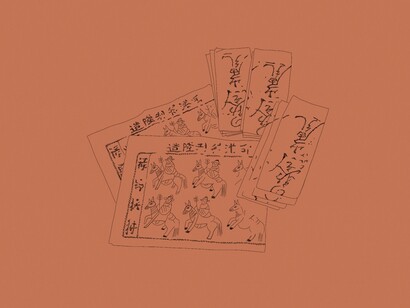
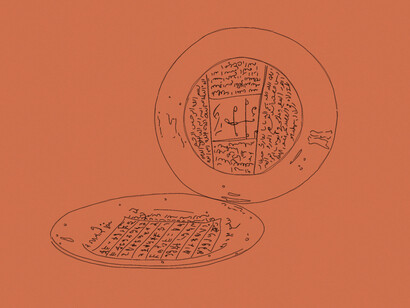
The idea that writing may possess an intrinsic power transferable to those who ingest it is not new: many cultures have developed practices that see written words not only as a vehicle for meaning but also as physical entities endowed with sacred power. This belief appears in various ancient civilizations, from Egypt to Islam, from China to Tibet, and even within the biblical Jewish tradition.
Graphophagy and alchemy: the alchemical transformation through writing
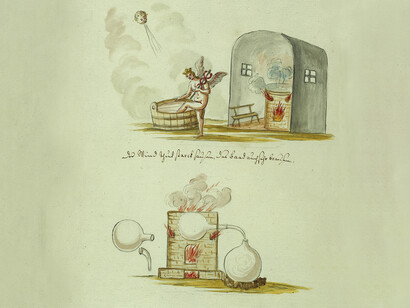
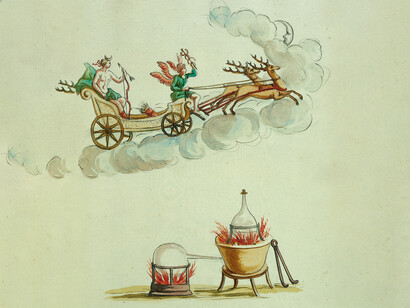
The connection between writing and alchemy is deep and mysterious. Renaissance and medieval alchemists firmly believed that magical and alchemical texts were not merely words written on paper but containers of transformative energy. Writing alchemical formulas or incantations meant imbuing the material world with the power of that knowledge, but not only that. Some practitioners believed that ingesting these writings could provoke a profound transformation of the individual. The "transmutation" of the soul, just like the transmutation of metals, occurred through the symbolic and spiritual power of words. Alchemical texts, such as the “Corpus Hermeticum” or the “Key of Solomon,” were not only read but sometimes consumed in secret rituals, convinced that direct contact with writing could accelerate the attainment of the "philosopher's stone," the elixir of immortality or spiritual enlightenment.
Writing and healing: the traditions of healing scriptures
In many traditions, writing has a direct therapeutic value. In India, for example, certain religious and spiritual practices view written mantras and sutras not only as a means of communication with the divine but also as a powerful tool for healing. The writing of sacred formulas, such as the Vedas or Tantras, was believed to transmit healing energy. Practitioners sometimes ingested small quantities of sacred writings or drank water in which they had been immersed to receive the benefit. In this way, it was believed that the healing, spiritual, and transformative energy of the words would spread through the body, curing both physical and spiritual ailments. These rituals could be seen as a form of psycho-cybernetics, where the repetition of sacred texts or the ingestion of written words with magical powers becomes a way to positively influence the psyche and the body.
Sympathetic magic and graphophagy: the power of written words
Sympathetic magic, which is based on the idea that "like affects like," intertwines perfectly with graphophagy. In this context, writing becomes a vehicle of energy that, once ingested, transfers its power to the consumer. Graphomancy, the practice of writing spells or magical formulas, is often associated with rituals of healing or protection. In some cases, the act of ingesting magical writing is interpreted as a form of union with its force. For example, if a practitioner writes a formula that invokes protection or healing, consuming that formula could be seen as a manifestation of their desire to integrate the power of the writing into their life.
The idea behind these practices is that the human body, like alchemical material, can be transformed through the assimilation of energies from the symbolic world of written words. This esoteric view gives writing a role far beyond that of a simple vehicle for meaning: it becomes a transformative agent, capable of changing reality on a spiritual and physical level.
Esotericism and the magical manuscripts
In the world of esotericism, especially in ceremonial magic, some manuscripts were considered true vehicles of power. Texts such as the "Key of Solomon," the "Liber Juratus," or the "Book of Shadows" from the Wiccan tradition were believed to be works capable of influencing the course of events, awakening hidden powers, or protecting the practitioner from dark forces. In many traditions, writing on parchment or other sacred media was done with special inks that imbued the text with mystical power.
Adepts of magic believed that not only the content of the text was sacred, but that the very act of writing could charge the words with inherent power. Sometimes, these texts were consumed or burned in rituals, with the idea that the words written would merge with the soul of the consumer. In some extreme cases, practitioners believed that consuming these writings could "absorb" or "transform" their magical energy, leading the magician to greater spiritual awareness or more control over the material world.
Graphophagy and the concept of spiritual nourishment: the connection with the divine
In many Eastern religious traditions, such as Bhakti Yoga in Hinduism or Tibetan Buddhism, written words are not merely a form of communication but a spiritual nourishment. For example, sacred mantras are written and read with the intent of establishing a direct connection with the divine. Some practitioners believe that if ingested, these sacred texts can purify the soul and protect it from both physical and spiritual diseases. Writing, therefore, becomes a vehicle of energy that goes beyond simple language: it becomes food for the spirit, capable of nourishing the practitioner with wisdom that cannot be acquired by mere reading or listening but must be assimilated internally, as though it were physical nourishment.
In Tibetan Buddhism, for instance, during some initiation ceremonies, the teacher may write the disciple's secret name on a piece of paper, which the disciple then ingests, symbolizing that the name is now part of them, united in teaching and enlightenment.
Writing is thus not merely a means of communication but a powerful tool of power. To ingest it, drink it, or absorb its essence, as in the case of graphophagy, is an act that involves a process of transformation, transcending mere reading and intertwining with the idea that written words possess an intrinsic power. As Giorgio Cardona writes in his book “Anthropology of Writing,” “Writing, in its essence, is something that transcends its communicative function, becoming a true instrument of power that influences the physical and spiritual reality of those who come into contact with it.” His research invites us to reflect on how writing, even in its most primitive and magical form, has always had the power to shape the individual and their reality.
Graphophagy thus represents an ancient tradition, which still echoes in some esoteric and religious practices today, reminding us that written words are not just marks on a page but can be a true vehicle of power, capable of protecting, healing, or transforming those who receive it.